
New Analysis Finds Lower Utility Returns Risk Higher Long-Term Costs for Customers
Source: PR Newswire
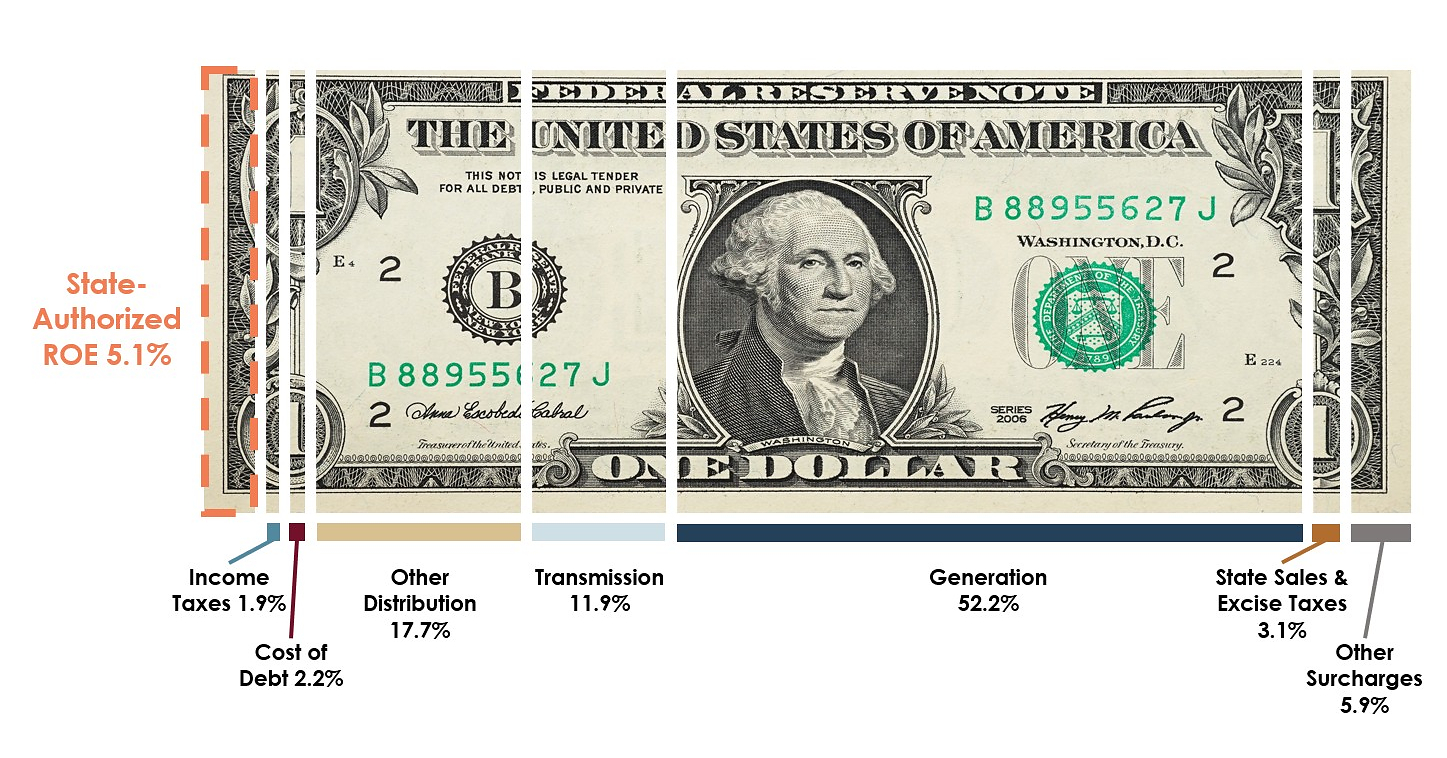
Concentric Energy Advisors finds that authorized equity returns account for about 5% of electric bills; a 100-basis-point ROE reduction would cut a typical bill by less than 1%, while the largest reduction modeled would change it by about 2%. The paper argues that if lower ROEs are not matched by lower capital costs or utility risk, higher financing costs over time could offset some near-term customer savings and affect infrastructure investment. It identifies wholesale power, capacity and policy-compliance costs as larger and faster-growing bill drivers.
Analysis
This is an advocacy paper, not evidence that regulators are changing allowed returns. Its market value is mainly as a framing tool in affordability proceedings; do not treat the modeled bill effects as a forecast across jurisdictions. The key second-order channel is the interaction between allowed ROE, authorized capital structure, and credit quality: if regulators cut equity returns while utilities retain large investment programs, companies may seek more debt, defer projects, or face higher financing costs. Those outcomes are conditional, not automatic, and will vary with regulatory lag, rate-base growth, actual earned returns, and each utility’s balance sheet.
Near term, the release alone is unlikely to alter earnings or spreads. Over 1–3 months, watch commission decisions and rate cases for whether affordability rhetoric translates into lower ROEs or equity ratios. Over 6–18 months, the more consequential test is whether investment-heavy utilities can fund grid upgrades without weaker credit metrics, project delays, or customer-rate disallowances. The paper’s claim that ROE cuts offer limited bill relief is plausible in direction, but should be independently checked against utility-specific bills and assumptions; the source has an industry-consulting perspective.
Contrarian point: investors may focus on the headline debate over ROE while underweighting wholesale power, capacity, and compliance costs, which the release itself identifies as larger bill drivers. A sustained fall in those costs could improve affordability and reduce political pressure on allowed returns, weakening the paper’s implied downside-risk case for utility equity.
AllMind Terminal
AI-powered research, real-time alerts, and portfolio analytics for institutional investors.
Request TrialMarket Sentiment
Overall Sentiment
neutral
Sentiment Score
0.10
Key Decisions for Investors
- No directional trade on this release alone. It supplies neither a regulatory decision nor utility-specific earnings, valuation, or credit data.
- For the next 1–3 months, monitor rate-case outcomes for explicit ROE and equity-ratio changes; distinguish proposed policy from final orders and assess each utility’s rate base and financing plan before positioning.
- Build a watchlist for utilities facing large grid-investment needs and potential regulatory lag. Reassess equity exposure if allowed returns fall without offsetting capital-cost relief, or if guidance shows project deferrals or weakening credit metrics.
- Do not use the paper as a reason to add broad utility exposure. Falsify the regulatory-risk thesis if commissions preserve returns and capital structures, or if lower wholesale and capacity costs materially ease customer affordability pressure.
More News
- Tech stocks are suffering their biggest selloff since Covid, as investors see premature end to AI datacenter boom
- Wall Street’s best post-midterm rally in 44 years lasted just one day—then $3 trillion vanished as chip stocks plunged over AI fears
- How Wall Street's postelection rally got obliterated — and what's next
- Elon Musk's Tesla and SpaceX lose over $420 billion in combined market cap after midterms
- Iran says tankers struck in Hormuz amid fears of new US attack
- The Iran war has cost U.S. households nearly $2,000 each. New strikes could keep the bill climbing