
CATL spúšťa skúšobnú výrobu batériových článkov v Maďarsku
Source: PR Newswire
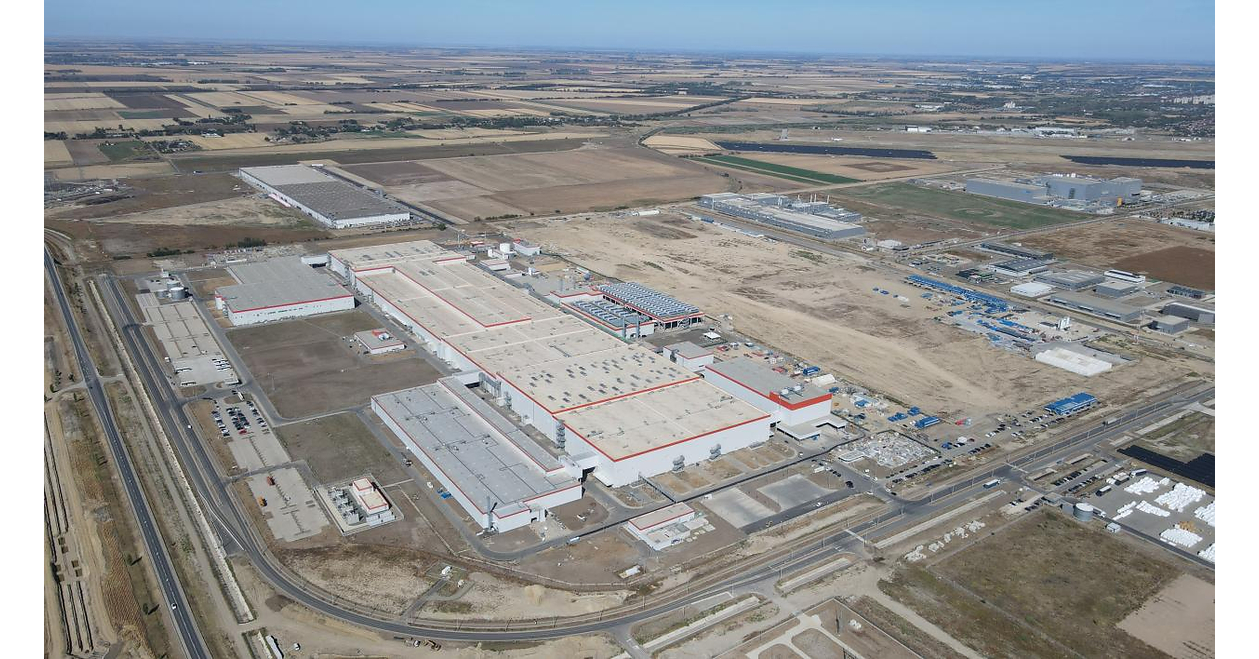
CATL began trial production on the first two cell-production lines at its new Debrecen, Hungary battery plant on September 22, 2026, after receiving required occupancy, IPPC and operating approvals. Once fully commissioned, the site is expected to be CATL's largest production base outside China, with 100 GWh of capacity, strengthening battery supply for European EV manufacturers. CATL has already produced 537,000 battery modules in Debrecen since module production began in autumn 2024, while environmental, health and safety performance will be monitored during the trial phase.
Analysis
The relevant market signal is localization rather than incremental European EV demand. A scaled Central European cell source reduces logistics cost, inventory buffers and FX/shipping exposure for regional OEMs, improving the economics of locally assembled EVs even if end-market volumes remain uneven. BMW (BMW.DE), Mercedes-Benz (MBG.DE) and Volkswagen (VOW3.DE) should gain procurement leverage versus European cell peers; the sharper pressure is on Northvolt-adjacent European battery aspirations and higher-cost Korean suppliers SK On and Samsung SDI, whose European capacity utilization is already more sensitive to OEM production cuts.
The near-term read-through is modest: trial lines do not establish qualified yield, customer acceptance or profitable utilization. Over the next 1-3 months, monitor disclosed customer qualification, ramp yields and any revision to commissioning schedules; battery-cell ramps commonly require quarters before fixed-cost absorption becomes visible. A successful ramp over 6-18 months would make Hungary a more credible EV manufacturing cluster, benefiting component/logistics names such as Schaeffler (SHA.DE) and, indirectly, Hungarian industrial real estate and power infrastructure, while increasing pricing pressure on EU-made cells.
Consensus may overstate the competitive damage to OEMs already supplied by CATL: lower cell input costs are likely to be competed away through EV price reductions, incentives or higher-content batteries rather than retained as margin. The more actionable implication is that OEMs with flexible battery architectures can use a local source to defend volume, whereas premium OEMs with weak EV demand may simply carry lower fixed costs into an underutilized vehicle plant. Regulatory and local-permitting risk remains a meaningful asymmetric downside: another environmental dispute or tighter EU battery-origin rules could slow qualification and force sourcing diversification.
AllMind Terminal
AI-powered research, real-time alerts, and portfolio analytics for institutional investors.
Request TrialMarket Sentiment
Overall Sentiment
moderately positive
Sentiment Score
0.58
Key Decisions for Investors
- No directional CATL trade: the company is unlisted domestically and trial production alone lacks enough evidence on yield, customer allocation and profitability to support a clean listed-equity expression.
- Watch for a 1-3 month qualification/ramp confirmation; if BMW.DE or VOW3.DE identifies meaningful local-cell sourcing without lowering EV delivery or margin guidance, consider a tactical long BMW.DE versus short 2800.HK (BYD). Thesis: European procurement resilience improves BMW's downside protection while BYD remains more exposed to EU trade barriers. Falsify on EV order deterioration or a material BMW margin-guide cut.
- Maintain a cautious stance on VARTA.DE and European battery-material/cell exposure until utilization evidence emerges. The structural risk is not merely volume competition but lower regional cell pricing and reduced OEM willingness to subsidize higher-cost local supply; avoid shorting solely on this release because ramp delays would temporarily support incumbents.
- For 6-18 months, screen long Schaeffler (SHA.DE) or Continental (CON.DE) only against confirmed Hungarian OEM production expansion, not battery capacity announcements. A local cell plant is supportive but insufficient; trigger requires OEM capex/orders and improving European auto builds. Falsify if EU light-vehicle production forecasts are cut or plant utilization remains below breakeven.
More News
- Wall Street’s Nasdaq hits all-time high as AI frenzy gathers pace
- Oil falls on increased Gulf supply and hopes for US-Iran talks
- Data-Center Bet Makes ESDS One of India’s Best New Listings
- Asia stocks ride tech wave higher, oil stays subdued
- South Korean solar stocks jump as curbs on Chinese sector expected to remain in place
- ‘I have a big decision to make’: Trump had a ‘good meeting’ with Iranian officials warning he may ‘annihilate the Islamic Republic’
From AllMind Research
- Anthropic IPO Preview: Valuation, Timing, and What to Watch
- Shein After the IPO: Venue, Valuation, and What Must Be Proved
- What AI Research Tools Should a Small Hedge Fund Buy First?
- Eli Lilly Q4 2025 Earnings: Revenue Surges 43% as Mounjaro and Zepbound Dominate the GLP-1 Market
- Investment Research Software Costs: A 2026 Budget Framework