
Xinhua Silk Road : le 2026 North Bund Forum dévoile 20 réalisations dans le domaine du transport maritime
Source: PR Newswire
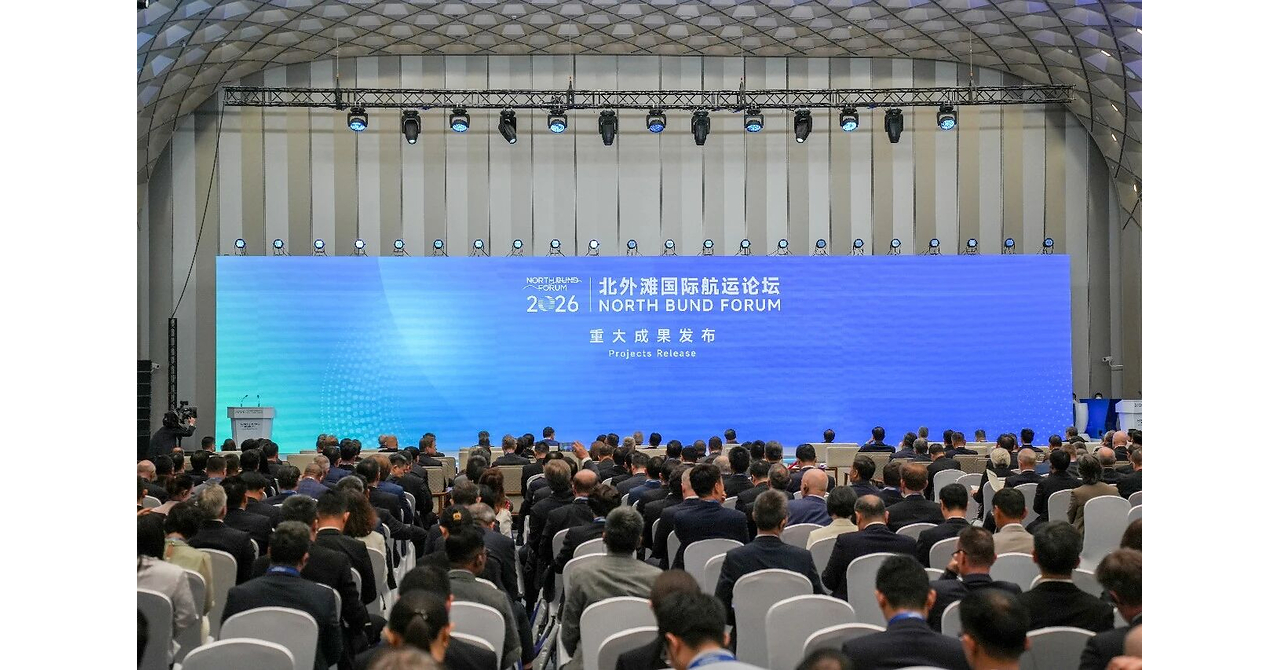
The 2026 North Bund Forum unveiled 20 maritime initiatives, including eight government-led initiatives and 12 focused on green transition and premium shipping services. China’s Ministry of Transport and the International Maritime Organization signed an MoU on maritime capacity-building, including cooperation on a China-France green shipping corridor. Shanghai ranked second globally in the 2026 Xinhua-Baltic index, and its port handled more than 55.06 million TEUs in 2025, remaining the world’s busiest container port for a 16th consecutive year.
Analysis
The investable signal is standards-setting, not the forum’s announcement count. If green-fuel certification and the China–France corridor become operational, they could direct future compliance spending toward certified fuels, measurement systems and retrofit-capable vessels. That may benefit marine equipment and fuel suppliers, but it also raises near-term costs for shipowners; without binding rules, contracts or disclosed volumes, neither side has a clear earnings catalyst yet.
Over 1–3 months, look for follow-through: named commercial participants, certification uptake, corridor sailings and evidence that customers will pay for lower-emission shipping. Over 6–18 months, a credible framework could improve the position of Chinese maritime institutions in international standard-setting and draw activity toward Shanghai. But an index ranking or port throughput leadership does not by itself establish higher port margins or shareholder returns; capacity, pricing and capital intensity matter.
The contrarian risk is treating this as either a near-term green-shipping trade or proof that Shanghai’s rise is at London’s expense. The initiatives are cooperative and potentially additive to global capacity, while fuel pathways, regulation and geopolitics remain unsettled. A reversal in IMO alignment, weak certification adoption, or no commercial follow-through would undermine the thesis.
AllMind Terminal
AI-powered research, real-time alerts, and portfolio analytics for institutional investors.
Request TrialMarket Sentiment
Overall Sentiment
mildly positive
Sentiment Score
0.25
Key Decisions for Investors
- No event-driven position on the announcement alone. Put marine certification, fuel-supply and retrofit-exposed companies on a watchlist; require disclosed contracts, volumes or revenue contribution before underwriting earnings impact.
- For the next 1–3 months, monitor IMO regulatory developments and evidence of corridor implementation, including participating shipowners, actual sailings and fuel certification uptake. Treat the MoU as a catalyst to verify, not proof of demand.
- For a 6–18 month thematic allocation, assess diversified maritime decarbonization exposure only after comparing retrofit and fuel capex with customer pricing and utilization; avoid assuming port throughput or a center ranking translates into better margins.
- Falsify the constructive thesis if there is no commercial follow-through, certification adoption stalls, or international rules diverge enough to fragment standards. Reassess any Shanghai-over-London relative-value thesis against port pricing, capacity and profitability rather than rankings alone.
More News
- Asia stocks fall as AI rout batters S.Korea; Japan spooked by strong CPI
- SK Hynix shares slide after chipmaker scraps Solidigm IPO plans
- Why is SK Hynix stock sliding today?
- Apple’s iPhone Duo Hits Stores in Face of Short Supply and High Demand
- Gold Holds Near Three-Month Low as AI Jitters Fuel Volatility
- OpenAI nears up to $30 billion funding round at $1.25 trillion valuation led by UAE investors