
La marque de mini-PC VZMORE fait ses débuts mondiaux lors du salon ShowStoppers @ IFA 2026, apportant des innovations thermiques de pointe aux mini-PC
Source: PR Newswire
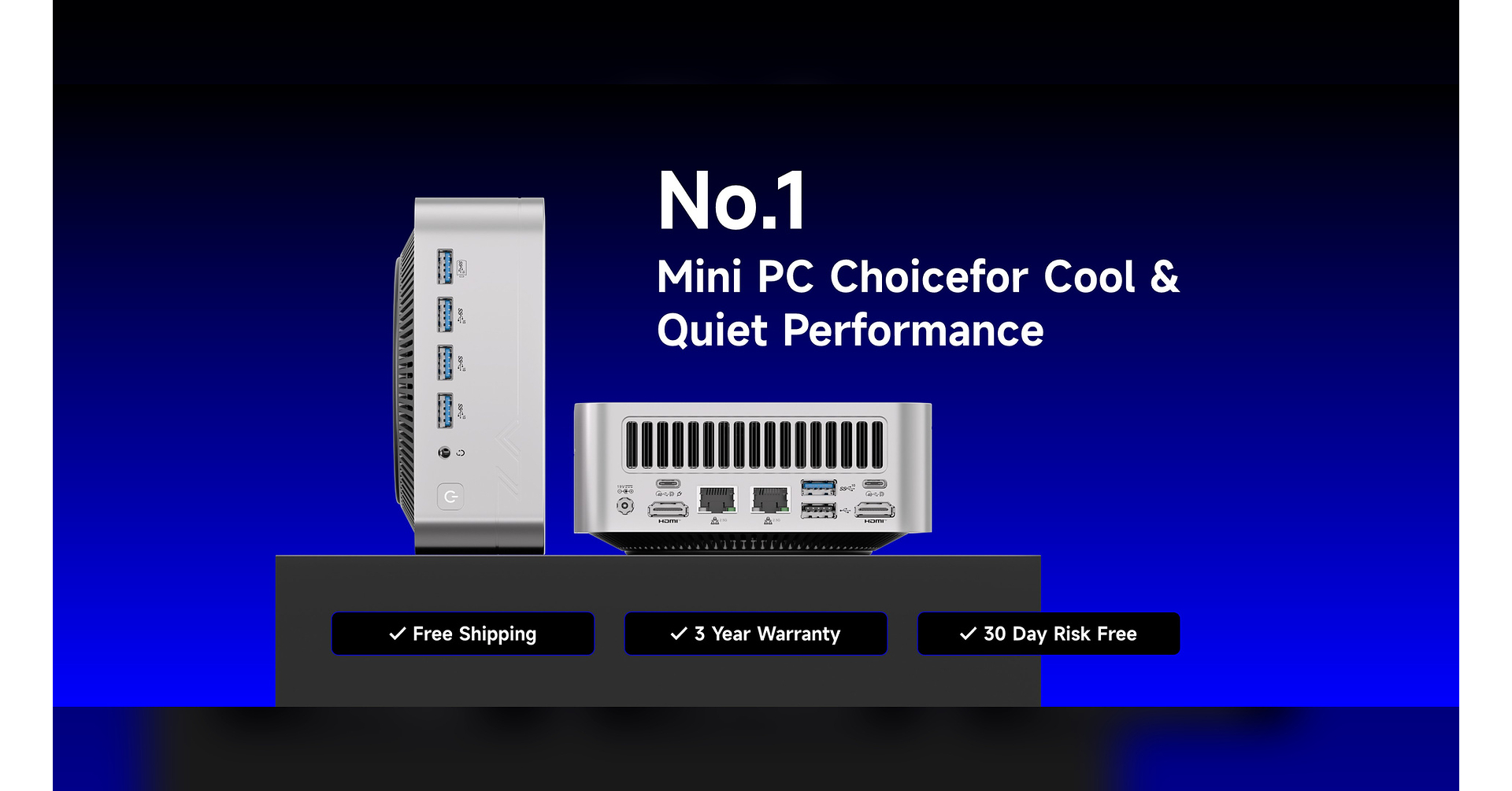
VZMORE, marque allemande de mini-PC, fera ses débuts publics à l’IFA 2026 avec 4 modèles (AX9 Max, iX9 Max, iX9 Ultra, AX9 Ultra) axés sur productivité, création de contenu, IA locale et jeux. Le fleuron AMD AX9 Max embarque un Ryzen AI 9 HX 470 avec NPU jusqu’à 55 TOPS, tandis que l’AX9 Ultra vise des charges IA/graphique plus élevées avec jusqu’à 120 W via la techno V-Boost Max™. Sa solution thermique V-Cooling™ revendique +40% de surface de dissipation et +50% de transfert thermique vs double caloduc, avec des nuisances sonores annoncées jusqu’à 38 dB en charge, lancement mondial prévu mi-octobre 2026.
Analysis
This is more a validation event for the AI-PC/mini-desktop category than a material revenue catalyst for either silicon vendor. For AMD, the important mechanism is not unit volume from one boutique brand, but evidence that its integrated GPU/NPU stack can anchor premium systems where sustained thermals are the real bottleneck; that supports mix and ASP discipline in a segment where buyers pay for quiet performance. Intel’s presence is not a clean negative either: if its newest mobile silicon is competitive in a thermally constrained chassis, that helps defend the narrative that Intel can still participate in premium compact PCs rather than cede the category outright.
The second-order winner may be the broader component ecosystem—vapor chambers, fan assemblies, chassis design, and channel OEMs—because thermal management is increasingly a differentiator in compact form factors. The market should be careful not to extrapolate this into a large TAM expansion: mini-PC adoption is still niche, and without disclosed pricing the launch could just be a high-spec halo product with limited volume. Over the next 1-3 months, the key catalyst is independent review quality and MSRP; if benchmarks show sustained clocks and low acoustics at attractive pricing, the signal strengthens, but if the product lands expensive or throttles under load, the story reverts to marketing.
Contrarian take: consensus may over-focus on the headline silicon names and miss that the real thesis is form-factor share shift away from larger desktops and entry workstations. If that shift persists into 6-18 months, AMD likely benefits more than Intel because compact systems reward integrated graphics and efficient AI acceleration, while Intel’s edge depends on proving performance without power-burn. The thesis is falsified if launch reviews show thermal throttling or if pricing forces these systems above mainstream SFF desktops, which would cap volume and make the whole category mostly promotional.
AllMind Terminal
AI-powered research, real-time alerts, and portfolio analytics for institutional investors.
Request TrialMarket Sentiment
Overall Sentiment
mildly positive
Sentiment Score
0.12
Ticker Sentiment
Key Decisions for Investors
- No immediate trade on the press release alone; treat this as a watch item until October launch pricing and third-party reviews confirm real demand and sustained-performance claims.
- If channel checks validate competitive MSRP, favor a small relative long AMD / short INTC pair over 1-3 months; AMD has more leverage to premium AI-PC mix, while Intel’s mention here is largely defensive.
- Use AMD pullbacks to add only if AI-PC sell-through data stays constructive; target the next catalyst as launch reviews, with invalidation on evidence of throttling or weak buyer uptake.
- Monitor SOXX and SFXL-style small-form-factor/mini-PC adjacencies for spillover, but do not assume meaningful revenue impact until there is evidence of order book depth beyond a single launch event.
More News
- The AI race may be decided by financing—not just better chips
- New data shows Starbucks turnaround is working, but Chipotle takeover report slams shares
- Nasdaq 100: Tech Stocks Find Buyers as Dow Holds Firm Premarket
- Trump presents national medal to Microsoft CEO after suspending its H-1B visas and alleging ‘foreign indentured servants’ replaced domestic workers
- TSMC taps GlobalFoundries to bolster US silicon interposer production in $2B deal
- Nvidia found $1B under the couch to help secure American scientific computing dominance