
Analog Devices Shows Why AI Is Not the Only Story Driving Chip Demand
Source: marketbeat.com
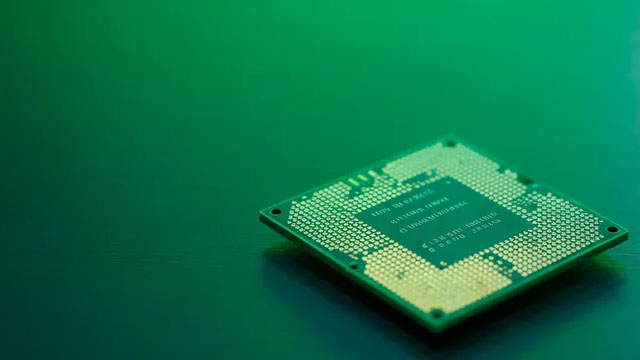
The article highlights continued AI-led growth prospects into 2026, with NVIDIA and other chipmakers positioned at the center of expanding compute demand. Billions of dollars are being invested in data-center infrastructure as industries build AI capacity, benefiting companies exposed to the hardware and infrastructure buildout.
Analysis
The investable question is no longer whether AI infrastructure spending grows, but whether incremental spending continues to translate into accelerating NVIDIA revenue and sustained gross-margin premiums. NVDA is increasingly exposed to deployment timing, power availability, networking bottlenecks, and customer concentration; a delay in data-center energization can defer GPU revenue even when headline capex budgets remain intact. Over the next 1-3 months, hyperscaler capex guidance and lead-time commentary from power, cooling, and networking vendors matter more than broad AI enthusiasm.
The second-order opportunity is in the physical constraints around compute: electrical equipment, liquid cooling, power generation, and high-speed networking can retain pricing power if GPU supply normalizes faster than data-center capacity. Conversely, a broad AI basket is vulnerable if customers shift toward lower-cost inference hardware, internally designed ASICs, or more efficient model architectures, which would pressure NVIDIA's unit growth and valuation multiple before reported revenue deteriorates. The contrarian view is that consensus may be underestimating the risk of a capex digestion phase: AI spending can remain structurally attractive while quarterly orders become volatile as large customers pause between cluster deployments.
A durable bullish NVDA thesis requires evidence that demand is broadening beyond a small group of cloud buyers and that networking attach rates and system-level revenue offset any GPU pricing normalization. Falsification signals include a material reduction in aggregate hyperscaler capex plans, rising reported inventory at AI-server OEMs, weaker data-center revenue guidance, or commentary that power constraints are pushing deployments out by more than one quarter.
AllMind Terminal
AI-powered research, real-time alerts, and portfolio analytics for institutional investors.
Request TrialMarket Sentiment
Overall Sentiment
mildly positive
Sentiment Score
0.35
Ticker Sentiment
Key Decisions for Investors
- Do not add directional NVDA exposure solely on this signal; treat upcoming hyperscaler earnings and NVDA guidance as the required confirmation point. Upgrade only if aggregate cloud capex guidance rises and management commentary indicates deployments are being energized rather than merely ordered.
- For existing NVDA longs, consider a 1-3 month hedge through a defined-risk put spread around the next earnings event; the key risk is multiple compression from any evidence of capex digestion rather than a collapse in long-term AI demand.
- Build a watchlist for AI infrastructure bottleneck beneficiaries—Vertiv (VRT), Eaton (ETN), Arista Networks (ANET), and power-generation exposure through GE Vernova (GEV)—but require backlog, margin, and lead-time confirmation before entry. These names offer a potentially cleaner 6-18 month exposure if compute demand shifts from chip scarcity to power and networking scarcity.
- Monitor a relative-value pair: long diversified AI infrastructure suppliers / short a broad semiconductor beta proxy such as SOXX only after NVDA reports stable demand but slower accelerator pricing or margins. The thesis is that value migrates downstream as GPU supply improves; exit if NVIDIA guidance reaccelerates materially or infrastructure backlog conversion weakens.
More News
- AI funding fears rattle Wall Street. Here's how we're adjusting our portfolio
- Will AI expose the rickety infrastructure of the internet?
- 3 AI Stocks That Can Beat the Nasdaq Composite in 2027
- Block’s new voice model sounds eerily human
- Make or Break for VRT on Oct. 28: Proving the ‘AI Factory' Thesis Amid a Brutal Valuation Reset.
- Jensen Huang Says AI Demand Is "Off the Charts." The Money to Pay for It Isn't
From AllMind Research
- Anthropic IPO Preview: Valuation, Timing, and What to Watch
- Shein After the IPO: Venue, Valuation, and What Must Be Proved
- What AI Research Tools Should a Small Hedge Fund Buy First?
- Bitcoin's 52% Crash Proves It's a Tech Stock: Here's What That Means for Portfolio Construction
- What Is an AI Investment Research Platform?