
Pimax stellt das Crystal Pro mit nativem Foveated Streaming vor, bei dem das native Bild der GPU drahtlos an das Headset übertragen wird
Source: PR Newswire
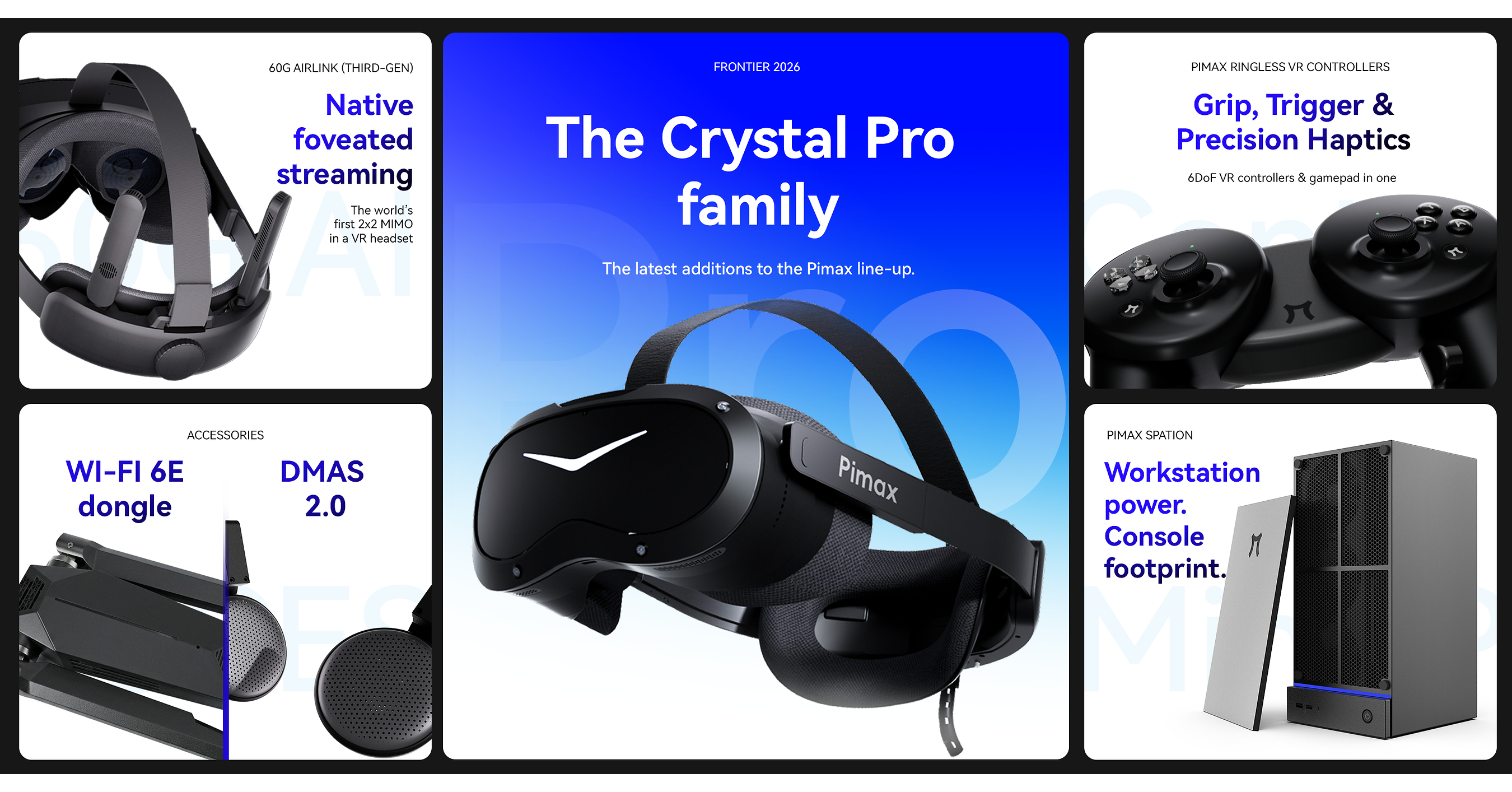
Pimax unveiled the Crystal Pro wireless PC-VR headset, priced at $1,399 or $1,899 bundled with its 60-GHz AirLink kit; the kit alone costs $599. Pimax says eye-tracked native foveated streaming uses a 2x2-MIMO connection for up to 6 Gbit/s throughput and less than 2 ms additional latency. The company also introduced ringless controllers and the Spation mini-PC, with pricing and delivery timing for both still unannounced; customers can reserve the headset for $1.
Analysis
Investment view — weak, long-dated read-through; no launch-driven trade. The commercial question is not whether the wireless link works in a controlled demo, but whether buyers will pay for it and tolerate an additional adapter and external power. A successful product could modestly expand premium PC-VR demand and pressure incumbents such as Meta, Valve and HTC to improve wireless performance; it is not yet evidence of a category-wide upgrade cycle. The claimed latency and image-quality benefits remain company claims until independently tested across real rooms, play sessions and supported PC configurations.
The hardware spillover is mixed: Spation includes an AMD CPU but offers either an AMD or NVIDIA GPU configuration. That creates potential component demand for both suppliers, not a clean share-transfer signal. Pimax’s reservation option is not a reliable proxy for paid orders, shipment volume or component purchases, so any near-term revenue effect for AMD or NVIDIA is likely unproven and too small to underwrite a trade.
Catalysts and risks: Over the next 1–3 months, watch for delivery dates, paid conversion, independent wireless/latency tests, and reviews identifying connection dropouts or setup friction. Over 6–18 months, repeatable adoption could support premium PC-VR demand; failure to deliver reliable 60-GHz performance or sustained consumer interest would leave this as a niche feature. The external battery and room-dependent wireless experience are plausible adoption constraints. The thesis improves only with credible shipment evidence and follow-on demand; it weakens if launch timing slips or reviews contradict the performance claims.
AllMind Terminal
AI-powered research, real-time alerts, and portfolio analytics for institutional investors.
Request TrialMarket Sentiment
Overall Sentiment
mildly positive
Sentiment Score
0.30
Ticker Sentiment
Key Decisions for Investors
- No immediate AMD or NVIDIA position: the product’s GPU options are split between the two suppliers, and there is no evidence yet of meaningful unit volume or incremental chip orders.
- Set an alert for confirmed shipment timing, paid preorder conversion, and third-party tests of wireless reliability, latency and usable range; treat the $1 reservation as weak demand evidence.
- Reassess only if Pimax reports material shipments or AMD/NVIDIA commentary identifies PC-VR demand as a measurable driver. Falsifiers include repeated launch delays, poor real-world connectivity reviews, or no evidence of customer conversion.
More News
- What Marvell's rosy long-term guidance means for our AI chip stocks
- Meta Muse gives AMD a boost as AI momentum shifts to personal agents
- DeepSeek considers doubling latest funding round to up to $15 billion, sources say
- SpaceX seeks $40 billion to buy Nvidia chips, FT reports
- Mistral unveils new AI model it says rivals best open systems from China
- Marvell Lifts Its Sales Outlook on Strong AI Demand. The Stock Is Surging