
AIPOCH Launches Open-Science, Making Research Easier to Follow, Learn From, and Share with .science Packages
Source: PR Newswire
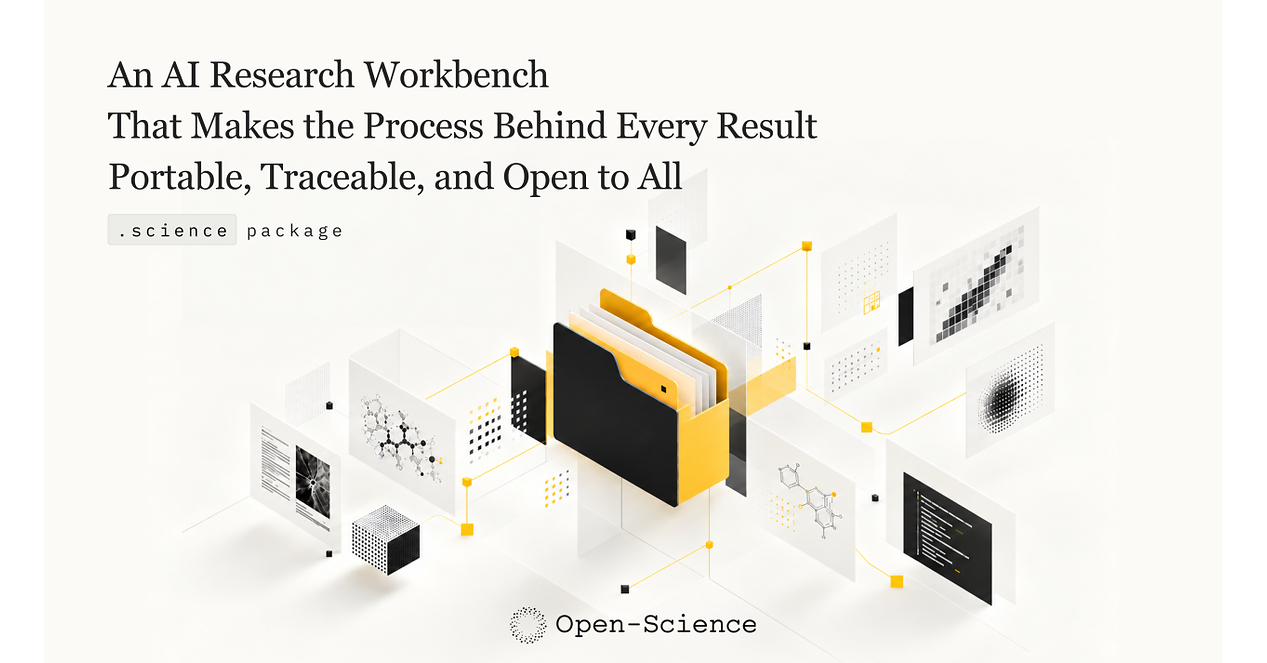
AIPOCH announced the public release of Open-Science, an open-source AI research workbench available under the Apache License 2.0. It includes 23 built-in Skills, a marketplace with 525 Skills and 10 Specialists, 36 research connectors, and support for four agent frameworks. The product is designed to make AI-assisted research workflows and artifacts portable and inspectable; the release announcement provides no commercial or financial performance figures.
Analysis
Investment read-through: This is an open-source product launch, not evidence of commercial adoption or institutional validation. The 76-affiliation author list should not be treated as 76 customer commitments. With no supplied public-company identity or financial metrics, there is no direct earnings signal to price.
Competitive dynamics: If .science packages gain real use, portable research context could weaken retention based on proprietary project histories and make it easier for labs to switch models or tools. That pressures closed, workflow-specific research software more than general model providers. Conversely, model-agnostic workflows may increase usage across providers, but local-first storage and configurable infrastructure could limit cloud capture. RO-Crate compatibility also cuts both ways: it helps exchange, but makes the portability layer harder to monopolize. Open-source skills and packages are easy to copy; curation, reliability, security, and support—not headline marketplace counts—would determine durable value.
Timing and contrarian view: Near term, expect little fundamental impact; the launch announcement and capability counts are not usage data. Over 1–3 months, watch repository activity, repeat contributors, working integrations, and evidence of lab pilots. Over 6–18 months, adoption could pressure paid seats in research workflow tools or support demand for compute and models, but only if reproducibility works across dependencies and external data. The consensus-like “research operating system” framing may overstate the moat: portable artifacts can reduce switching costs for users while increasing competition among vendors. Thesis weakens if activity is mostly promotional, packages fail to reproduce results, or no credible institutional deployments emerge.
AllMind Terminal
AI-powered research, real-time alerts, and portfolio analytics for institutional investors.
Request TrialMarket Sentiment
Overall Sentiment
mildly positive
Sentiment Score
0.25
Key Decisions for Investors
- No standalone trade on this release: there is no supplied listed-company exposure, adoption evidence, or monetization data. Avoid treating institutional affiliations or marketplace totals as revenue proxies.
- Set a 1–3 month diligence alert for GitHub usage and contribution trends, package import/export reliability, third-party integrations, and verifiable research-group pilots; reassess only on sustained use, not downloads or launch-day attention.
- Watch research-software vendors with workflow-based seat revenue as a conditional relative-underperformance risk if labs demonstrate repeat use of portable packages and model switching. Do not initiate a short until deployment and substitution evidence is visible.
- Track whether local execution and model choice shift workload away from hosted platforms or instead expand paid inference and compute demand; this determines whether the larger second-order effect is SaaS seat compression or infrastructure consumption.
More News
- Anthropic's third-quarter revenue is said to hit $16.8 billion ahead of IPO
- Why is Samsung Electronics stock plunging today?
- SK Hynix plunges 8% amid Asia tech rout as Fed rate hike fears, AI funding worries mount
- Elon Musk says Trump is 'ultimately' responsible for any curbs on Ukraine's Starshield systems
- SK Hynix seeks U.S. chip equipment exports to China tied to new factory
- Dell stock plunges 11%, leading data center sell-off on concerns about 'enterprise AI timing'