
Sikh Advocacy Group Petition UN General Assembly to Recognize Punjab as Occupied Territory and Affirm Sovereign Right to Self-Determination
Source: PR Newswire
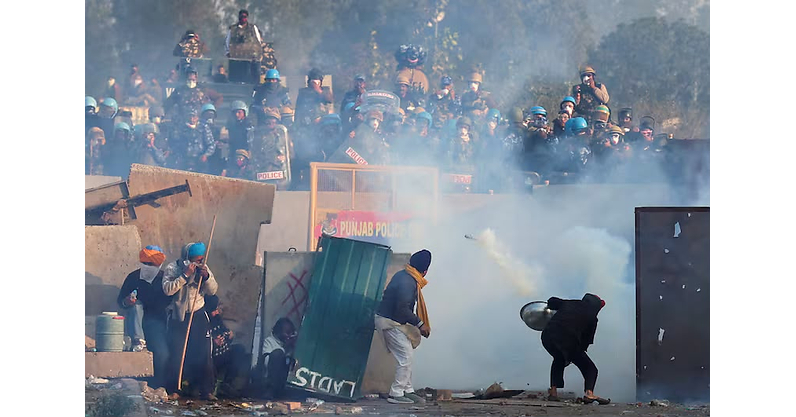
Sikhs for Justice submitted a legal memorandum to the UN General Assembly seeking recognition of Punjab as territory occupied by India and backing for Sikh self-determination through the Khalistan Referendum. The advocacy group alleges genocide, economic repression, transnational operations and historical state violence, citing more than 9,000 narcotics-related deaths, over 18,000 agrarian suicides and more than 100,000 alleged extrajudicial killings between 1988 and 1995. The claims are allegations from an advocacy organization and are unlikely to have material near-term market implications without an official UN or government response.
Analysis
This is not presently an investable India-risk catalyst: a civil-society UN submission has no direct enforcement mechanism, and the most likely near-term outcome is diplomatic signaling rather than sanctions, trade restrictions, or a change in New Delhi’s control of security policy. INDA, EPI, and the INR should therefore be insensitive absent corroboration from a major government, a formal UN process, or evidence that bilateral security cooperation with the US, Canada, or UK is impaired. The market-relevant transmission channel is reputational and diplomatic, not Punjab-specific economic disruption.
The non-obvious risk is a renewed transnational-repression controversy rather than a separatism event itself. If allied intelligence findings prompt targeted visa restrictions, law-enforcement actions, or parliamentary inquiries, the immediate pressure would fall on India’s governance premium and foreign-capital narrative; that could widen the valuation discount of broad India ETFs versus EM peers over 1-3 months, while USD/INR hedging demand rises. Over 6-18 months, only a sustained deterioration in Western security ties or localized unrest affecting Punjab’s agricultural/logistics corridors would become material to earnings or national growth. The contrarian view is that geopolitical headlines may create a tactical INDA discount that domestic flows absorb quickly, since India’s index earnings drivers remain concentrated in financials, IT services, and consumption rather than Punjab-exposed assets.
AllMind Terminal
AI-powered research, real-time alerts, and portfolio analytics for institutional investors.
Request TrialMarket Sentiment
Overall Sentiment
moderately negative
Sentiment Score
-0.45
Key Decisions for Investors
- No directional position on this release; treat it as a monitoring item rather than a standalone geopolitical trade. Require an official response or policy action from the US, Canada, UK, or UN before assigning an India risk premium.
- Set a 1-3 month alert for INDA underperforming EEM by more than 5 percentage points alongside USD/INR breaking meaningfully above its prior 3-month range; that combination would indicate capital-flow stress rather than headline noise and could justify a tactical long USD/INR hedge or INDA/EEM relative-value short.
- If a credible allied-government finding produces sanctions, visa measures, or restrictions on security cooperation, consider a 1-3 month pair trade: short INDA or EPI versus long EEM. The thesis is multiple compression from governance-risk repricing, not an immediate downgrade to India aggregate earnings.
- Avoid shorting Punjab-adjacent agriculture or logistics proxies without evidence of operational disruption. Falsification of any bearish India thesis would be stable INR, continued foreign inflows, and no formal diplomatic escalation within 30-60 days.
More News
- Wall Street’s Nasdaq hits all-time high as AI frenzy gathers pace
- Oil falls on increased Gulf supply and hopes for US-Iran talks
- Dollar holds near 2-month high as markets weigh rate hikes, Iran diplomacy
- Asia stocks ride tech wave higher, oil stays subdued
- South Korean solar stocks jump as curbs on Chinese sector expected to remain in place
- ‘I have a big decision to make’: Trump had a ‘good meeting’ with Iranian officials warning he may ‘annihilate the Islamic Republic’
From AllMind Research
- Anthropic IPO Preview: Valuation, Timing, and What to Watch
- Shein After the IPO: Venue, Valuation, and What Must Be Proved
- What AI Research Tools Should a Small Hedge Fund Buy First?
- Weekly Update: Live Event Center, In-App Documents, and Faster Transcripts
- How to Automate Equity Research Workflows: A Control-First Guide