
Trustero Extends its AI-Powered GRC Platform to Third-Party Risk Management
Source: PR Newswire
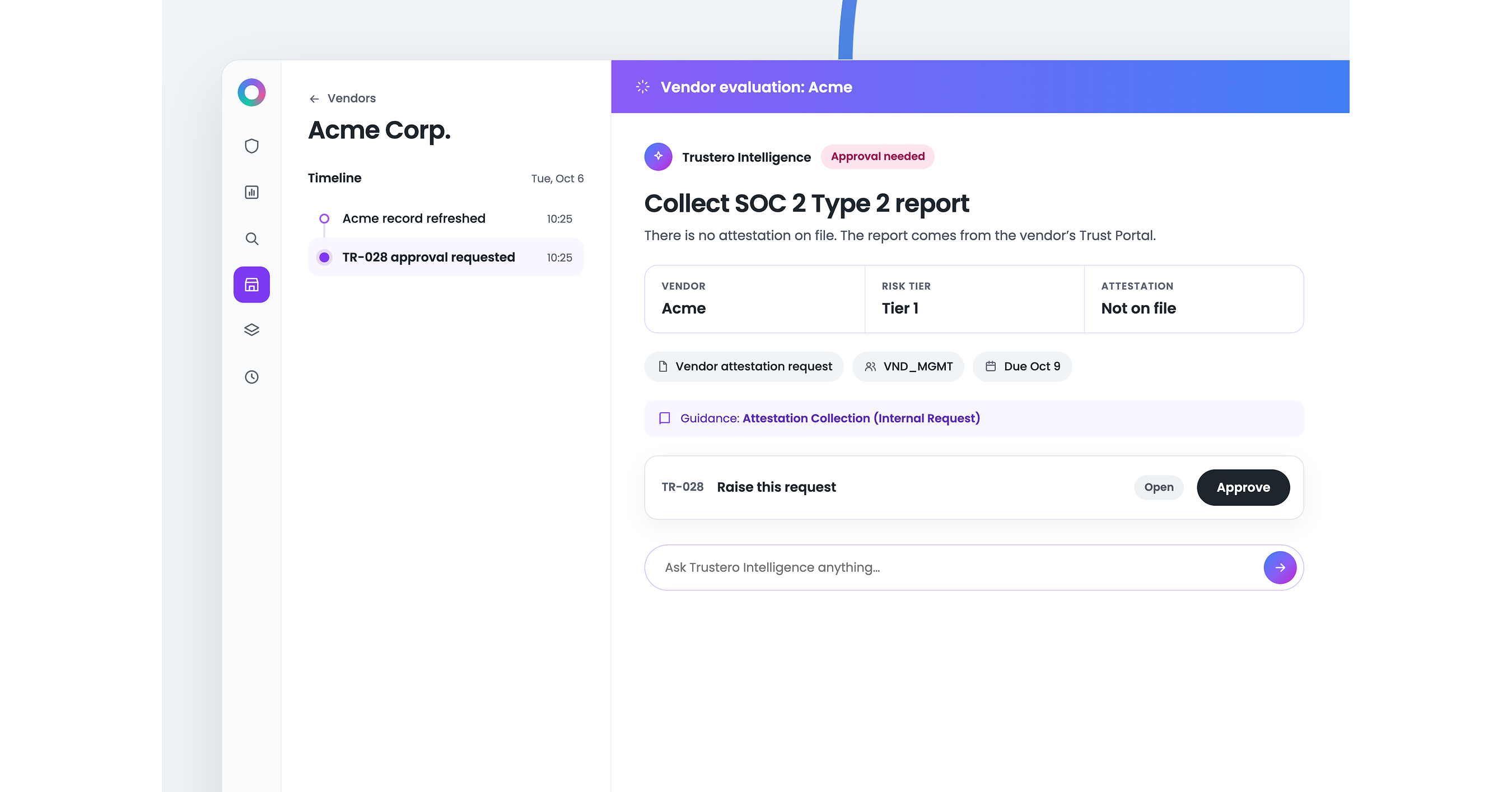
Trustero launched its AI-powered Third-Party Risk Management product, which evaluates vendor attestations and questionnaires against customer-defined policies, assigns risk determinations for human review, and tracks assessment requests. The company says the workflow can turn weeks of due diligence into a review-and-approve process; no pricing, customer adoption, or financial impact was disclosed.
Analysis
This is a product-level signal, not evidence of material revenue or displacement: the release provides no customer adoption, pricing, accuracy, or time-saved data. The commercial test is whether Trustero can embed in existing approval workflows and prove lower assessment effort without increasing the cost of errors. AI can move the bottleneck from document review to stale or incomplete vendor evidence, exception handling, and accountable sign-off; human review limits adoption risk but also caps labor savings if flagged cases are frequent.
The likely competitive pressure is on standalone questionnaire and assessment tools, while platforms that connect vendor risk to broader GRC workflows may gain a bundling advantage. That is a category hypothesis, not evidence that Trustero is taking share from OneTrust, Vanta, Drata, or ServiceNow. Over 1–3 months, look for customer references and measurable deployment outcomes; over 6–18 months, watch whether buyers consolidate point tools or retain them alongside their core GRC platform. The contrarian risk is that polished AI triage looks compelling in demos but procurement, integrations, and liability concerns slow production adoption. No mapped public ticker or independently verified financial impact supports a directional equity trade.
AllMind Terminal
AI-powered research, real-time alerts, and portfolio analytics for institutional investors.
Request TrialMarket Sentiment
Overall Sentiment
mildly positive
Sentiment Score
0.20
Key Decisions for Investors
- No trade on the announcement alone. Treat Trustero’s launch as a competitive watch item, not a confirmed demand or share-loss signal for GRC and cybersecurity vendors.
- Over the next 1–3 months, seek evidence of paid deployments, renewal or expansion, integrations into customer approval workflows, and measured reductions in assessment time; distinguish customer results from company marketing claims.
- For 6–18 months, monitor whether risk teams consolidate questionnaire-focused tools into broader GRC platforms. A credible shift would support platform bundling economics; persistent use of separate tools would weaken that thesis.
- Falsify the automation thesis if customer evidence shows frequent human overrides, poor handling of missing or outdated attestations, or no measurable workflow-time reduction. These would indicate the product relocates work rather than removing it.
More News
- Asia shares subdued, bonds swamped by AI debt wave
- Elon Musk blames Indian 'oligarchs' for stalling Starlink launch
- Anthropic will be 'most ridiculous IPO' of year, analyst says
- Megacaps Are Back Driving the US Stock Rally in Hot-Running Economy
- Samsung Q3 profit surges to record high, but misses lofty expectations
- Stock Rally Fades on Higher Oil Prices; SpaceX in Talks to Buy Nvidia Chips
From AllMind Research
- Anthropic IPO Preview: Valuation, Timing, and What to Watch
- Shein After the IPO: Venue, Valuation, and What Must Be Proved
- What AI Research Tools Should a Small Hedge Fund Buy First?
- Selecting an AI Research Platform for Institutional Investors
- Weekly Update: New Reporting Features and More Sources for Document Search