
Europas Verordnung zu wiederverwendbaren Verpackungen aus dem Jahr 2028 löst eine neue Krise aus: Wer spült die Tassen?
Source: PR Newswire
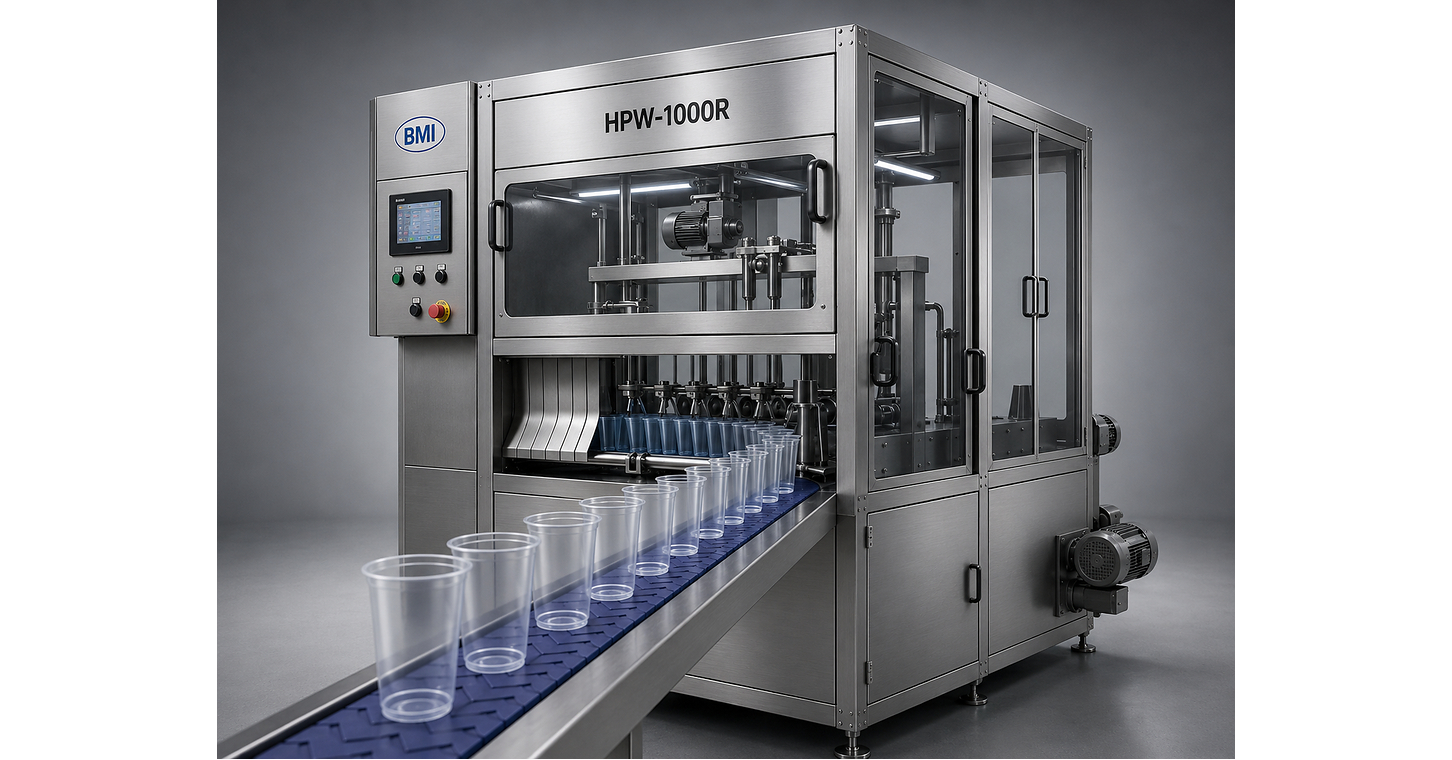
EU food-to-go operators will be required to offer reusable packaging under a formal reuse system from February 2028, creating demand for high-throughput washing infrastructure. BMI Korea says its HPW-5000 can clean 5,000 reusable cups per hour at 50 bar—five times manual washing speed—and replace 4-5 workers per production line. The company cites reusable cups' potential to reduce emissions by up to 69%, while positioning its installed-base technology as a solution to Europe’s limited washing capacity.
Analysis
The investable exposure is not the Korean equipment vendor but the European commercial-warewashing and collection stack. Electrolux Professional (ELUXB.ST) is the clearest listed appliance proxy; Ecolab (ECL) has a higher-quality recurring-revenue angle through detergents, water-treatment chemistry and service contracts. TOMRA (TOM.OL) could benefit only if reuse schemes adopt automated return/deposit infrastructure; collection economics are distinct from washing economics, so it should not be treated as a direct beneficiary without operator contract evidence.
The constraint is likely network utilization rather than machine throughput. Centralized washing earns acceptable returns only when cup recovery rates, contamination rates and average reuse cycles are high enough to absorb reverse-logistics, energy and labor costs; fragmented café networks can instead favor on-site commercial dishwashing. This creates a 12-24 month procurement window for equipment suppliers, but a longer and less certain earnings conversion cycle because operators will delay capex until national implementation guidance, hygiene standards and deposit-system interoperability are settled.
Huhtamaki (HUH1V.HE) has a plausible downside exposure in foodservice disposables, but the effect should be modest initially: substitution can migrate toward recyclable fiber products, and foodservice packaging is diversified across geographies and end markets. The contrarian view is that compliance costs may make reusable systems economically unattractive for low-frequency takeaway users, leading to exemptions, delayed enforcement, or a shift toward recyclable single-use formats rather than a wholesale volume collapse. The press-release claims on labor replacement and throughput are not independently sufficient to underwrite any supplier revenue forecast.
AllMind Terminal
AI-powered research, real-time alerts, and portfolio analytics for institutional investors.
Request TrialMarket Sentiment
Overall Sentiment
mildly positive
Sentiment Score
0.28
Key Decisions for Investors
- Add ELUXB.ST to a regulatory-capex watchlist; initiate only after management identifies European warewashing order growth or 2027 backlog attributable to reuse systems. A 6-18 month long is more defensible than a near-term trade; invalidate if commercial-foodservice orders remain flat through the first half of 2027.
- Maintain a modest 12-18 month long bias in ECL versus a short basket of cyclical foodservice-disposable exposure led by HUH1V.HE, but only after confirming ECL's institutional segment can pass through chemical and service costs. The pair isolates recurring wash-cycle economics from packaging-volume risk; exit if implementation guidance materially broadens single-use exemptions.
- Do not establish a standalone TOM.OL position on this theme. Set an alert for announced European cup-return contracts, deposit-system mandates, or reuse-operator partnerships; absent these, its reverse-vending multiple already reflects circular-economy optionality without a verified revenue bridge.
- For HUH1V.HE, treat 2028 as a medium-term margin-risk monitor rather than an immediate short. Escalate only if management cites European foodservice volume declines, increased customer conversion to reusable formats, or unfavorable mix pressure exceeding its ability to reprice fiber-based alternatives.
More News
- Here’s the ‘core economic flaw’ in the AI bull case as stock and bond trades unravel, according to a top economist
- Biotech stocks are surging. How investors can play the new drug innovation boom
- Braskem creditors, shareholders near deal on $11bn debt restructuring
- Instacart reportedly discussed selling itself with DoorDash and Uber
- Nvidia's role as AI financier faces first big test as neoclouds take market hit
- Trump set to announce plan by Audi to build a U.S. factory in Georgia, source says