
Midterms 2026 What to Watch: Voter Turnout, Trump Inflation Record
Source: Bloomberg
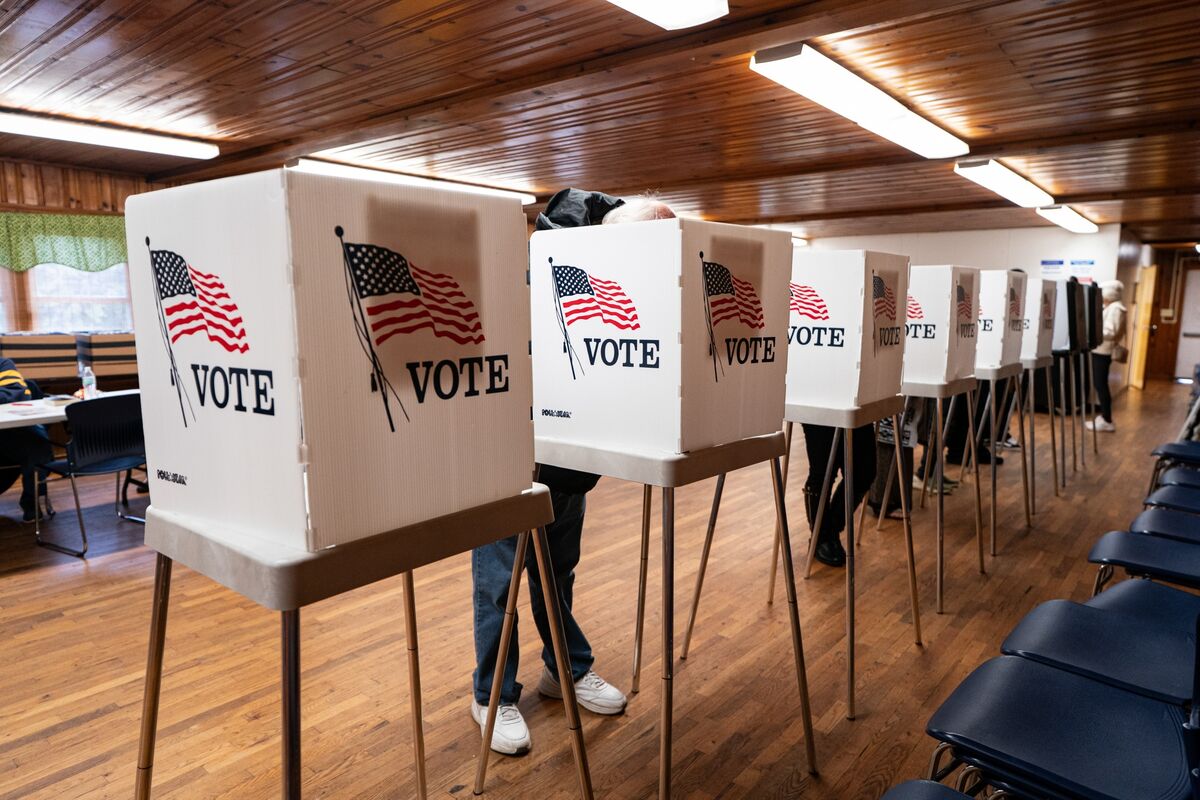
All 435 House seats and roughly one-third of Senate seats are contested in Tuesday’s US midterm elections, with early voting turnout ahead of the same point in 2022. Polls show voters focused on affordability; losses by Republicans in either chamber could increase oversight of President Trump’s administration and enable congressional investigations.
Analysis
The election is more useful as a volatility and policy-visibility event than as a clean earnings signal. A change in congressional control could increase oversight and slow new legislation; absent specific policy proposals or vote-count detail, do not price a large sectoral earnings shift from the result alone. The nearer-term channel is risk appetite: investigations and legislative uncertainty can widen the uncertainty premium, while the Iran conflict remains a more direct source of energy and geopolitical risk.
Affordability pressure is the more durable read-through. If subsequent company commentary confirms consumers trading down, value-oriented retailers and staples may prove more resilient than discretionary categories; that is a conditional demand thesis, not something established by election turnout. Watch earnings calls and comparable-sales, traffic, and unit-volume trends rather than treating turnout or polling as a consumer-spending proxy.
Timing: election-night moves may be noisy and reverse quickly. Over 1–3 months, congressional control and oversight could affect policy expectations and headline volatility. Over 6–18 months, consumer mix and the trajectory of the Iran conflict are more consequential to earnings and inflation than the election itself. The contrarian point: the political result may attract more market attention than its near-term cash-flow impact warrants; do not confuse a volatility catalyst with a fundamental catalyst.
AllMind Terminal
AI-powered research, real-time alerts, and portfolio analytics for institutional investors.
Request TrialMarket Sentiment
Overall Sentiment
neutral
Sentiment Score
0.00
Key Decisions for Investors
- Avoid a directional election trade ahead of the result; the article provides no outcome probabilities or policy specifics that support a differentiated sector call.
- Use a conditional relative-value watch: consider long XLP versus XLY only if upcoming company reports corroborate persistent downtrading and weaker discretionary volumes. Falsify the thesis if discretionary traffic and unit volumes stabilize without discounting or mix deterioration.
- Keep Iran-related energy exposure distinct from the election thesis. Reassess crude and inflation hedges on developments in the conflict and oil prices; congressional control alone is not evidence of a change in supply risk.
- Monitor post-election legislative priorities, oversight actions, and consumer-company guidance over the next 1–3 months. If the result produces no material policy shift and earnings commentary remains stable, treat election-driven volatility as noise rather than a reason to change core exposure.
More News
- Explosions hit Iran’s Qeshm Island as US media report US strikes in Hormuz
- Oil price falls amid hope of a breakthrough to end Iran war
- Statement by the Monetary Policy Board: Monetary Policy Decision
- U.S. reportedly strikes Iran's Qeshm Island as Vance hopes for ‘negotiated settlement’ with Tehran
- New Apple CEO John Ternus chalks up some early wins, but the honeymoon is over
- Reliance’s Record $19 Billion Surge Lifts Nifty, Keeps India Bulls in the Game