
Apple iPhone Duo’s Cracked Screen Takes Some Excitement Away From Launch
Source: Bloomberg
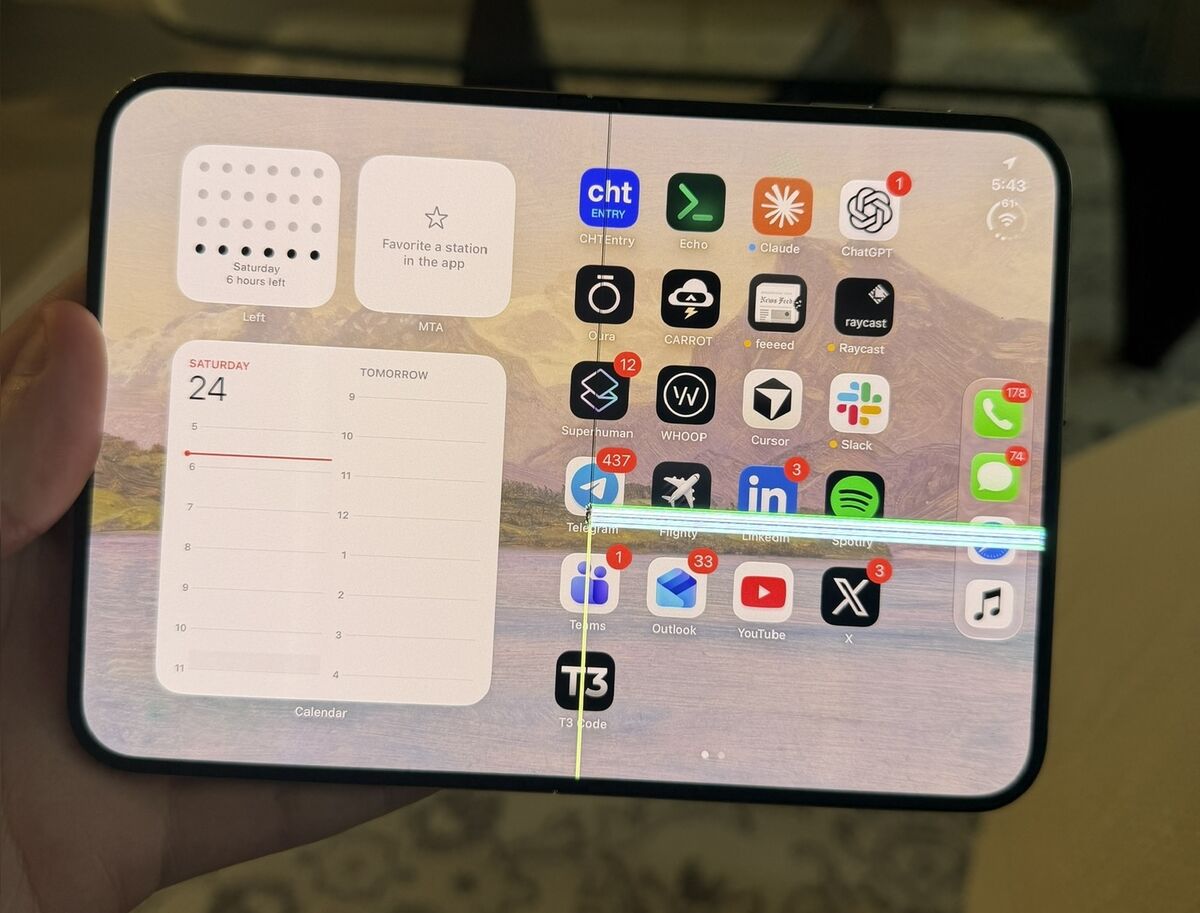
Some of Apple’s new iPhone Duo foldable phones have developed cracked screens, a first-generation defect. The article frames the issue as a setback but not a terminal threat to Apple’s foldable-phone effort; it gives no count of affected devices or financial impact.
Analysis
The foldable issue matters less as a single launch blemish than as a test of Apple’s quality-control promise in a category where visible failures can suppress adoption disproportionately: buyers may defer purchase even if actual failure incidence is low. Near term, watch for evidence of returns, replacement costs, shipment delays, or a rollout change; without it, treating this as a broad AAPL earnings reset looks premature. Over 1–3 months, credible evidence of a contained defect could instead reinforce Apple’s ability to iterate and sustain premium pricing. A widening repair/return pattern or delayed next-generation plans would raise the risk of lost upgrade demand and hand credibility to established foldable competitors such as Samsung.
SK hynix’s memory outlook supports pricing power for now, but a management forecast extending to 2030 is not proof that tightness lasts that long. The second-order risk is that elevated prices and shareholder returns strengthen near-term equity sentiment while encouraging capacity additions across the supply chain; later supply normalization could hit memory pricing before AI infrastructure demand visibly rolls over. Over 6–18 months, monitor realized memory prices, customer inventory, capex, and supply additions—not just AI demand narratives. No valuation or incident-rate data are provided, so neither a precise AAPL event discount nor the durability of SK hynix’s earnings uplift can be established.
AllMind Terminal
AI-powered research, real-time alerts, and portfolio analytics for institutional investors.
Request TrialMarket Sentiment
Overall Sentiment
mildly negative
Sentiment Score
-0.10
Ticker Sentiment
Key Decisions for Investors
- AAPL: Do not short solely on the reported defect. Consider adding on event-driven weakness only if independent reporting and company updates indicate the issue is contained, with no material return spike, shipment disruption, or product-plan change. Thesis is falsified by broadening failures or a launch delay.
- SKHY: Avoid chasing the immediate earnings-led rally. Add on a pullback only if subsequent pricing and customer-inventory data confirm tightness; reduce exposure if memory prices flatten, inventories rise, or industry capacity plans accelerate.
- Set alerts for AAPL repair/return disclosures and foldable shipment guidance, and for SK hynix memory pricing, capex, and customer inventory. These are the missing checks needed to distinguish a localized quality issue and a durable supply squeeze from narrative-driven moves.
More News
- SK Hynix says the memory-chip shortage will last until 2030—and more than half its production is booked for the next two years
- Countdown to Fed, Tech Earnings
- Fed chairman talks tough on inflation — plus, what's behind Micron's big rally
- Investors Eye AI Payoff in Microsoft, Alphabet Earnings
- The 2,000-Nit OLED in Apple’s New MacBook Is a Big Deal
- Apple brings touch to the Mac, reversing years-old stance on touchscreen laptop