
Lytx Expands Dynamic Risk with Speed for Conditions, Helping Fleets Act on the Difference Between Legal Speed and Safe Speed
Source: PR Newswire
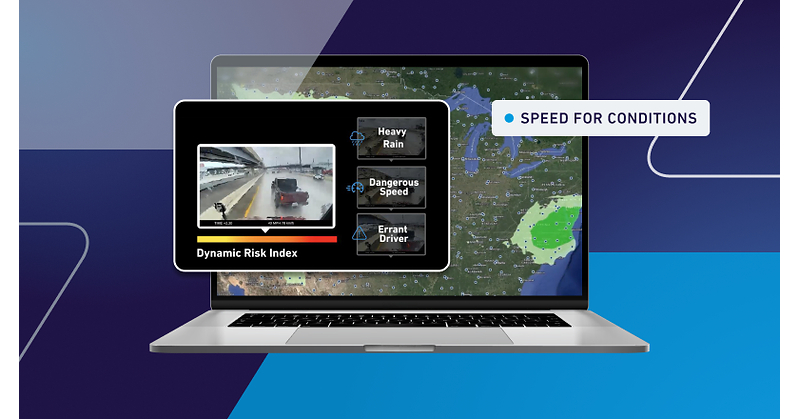
Lytx announced that its Speed for Conditions capability is available now, using machine vision and AI to detect adverse weather and alert drivers who exceed a fleet-configured adjusted speed threshold for a sustained 30 seconds. The feature is recorded separately from standard speeding and incorporated into Lytx's Dynamic Risk Index for coaching; the company says its system draws on more than 341 billion miles of driving data. This product update highlights a safety-focused expansion, but the article provides no adoption, revenue, or market-reaction figures.
Analysis
This is a product-feature signal, not yet an earnings signal: the release provides no pricing, attach-rate, customer-conversion, or independently measured collision/claims outcomes. The commercial test is whether condition-specific alerts increase fleet retention or support higher per-vehicle monetization—and whether fleets trust the detection enough to act on it. Until those measures emerge, treating this as a durable revenue or margin catalyst would be premature.
The second-order competitive risk is feature parity. Samsara, Motive, and Geotab could respond with comparable weather-context tools, limiting differentiation and shifting competition toward data quality, integrations, and measurable insurance or operating savings. Conversely, fleet buyers may prefer bundled platforms, raising switching costs if contextual alerts become part of coaching workflows. Better risk data could also help insurers refine fleet underwriting, but inaccurate or inconsistent alerts create liability and adoption risk; the 30-second sustained threshold may miss some fast-changing situations or frustrate drivers if policies are poorly calibrated.
Near term, there is no clear listed-company trade from the supplied identities: Lytx has no ticker mapping here, and the launch alone does not establish a material financial impact for competitors. Over 1–3 months, watch customer demonstrations, renewal/attach evidence, and competitor responses. Over 6–18 months, verified reductions in claims or insurance costs could support broader adoption; failure to show those outcomes would leave this as feature parity rather than a moat. Contrarian read: the safety narrative may overstate buyer willingness to pay—fleets may value validated loss reduction more than incremental alert sophistication.
AllMind Terminal
AI-powered research, real-time alerts, and portfolio analytics for institutional investors.
Request TrialMarket Sentiment
Overall Sentiment
mildly positive
Sentiment Score
0.25
Key Decisions for Investors
- No trade on the announcement alone. Do not infer revenue uplift or valuation impact without evidence on pricing, adoption, and retention.
- Watch Samsara, Motive, and Geotab for comparable launches and customer evidence; treat feature parity or bundling as a potential competitive headwind for Lytx rather than assuming first-mover advantage.
- Set an alert for verified fleet case studies or insurer data showing lower collision frequency, claims severity, or premiums. That would strengthen the 6–18 month adoption thesis; absent such evidence, keep the product-impact thesis neutral.
- Falsify the adoption thesis if fleets report poor alert accuracy, low driver compliance, or no measurable claims improvement; monitor customer renewals and attach rates where disclosed.
More News
- BlackRock, GIC among investors chasing Indian telecom major Jio's IPO as anchor bids top $26 billion
- Nscale, Anthropic Eye $45 Billion Cloud Deal as AI Trade Rebounds
- Asia stocks slump as AI jitters hammer Korean chipmakers ahead of tech earnings
- Elice shares plunge 28% on debut as investor doubts over AI trade deepen
- Gartner analyst behind tech rout: AI returns are not yet large enough to justify neocloud build-out
- Tech stocks had a nice oversold bounce on Monday. Earnings this week will determine if it's for real