
Lockheed Martin: Missile Demand Is Surging, But The Stock Still Prices In Some Execution Risk
Source: seekingalpha.com
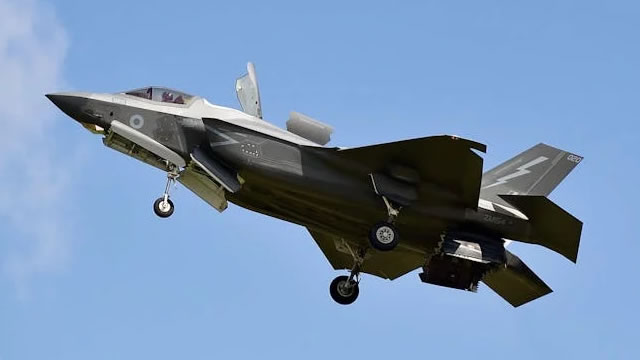
Lockheed Martin (LMT) was reiterated as a Buy, supported by a record $230B backlog and strong PAC-3/THAAD demand, alongside a moderate valuation versus peers. The investment case is tied to production execution risk—particularly for F-35 and missile defense—given rising fixed-price contract exposure. The normalized FCF yield is ~5.8% (2.6% dividend yield), with 2026 targets of $7.0–$7.2B FCF and EPS of $29.95–$30.65.
Analysis
The key issue is not the backlog headline; it is conversion quality. In defense, a larger book can be a negative if it is stuffed with fixed-price work that consumes working capital and exposes margin to learning-curve and supplier drift. That makes LMT more of a 12–18 month cash-flow execution story than a simple geopolitics beta trade, with the near-term stock response likely driven by confidence in production cadence rather than order volume alone.
Second-order winners are the missile-defense ecosystem and select specialty manufacturers that can scale components faster than the primes can integrate them. RTX is the obvious read-through beneficiary on interceptor demand, but the cleaner relative-value expression is against primes with more execution uncertainty on development-heavy or fixed-price programs. If cost inflation, labor constraints, or subcontractor bottlenecks persist, backlog can actually compress valuation multiples because investors will demand a larger risk discount for every dollar of future revenue.
The contrarian view is that the market may be overpaying for visibility: backlog only matters if it turns into margin-accretive deliveries on schedule. The main catalysts are 1–3 months of procurement and guidance headlines, then 6–18 months of realized FCF and margin evidence; the thesis is falsified if 2026 FCF slips materially below the current framework or if missile-defense demand is offset by execution misses in F-35. In that case, the stock should trade more like a low-growth industrial cash generator than a premium defense compounder.
AllMind Terminal
AI-powered research, real-time alerts, and portfolio analytics for institutional investors.
Request TrialMarket Sentiment
Overall Sentiment
mildly positive
Sentiment Score
0.35
Ticker Sentiment
Key Decisions for Investors
- Initiate a tactical long in LMT on any 2–4% pullback over the next 2–6 weeks; target a 6–12 month hold. Risk/reward is attractive only if management can keep 2026 FCF near the $7B+ guide and avoid new fixed-price margin surprises.
- Pair trade: long LMT / short NOC into the next earnings cycle. Use it as an execution-quality spread: LMT benefits if missile-defense demand converts cleanly, while NOC is more vulnerable to multiple compression if the market re-prices defense execution risk.
- Buy a modest LMT call spread rather than outright stock if the market has already bid up defense names on geopolitics. Limit premium at risk and use it to express a 3–6 month catalyst view tied to guidance, appropriations, and production data.
- Set a hard watch item on 2026 FCF guidance and margin commentary; if normalized FCF yield falls below ~5% or management signals fixed-price pressure, fade the move and reduce exposure. That would be the clearest falsifier of the backlog bull case.
- For basket exposure, prefer LMT over broad defense ETFs like ITA/XAR only if you want idiosyncratic cash-return upside; otherwise keep it as a sector hedge. The structural beneficiary set is broader, but the incremental alpha is in execution dispersion, not in the entire defense complex.
More News
- Satellogic at ld micro main event: growth, cash and a new orbit
- Elon Musk says SpaceX and Tesla exploring largest merger in history
- Asia stocks rebound as SpaceX, Super Micro results lift chipmakers
- Australian data center operator NextDC's shares plunge 40% after it slashes earnings forecast
- Philip R. Lane: Euro liquidity lines and the international monetary system
- Neoclouds Lose Silver Lining as Elice, CoreWeave Dive: Evening Briefing Americas