
The Tethered Drone Pictured at Fort Benning Has a Name: Meet Hoverfly Spectre
Source: PR Newswire
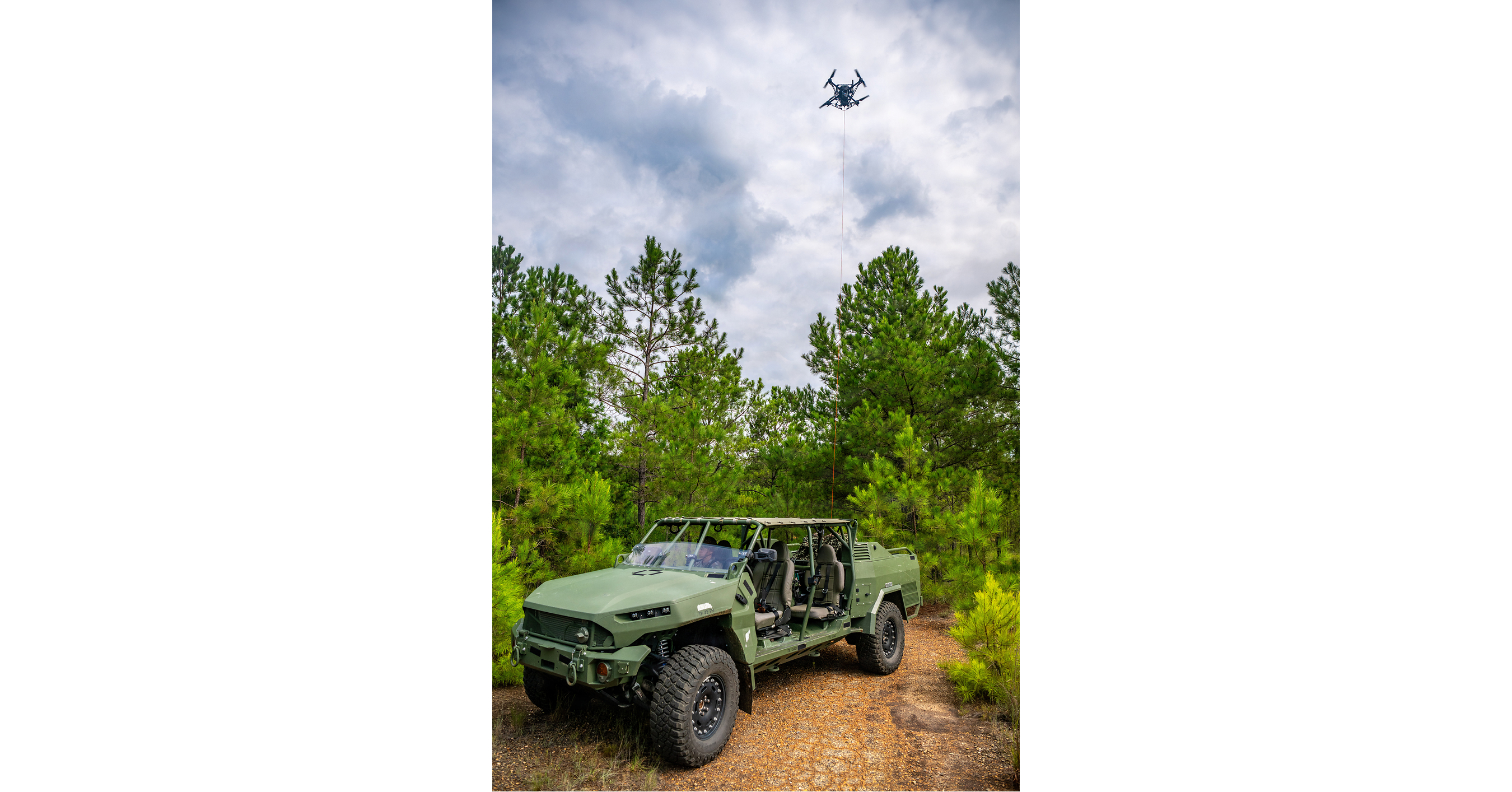
Hoverfly said its Spectre tethered UAS participated in a two-week U.S. Army Maneuver Battle Lab evaluation at Fort Benning, operating in follow-mode on moving Infantry Squad Vehicle-Utility vehicles at altitudes up to 200 feet. The company reports more than 700 tethered systems fielded and says Spectre is the only tethered UAS on the DCMA Blue UAS Cleared List; its physical tether provides continuous power and data while avoiding RF control emissions and mitigating jamming. The article is a company announcement describing a military field trial and platform capabilities, without a reported contract award or market reaction.
Analysis
The investable signal is procurement optionality, not proof of a scaled award. A successful vehicle-integrated demonstration could move tethered UAS from fixed-site security toward mobile squad communications and ISR, expanding the addressable mission set and creating follow-on demand for vehicle integration, radios, sensors, and sustainment. But the release is vendor-authored: fielded-unit count, security advantages, and trial performance are not evidence of Army-wide selection, funded quantities, or recurring revenue. The Blue UAS listing may reduce procurement friction; it does not establish sole-source status or a durable moat.
The operational trade-off is also material. A tether can reduce dependence on RF control links and battery endurance, but constrains vehicle movement and creates a physical line that may snag, limit maneuver, or expose the system; payload and integration requirements may further narrow use cases. Competing untethered systems retain advantages in reach and mobility. Near term (days), the announcement alone is unlikely to support a durable public-equity repricing. Over 1–3 months, watch for an Army requirement, funded procurement, or named vehicle/program integration. Over 6–18 months, repeat orders and adoption across units—not trial imagery—would validate the category. No company ticker is supplied, and Hoverfly’s ownership/public-market exposure is unverified; there is no clean direct trade on this release.
AllMind Terminal
AI-powered research, real-time alerts, and portfolio analytics for institutional investors.
Request TrialMarket Sentiment
Overall Sentiment
moderately positive
Sentiment Score
0.55
Key Decisions for Investors
- Do not trade the press release as a confirmed award. First verify whether Hoverfly is publicly investable, whether the Army has issued a funded requirement, and whether trial results lead to a contract or production order.
- Set an alert for Army budget, solicitation, and award disclosures over the next 1–3 months. A specific quantity, program line, or vehicle-integration decision would be a materially stronger catalyst than additional company commentary.
- If evaluating defense exposure, treat vehicle integrators, tactical communications suppliers, and ISR payload providers as potential second-order beneficiaries only after confirming they are included in an actual procurement; do not infer revenue exposure from participation in a field trial.
- Falsify the adoption thesis if follow-on Army activity omits tethered systems, procurement remains unfunded, or operational evaluations identify tether-management and mobility limitations that outweigh persistence and reduced RF-link dependence.
More News
- Security researcher claims to they found KVM guest-host escape flaw
- OKX debuts a platform that turns 50 currencies into digital dollars, betting emerging market investors want stablecoins
- SpaceX stock climbs to highest since June, returning Musk to trillionaire status
- Schneider Electric drops $22.6B on PTC as datacenter boom rains money on infra companies
- Security researcher claims they found KVM guest-host escape flaw
- Brazil Election: Bolsonaro Pushes Lula to Brink as Markets Set to Rally
From AllMind Research
- Anthropic IPO Preview: Valuation, Timing, and What to Watch
- Shein After the IPO: Venue, Valuation, and What Must Be Proved
- What AI Research Tools Should a Small Hedge Fund Buy First?
- Document Search Enhancements, AI Enhancements, AI Actions, & Chat Export
- AI Vendor Landscape for Institutional Investment Teams