
Fed Raises Rates in Unanimous Vote: Evening Briefing Americas
Source: Bloomberg
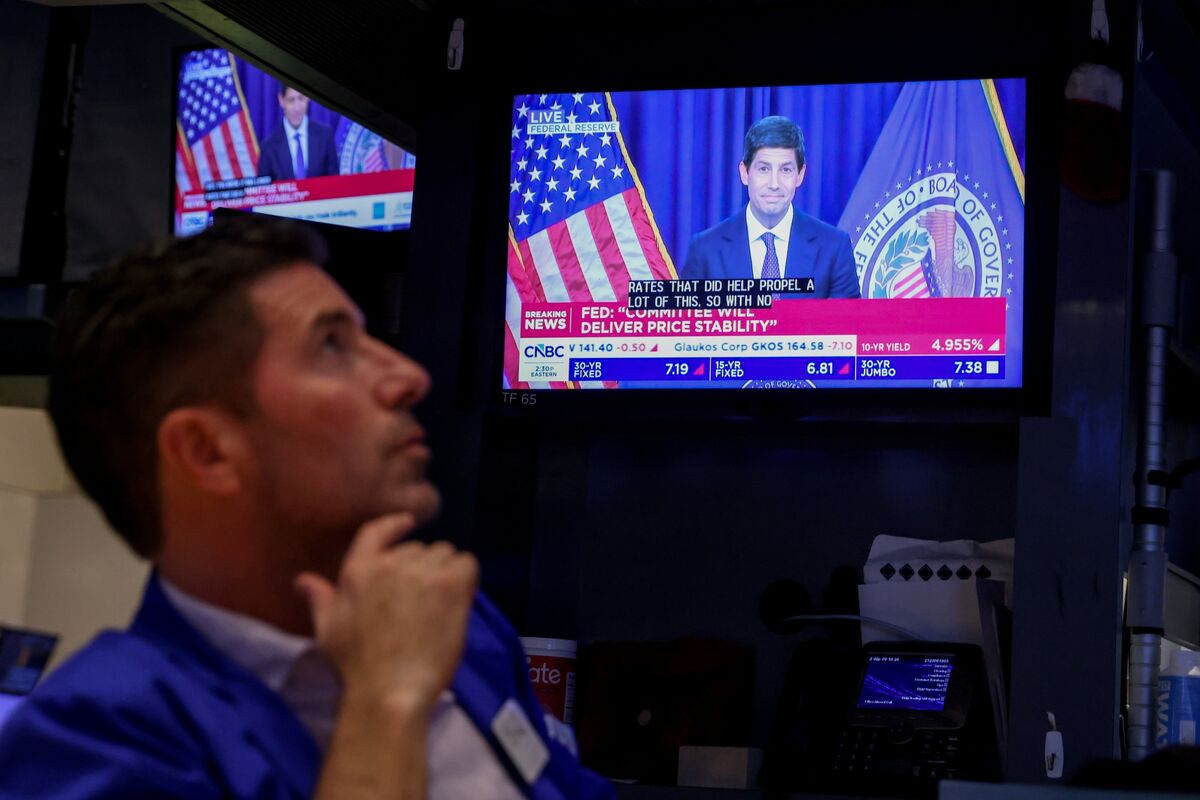
The Federal Reserve unanimously raised interest rates by 25bps, its first increase since July 2023, and signaled one additional hike later this year. Chair Kevin Warsh emphasized concern about inflation, which has been exacerbated by an energy crisis tied to the US-Israel war with Iran. The renewed tightening stance is a material headwind for risk assets and underscores the Fed's prioritization of inflation containment despite White House pressure for lower rates.
Analysis
The relevant repricing is not the initial 25bp but a higher terminal-rate and inflation-risk premium embedded in the long end. If energy-driven inflation proves persistent, 2-year yields should lead higher initially while 10-year real yields rise more gradually; that combination is unfavorable for long-duration equities (ARKK, XLK), highly levered real estate (IYR), and small caps reliant on refinancing (IWM). Banks are not automatic winners: a renewed bear-flattening or credit deterioration would offset any benefit from higher asset yields, leaving regional-bank exposure (KRE) particularly asymmetric to the downside.
Over the next 1-3 months, the market will focus on whether core services inflation and inflation expectations validate a second move rather than on headline energy alone. A sustained rise in crude-derived input costs compresses margins first in consumer discretionary, airlines and transports (XLY, JETS, IYT), while energy producers retain incremental pricing power; XLE should outperform XLY if the inflation shock persists. The second-order risk is that tighter policy into an energy shock converts a nominal-growth problem into a real-demand slowdown, ultimately hurting cyclicals and high-yield credit more than mega-cap quality.
Consensus may be too quick to price a mechanically bullish dollar and bearish gold outcome. If investors interpret policy restraint as insufficient to prevent an energy-led inflation regime, term premium and geopolitical hedging can support both UUP and GLD even as policy rates rise. The thesis fails if forward energy prices retreat, breakeven inflation declines, and upcoming labor/inflation data show broad disinflation; in that case, duration-sensitive growth could rebound sharply as the anticipated follow-up tightening is removed.
AllMind Terminal
AI-powered research, real-time alerts, and portfolio analytics for institutional investors.
Request TrialMarket Sentiment
Overall Sentiment
mildly negative
Sentiment Score
-0.30
Key Decisions for Investors
- For the next 1-3 months, express higher-for-longer risk via long 2-year Treasury exposure through short SHY or long TBT only if 2-year yields break post-decision highs; use a reversal below those highs as the stop. Prefer the front-end expression over an outright long-end short, where geopolitical flight-to-quality can dominate.
- Initiate a relative-value position long XLE / short XLY in equal dollar amounts, with a 3-month horizon. The trade captures producer pricing power versus consumer-margin and real-income pressure; exit if energy futures fall materially or consumer-discretionary earnings revisions stop deteriorating.
- Reduce or hedge unprofitable long-duration growth and refinancing-sensitive exposure through ARKK and IWM puts dated 3-6 months. The favorable setup requires only modest multiple compression if real yields rise; the principal risk is rapid disinflation that restores expected easing.
- Avoid adding broad KRE exposure until deposit-cost trends, commercial-real-estate provisions, and credit-spread behavior are known. Higher rates help only if asset repricing exceeds funding pressure and credit losses remain contained; widening high-yield spreads would invalidate the constructive bank case.
- Maintain a modest GLD allocation as a policy-credibility/geopolitical hedge rather than a pure rate-direction trade. Add only if inflation breakevens and real yields rise together; falling breakevens would remove the core rationale.
More News
- Bloomberg Surveillance: The Fed Decides 9/16/2026
- Investors react to Fed hike and market sell-off: Brace for 'higher for longer' rates
- House Passes Bill Allowing Trump Tariffs on Russian Oil Buyers
- Oil Extends Slump as Saudi Arabia Moves to Restore Key Pipeline
- Iran war has cost the US $38bn: How will it impact US economy, politics?
- 'Science fiction': Transport companies — the backbone of economy — are sounding alarm on fuel prices