
Americans Waste $19 Billion on Black Friday Purchases They Later Regret
Source: globenewswire.com
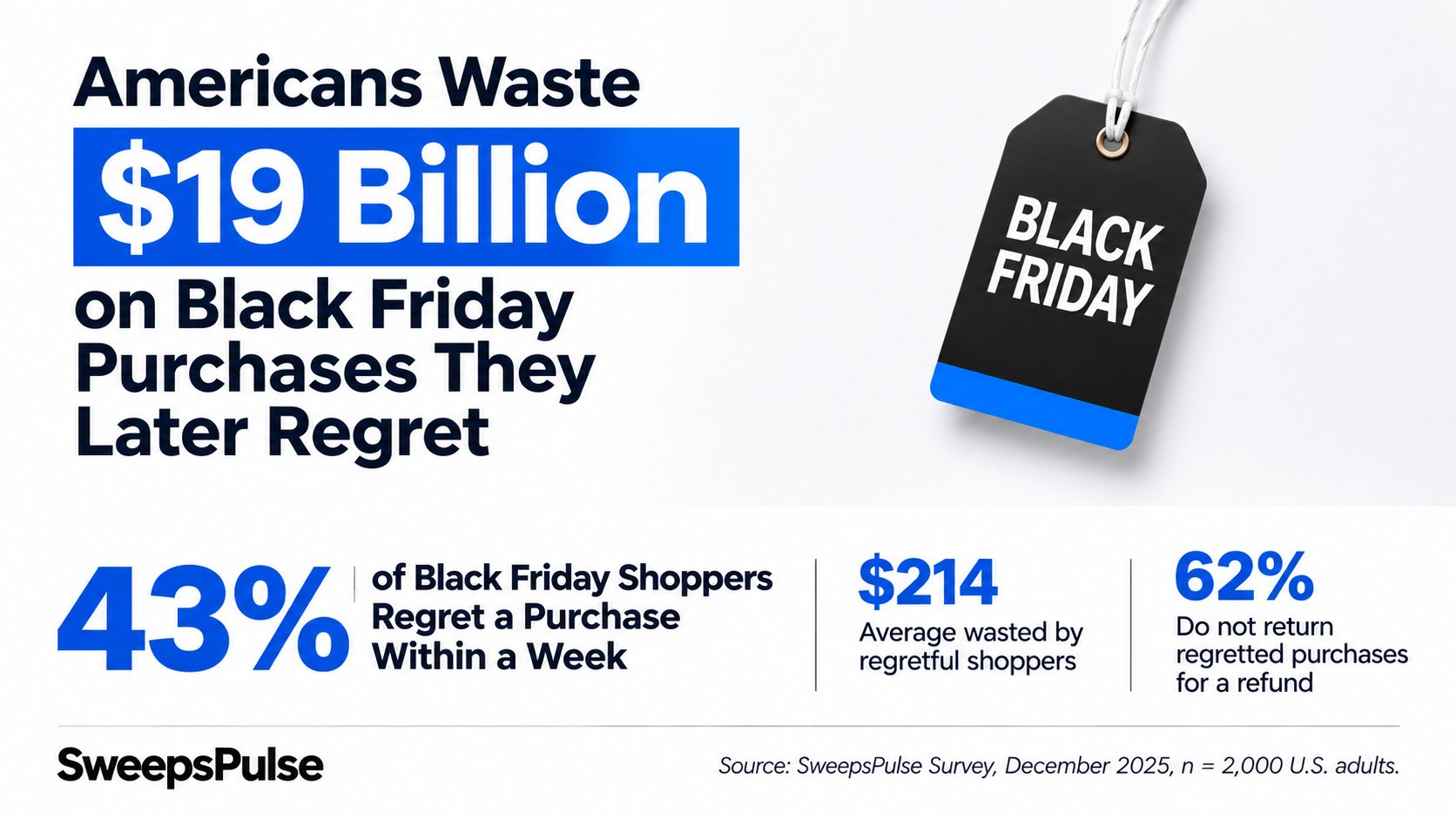
SweepsPulse's survey of 2,000 U.S. adults found that 43% of Black Friday shoppers regret at least one purchase within a week. The average regretful shopper wastes $214 on items they do not return, resell, or use, despite expectations for record Black Friday spending.
Analysis
The investable signal is not the survey’s headline spending claim but the possibility that some holiday demand is low-quality and pulled forward: regretful, unused purchases can support near-term checkout volumes while leaving less wallet for January and weakening repeat engagement. That is a conditional risk, not evidence of a broad consumer slowdown. The survey does not establish retailer-level exposure, actual post-holiday spending, or whether regret is concentrated in categories or channels. Retailers may also avoid reverse-logistics costs when purchases are not returned, so regret alone does not imply a margin hit.
Over the next few weeks, watch actual Black Friday/Cyber Monday sales alongside promotional intensity, retailer commentary on conversion and average order values, and post-holiday return rates. In 1–3 months, January sales and guidance are the cleaner test of pull-forward; in 6–18 months, persistent dissatisfaction could matter through repeat purchase and customer-acquisition economics, but this single survey cannot establish that trend. The contrarian read is that unused, non-returned purchases are already recognized sales with no return burden; if spending holds up after the holidays, the survey is noise rather than a bearish demand signal. No broad retail position is justified from this evidence alone.
AllMind Terminal
AI-powered research, real-time alerts, and portfolio analytics for institutional investors.
Request TrialMarket Sentiment
Overall Sentiment
neutral
Sentiment Score
-0.10
Key Decisions for Investors
- Do not trade broad consumer-discretionary exposure on this survey alone; treat its spending and regret figures as unverified until corroborated by transaction data or retailer disclosures.
- Into holiday results, monitor retailers’ promotional intensity, conversion, average order values, and return rates. A sales beat achieved with heavier discounting would be a weaker signal than broad-based demand with stable promotions.
- Use January sales and guidance as the key 1–3 month catalyst: pull-forward is supported if holiday strength is followed by softer post-holiday demand; it is falsified if spending remains resilient without a material increase in promotions.
- Watch for category and channel breakdowns before considering relative-value trades; the survey provides no basis to identify specific retailer winners or losers.
More News
- Costco is taking aim at its May record high — how it got here and where's it going
- Tapestry CEO on Earnings Beat, Consumer Outlook
- e.l.f. CEO: All of Our Brands Are Growing
- Here's where we stand on Kimberly-Clark shares after a better-than-feared quarter
- Mattel cuts annual forecasts as new CEO takes charge
- Snap earnings analysis: questions answered and next catalysts