
Clarus Founder Niosha Shakoori Discusses Emerging Workplace Hate Speech Legislation at 2026 California HR Conference
Source: PR Newswire
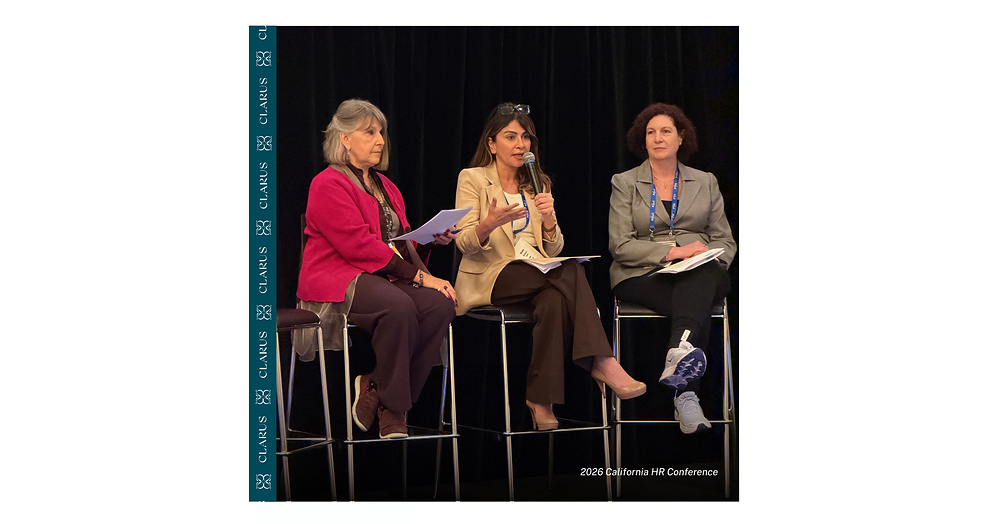
California's AB 1803, which adds anti-hate-speech content to mandatory workplace harassment-prevention training, has been signed into law and takes effect January 1, 2028. Clarus founder Niosha Shakoori, who spoke in support of the bill at the 2026 California HR Conference, discussed employer implementation questions including training content, delivery, and integration with existing compliance programs.
Analysis
The investable signal is limited: Clarus is a private firm, and a California training mandate taking effect in 2028 is unlikely by itself to change near-term earnings materially for diversified public employers. The more consequential channel is implementation. If guidance creates a distinct, auditable training requirement rather than folding into existing harassment programs, California-exposed employers may see incremental spend on content, tracking, manager training, and investigations. That could modestly benefit employment-law and workplace-investigation providers, but not enough to underwrite a trade absent evidence of a meaningful new budget line.
The less obvious risk is that mandated discussion of “hate speech” raises disputes over definitions and protected expression. In the near term, clearer reporting pathways could increase complaints and investigation activity; over time, better intervention may reduce repeat incidents and litigation exposure. The direction of net liability is therefore uncertain and depends on final guidance, training quality, and consistent employer documentation. Existing FEHA obligations may overlap substantially, limiting incremental compliance costs.
The 1–3 month catalyst is regulatory and implementation detail, not the conference panel. Structural effects belong on a 6–18 month-plus horizon given the 2028 effective date. The contrarian read is that headline attention may overstate both compliance spend and immediate liability: employers already running mature California programs may absorb the change, while smaller or less-prepared employers could face proportionally greater process burden. No direct security-level trade is supported by this item alone.
AllMind Terminal
AI-powered research, real-time alerts, and portfolio analytics for institutional investors.
Request TrialMarket Sentiment
Overall Sentiment
neutral
Sentiment Score
0.10
Key Decisions for Investors
- No immediate position based on this announcement. Avoid treating it as a broad HR-services revenue catalyst without evidence that final rules require distinct training or materially increase employer spend.
- For California-exposed employers, monitor final implementation guidance and disclosures on training, documentation, and investigation costs; prioritize labor-intensive businesses with large California workforces for diligence rather than assuming uniform exposure.
- Watch for a two-sided investigations effect: complaint volumes may rise initially as reporting awareness increases, while mature programs could reduce repeat incidents over time. Verify through claims trends, employment-litigation disclosures, and any guidance revisions.
- Reassess the thesis if implementation rules clearly exceed existing FEHA training requirements, or if employers report measurable recurring costs or claims changes; substantial overlap with current programs would falsify the incremental-cost case.
More News
- SK Hynix shares slide after chipmaker scraps Solidigm IPO plans
- Moderna and Merck say their mRNA cancer vaccine cut death, recurrence by 42%
- Musk's clash with Ukraine accelerates demand for Starlink alternatives. Few exist
- A lesson from poker tells us not to fold on Meta after its earnings sell-off. Here’s why
- Trump invokes Cold War era Defense Production Act for oil production, refining
- Meta stock sinks 6% as AI spend pushes free cash flow negative