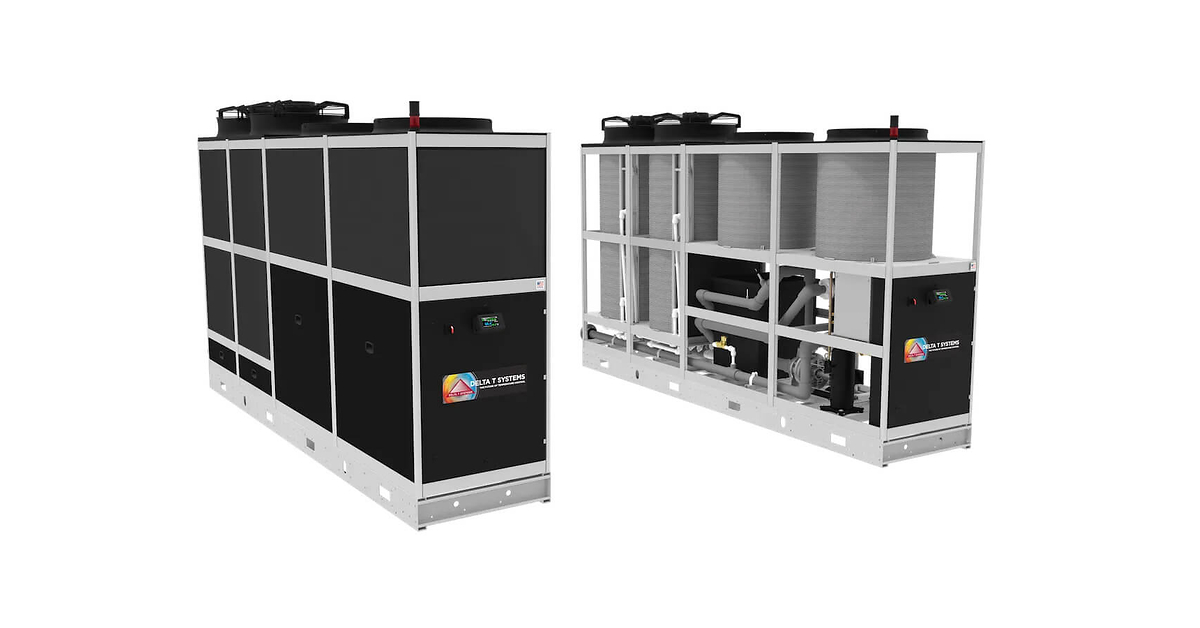
Delta T Systems launched a factory-integrated Dry Cooler/Chiller Combo that automatically switches between free cooling and mechanical chilling to lower industrial process-cooling energy costs. The single unit uses one control system to monitor ambient and process temperatures in real time, is factory-assembled/function-tested, and is designed to reduce installation labor versus commissioning two separate systems (with a smaller footprint than equivalent separate capacity). The news is product-focused and is unlikely to materially move broader markets, but it is a constructive step for the company’s industrial efficiency offering.
This reads as a demand-pull signal for energy-saving retrofit capex, not a material public-market event. The economic value is in reducing total installed cost and shortening payback, which matters most for plastics, machine-tool, and chemical users facing high power rates and tight maintenance labor; if that thesis holds, it supports replacement demand even in a softer industrial backdrop. The first-order winner is the end customer; the second-order winners are controls-heavy thermal management OEMs that can bundle software, sensing, and service rather than sell standalone metal boxes.
The main losers are installers, commissioning firms, and any incumbent whose economics depend on selling two separate systems plus labor-intensive setup. But the moat here is likely thinner than the press release implies: larger public OEMs can replicate the control logic, and buyers will care far more about uptime, qualification, and service coverage than about feature-level efficiency. If field reliability is uneven, the product becomes a niche spec item rather than a category shift.
Consensus may overestimate near-term impact because this is a private-company launch with no visible order book, so the real test is 1-3 quarters of repeat retrofit wins and references. The thesis is falsified if energy prices ease, industrial capex softens, or customers see no meaningful payback improvement versus conventional separate systems. Structural upside only shows up over 6-18 months if this becomes a template for broader industrial cooling standardization.
AI-powered research, real-time alerts, and portfolio analytics for institutional investors.
Request TrialOverall Sentiment
mildly positive
Sentiment Score
0.15
