
Trump’s threat to stop trade unless there’s a rate cut risks shock to U.S. economy
Source: MarketWatch
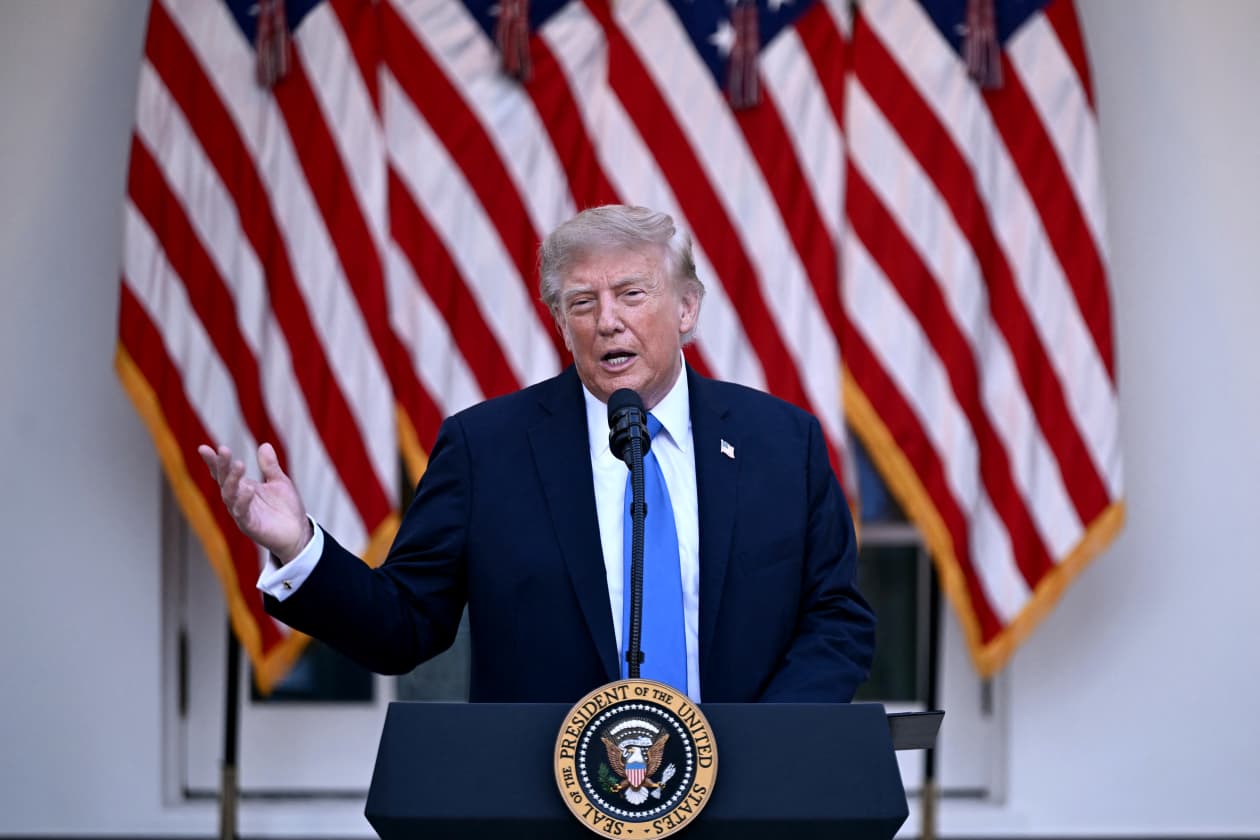
Trump threatened to stop trading with countries that have a U.S. trade surplus unless the Fed cuts interest rates, tying trade policy directly to monetary policy demands. The comments followed a stronger-than-expected jobs report, and economists warned this could create an economic shock via higher trade friction and uncertainty. While no rate or trade policy changes were implemented yet, the market could reprice interest-rate expectations and trade risk quickly.
Analysis
This should be treated first as a policy-volatility shock, not an implementable trade policy. The market mechanism is tighter financial conditions via higher uncertainty: firms with import-heavy cost bases, thin gross margins, or global sourcing need to discount planning risk immediately, even before any action is taken. That argues for multiple compression in cyclicals and small caps before the earnings hit shows up.
The second-order effect is that the Fed is likely less, not more, inclined to appear responsive to political pressure, which raises the odds that real rates stay firmer for longer. That is a headwind for duration-sensitive equities and a tailwind for any asset that benefits from a growth scare, but the inflation-versus-growth tug of war makes the first move noisy. If this escalates into actual restrictions, the near-term losers are retailers, autos, industrial importers, and any company with Mexico/Asia supply chains; if it fades, those sectors snap back quickly.
Contrarian view: the consensus may be underpricing how often headline threats fail to convert into policy, but overpricing the immediate earnings impact. The real damage could come from capex deferral and procurement re-routing over the next 1-3 months, not from day-one revenue loss. DJT should be treated as a sentiment proxy rather than a direct beneficiary; if the market starts pricing this as a real policy path, the name can stay volatile, but the fundamental linkage is weak.
AllMind Terminal
AI-powered research, real-time alerts, and portfolio analytics for institutional investors.
Request TrialMarket Sentiment
Overall Sentiment
mildly negative
Sentiment Score
-0.35
Ticker Sentiment
Key Decisions for Investors
- Long TLT vs short IWM for 2-6 weeks: a clean hedge on policy uncertainty and growth scare risk. Falsify if 2Y yields back up materially on the next tariff headline instead of rallying.
- Short XLY vs long XLP on a 1-3 month view: consumer-discretionary margins are more exposed to import-cost pass-through and demand elasticity than staples. Cover if retailers guide to stable gross margins or if tariff rhetoric fades without follow-through.
- Buy a small DJT put spread on strength, 30-60 day tenor: treat it as a crowded rhetoric-beta trade, not a fundamental long. Risk/reward is attractive only after a headline-driven squeeze; abandon if the stock stops reacting to policy noise.
- Set an alert on any formal tariff proposal or legal pathway: until there is a concrete mechanism, keep exposure small and prefer hedges over outright shorts.
- If the market starts pricing higher inflation rather than slower growth, rotate the hedge from TLT to UUP and reduce duration exposure; that would invalidate the simple bond-rally thesis.
More News
- It’s Donald Trump Versus MAGA on Data Centers
- What are Iran’s latest conditions to end its war with the US?
- Nvidia CEO Jensen Huang emerges as Trump's top ally in AI safety debate
- Turkish FM says ready to meet Saudi defence needs – what does that mean?
- Global Conflicts Shape High Stakes UN Meetings
- Caruso-Cabrera: The investing tailwinds for Latin America are the best in decades
From AllMind Research
- Anthropic IPO Preview: Valuation, Timing, and What to Watch
- Shein After the IPO: Venue, Valuation, and What Must Be Proved
- What AI Research Tools Should a Small Hedge Fund Buy First?
- AI Research Tools for Pension Funds and Allocators
- AllMind's Data Standardization Methodology: Our Approach to Fundamentals