
M&S Grocery Sales Bounce Back After Last Year’s Cyberattack
Source: Bloomberg
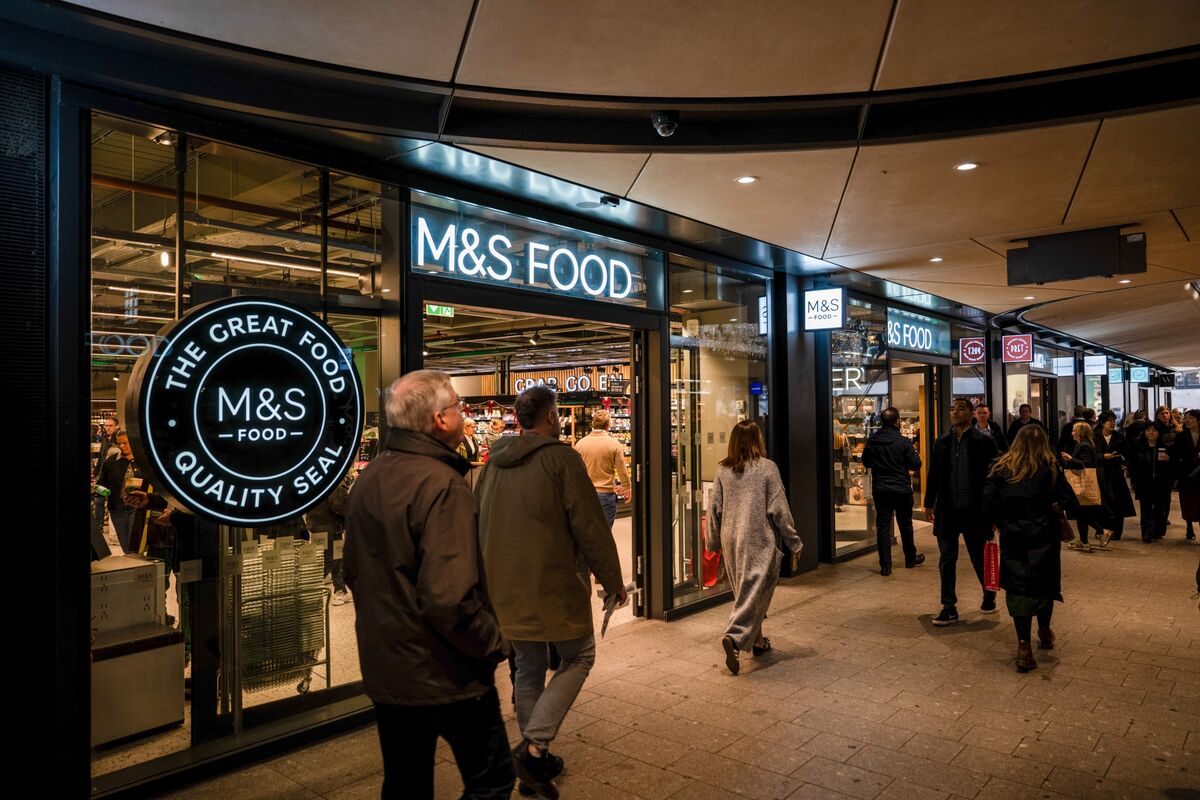
M&S like-for-like food sales rose 11.7% in the six months ended Sept. 26, exceeding the 10.9% analyst estimate and supporting the retailer’s recovery from last year’s cyberattack. Clothing and homeware sales grew 17.3%, slightly below analyst expectations.
Analysis
The key question is whether M&S is recovering durable customer spend or merely comping against disrupted availability. The sales surprise supports the former, but like-for-like growth does not establish volume, market-share recapture, or profitable growth: pricing, product mix, promotions and fulfillment costs need to be checked. The clothing/homeware result also cautions against treating the rebound as a broad-based earnings upgrade.
Over the next 1–3 months, the decisive evidence is gross-margin progression, availability and market-share data, plus management commentary on recovery costs—not another headline sales growth rate. If M&S is taking back customers it temporarily lost, Tesco, Sainsbury’s and Waitrose could face a modest share headwind; if growth is largely category inflation or promotional intensity, that spillover is limited. Over 6–18 months, better operating resilience could reduce the perceived cyber-risk discount, but controls and redundancy may add recurring costs, and a repeat disruption would quickly reverse confidence. The consensus risk is extrapolating a rebound into a new growth rate; the counterpoint is that customer retention through a serious operational shock may be underappreciated. No clean trade follows from sales alone without margin, volume and valuation context.
AllMind Terminal
AI-powered research, real-time alerts, and portfolio analytics for institutional investors.
Request TrialMarket Sentiment
Overall Sentiment
mildly positive
Sentiment Score
0.30
Key Decisions for Investors
- Keep M&S on a catalyst watchlist rather than chase the sales beat. Before adding exposure, verify volume and market-share gains, gross margin, promotional intensity and any continuing recovery-related costs in the next results.
- For relative-value work, compare M&S with Tesco, Sainsbury’s and Waitrose on food share and margins; treat a M&S share gain as a potential relative headwind to peers only if independent market data confirms recapture.
- Falsify the recovery thesis if subsequent trading shows weakening availability or market share, or if sales growth fails to translate into stable margins; a renewed material cyber disruption would also undermine the resilience rerating.
More News
- NextDC shares surge 43% after Goodman, Digital Realty stake purchases
- A blue wave sends futures into the green
- Asian chip stocks slide as disappointing Qualcomm, Arm earnings weigh
- Snap shares fall over 10% on third-quarter earnings miss
- ‘Seismic’ blue wave triggers the sinking of oil prices, energy stocks, and the chances of power permitting reform
- Softbank’s $5.4 bln takeover of ABB robotics unit blocked by China- FT
From AllMind Research
- AllMind Platform Feature Updates - Fall 2026
- AI Credit Covenant Monitoring: From Clause to Review
- AI-Led Expert Interviews vs. Transcript Libraries
- Automating Financial Model Updates: A Source-Controlled Workflow
- Weekly Update: Sector Analysis, Improvements on Research Data, and Performance Enhancements