
RayNeo présente ses lunettes IA à réalité augmentée cinématographique à l'IFA 2026 en collaboration avec Dolby et Bang & Olufsen
Source: PR Newswire
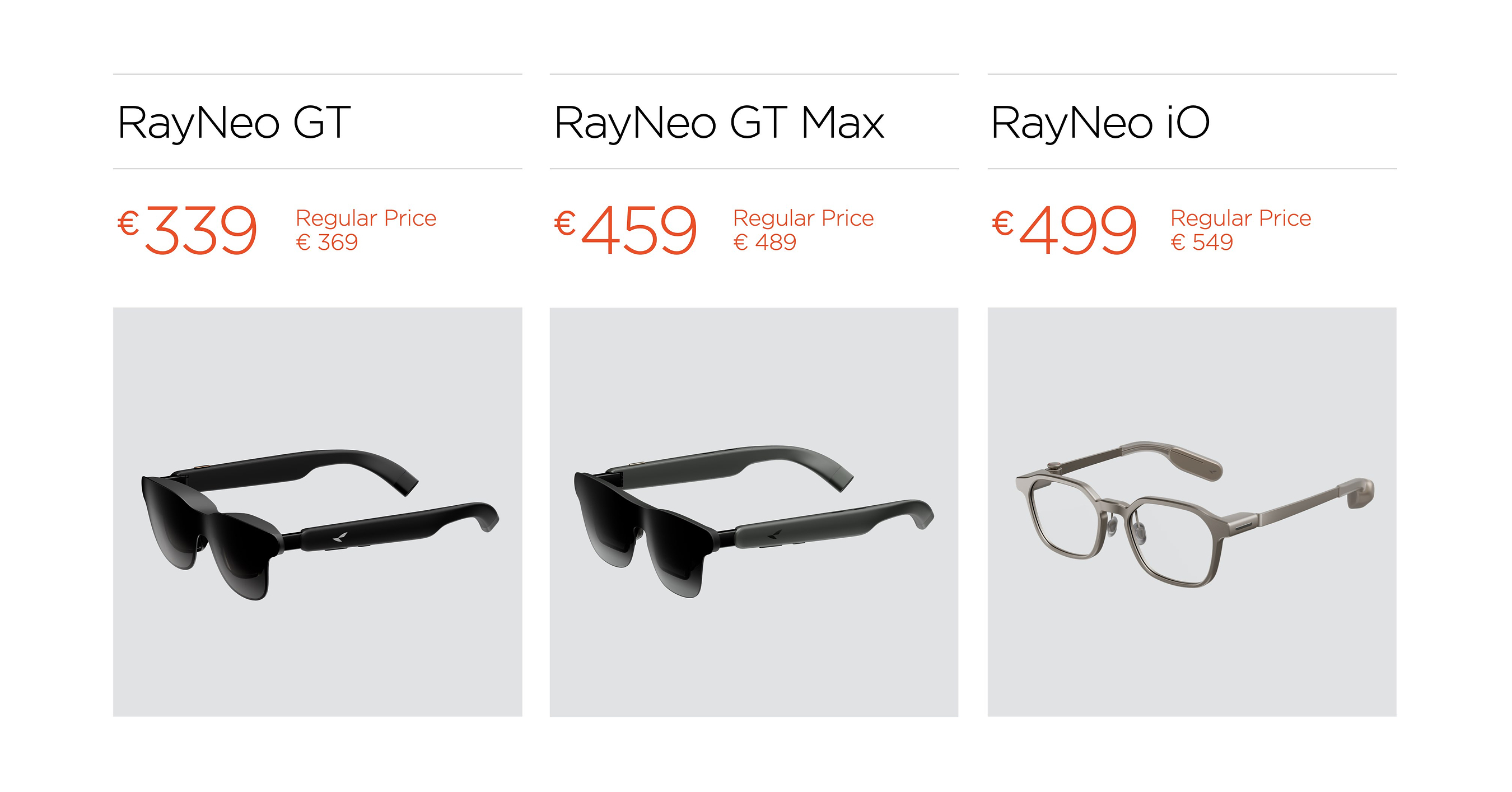
RayNeo a lancé à l'IFA 2026 les lunettes IA RayNeo iO et les modèles de réalité augmentée GT/GT Max, commercialisés à partir du 4 septembre dans 40 pays. La série GT devient la première gamme de lunettes AR compatible Dolby Vision, avec des prix de 329 à 429 USD, tandis que l'iO de 33 g, dotée d'un affichage tête haute et de fonctions IA, est proposée à partir de 499 USD. RayNeo affirme détenir 23,7 % du marché mondial des lunettes AR au T1 2026 selon Counterpoint, soutenant son positionnement de leader dans le segment.
Analysis
The investable read-through is primarily validation of premium content and audio branding as differentiation in a hardware category otherwise prone to rapid commoditization. DLB benefits only if Dolby Vision support translates into recurring per-unit licensing or expands its device-certification footprint; absent disclosed royalty economics or sell-through, the announcement is not large enough to alter near-term estimates. For Bang & Olufsen (BO), the collaboration improves brand relevance in wearable audio but is more likely a marketing halo than a material revenue contributor unless it evolves into co-branded hardware or royalty-bearing IP.
RayNeo's sub-$550 positioning puts pressure on Meta's premium wearable ambitions and on smaller listed AR pure plays such as VUZI, whose valuation depends on enterprise adoption rather than consumer-scale distribution. The more important second-order beneficiary could be AMZN: a multi-country launch can add high-AOV accessories, streaming-device attachment and advertising inventory, but this will be immaterial to consolidated results. The near-term risk is elevated return rates and weak repeat usage; cinematic AR glasses require sustained comfort, battery life, prescription-lens compatibility and content interoperability, none of which is proven by launch demonstrations.
Over the next 1-3 months, Amazon category rank, review quality, return-rate proxies and evidence of Dolby-enabled streaming compatibility matter more than award recognition. Over 6-18 months, the category's bottleneck is likely not display quality but consumer willingness to wear a camera/microphone-equipped device daily, creating regulatory and privacy risks that favor established platforms with developer ecosystems. Consensus may overvalue shipment-leadership claims because market definitions vary and the AR-glasses base remains small; leadership can coexist with negligible profit contribution.
AllMind Terminal
AI-powered research, real-time alerts, and portfolio analytics for institutional investors.
Request TrialMarket Sentiment
Overall Sentiment
moderately positive
Sentiment Score
0.42
Ticker Sentiment
Key Decisions for Investors
- Maintain a modest tactical long bias in DLB only on confirmation that wearable-device certifications are producing incremental licensing revenue; reassess after the next earnings call if management does not identify device-category growth. Upside is multiple expansion from consumer-device optionality, while downside is limited financial materiality and a reversal to the legacy-TV licensing narrative.
- Do not initiate a standalone BO position on this announcement. Set an alert for disclosed commercial terms, follow-on co-branded products, or management guidance linking wearable partnerships to revenue; without these, the likely risk/reward is unfavorable after publicity-driven strength.
- Use AMZN as an operational-data watch rather than a directional trade: monitor RayNeo product ranking, review velocity and stock availability through the first 30-60 days. Strong ranking with low review complaints could support a small accessories/consumer-electronics demand read-through, but it is not earnings-material for AMZN.
- Avoid chasing listed AR pure plays such as VUZI on consumer-AR enthusiasm. A more defensible relative-value expression is long DLB versus short a high-beta AR pure play only if retail sell-through confirms category expansion; falsify the pair if device reviews indicate comfort, battery, or privacy issues that constrain repeat use.
More News
- US tech stocks tumble as investors fret over AI spending
- Nasdaq 100 Drops as Oil Rise Fuels Risk-Off Mood
- Markets sell off worldwide as further conflict looms in the Middle East and Elon Musk cuts capex guidance
- Musk's clash with Ukraine accelerates demand for Starlink alternatives. Few exist
- Personal agents like Meta's Muse could fuel AI’s growth — and challenge Amazon and Apple
- What’s the PHP coding flaw that could pull down 70 percent of the internet?
From AllMind Research
- Anthropic IPO Preview: Valuation, Timing, and What to Watch
- Shein After the IPO: Venue, Valuation, and What Must Be Proved
- What AI Research Tools Should a Small Hedge Fund Buy First?
- AI Tools for CFA Charterholders: An Evidence Standard
- Weekly Update: Unstructured Data Search, Ask AI, and Advanced Futures Data