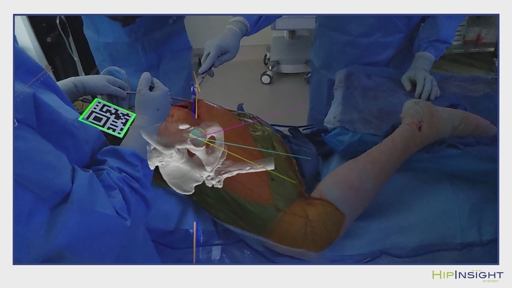
Surgical Planning Associates launched an open-platform HipInsight solution for hip replacement that supports any surgical approach, enabling simulated predictive radiographs and MR guidance for intraoperative comparison. The implant library now covers 35 implant systems plus generic designs, designed to reduce manufacturer lock-in so surgeons can use preferred implants across primary and revision cases. Duke Health surgeons cite improved accuracy and operating-room time efficiency from their >1,300 (Wellman) and >900 (Ryan) procedure experiences.
This is more meaningful as a distribution and workflow story than as a near-term revenue event. Interoperability lowers switching costs in a category where the incumbent moat has often been “the software is bundled with the implant,” so the economic value may migrate from proprietary navigation stacks toward broad-line implant OEMs with the best sales coverage and service footprint. That tends to favor scaled orthopedics platforms like SYK, ZBH, and JNJ over smaller, more device-locked competitors, but the first-order financial impact is likely modest until hospitals standardize on the system across service lines.
The second-order effect is pricing: once the navigation layer becomes more like a utility, hospitals gain leverage to separate implant selection from guidance selection, which can compress ASPs for niche enabling-tech vendors and reduce the stickiness of single-vendor ecosystems. In the next 1-3 months, the key catalyst is not the launch itself but whether surgeons’ enthusiasm converts into procurement decisions and operating-room adoption metrics. If utilization broadens from complex revisions into routine primary cases, the commercial read-through becomes more relevant because it expands the addressable base rather than just improving attach rates.
Contrarian view: the market may be overestimating how fast “open” translates into share. In medtech, workflow change is gated by IT integration, training, and hospital capital committees, so surgeon preference alone rarely moves the P&L quickly. The thesis is falsified if adoption remains concentrated in a few academic centers, if hospitals still buy multiple redundant systems for redundancy/compliance reasons, or if a competing platform shows better measured OR time and revision outcomes over the next 6-18 months.
AI-powered research, real-time alerts, and portfolio analytics for institutional investors.
Request TrialOverall Sentiment
mildly positive
Sentiment Score
0.25
