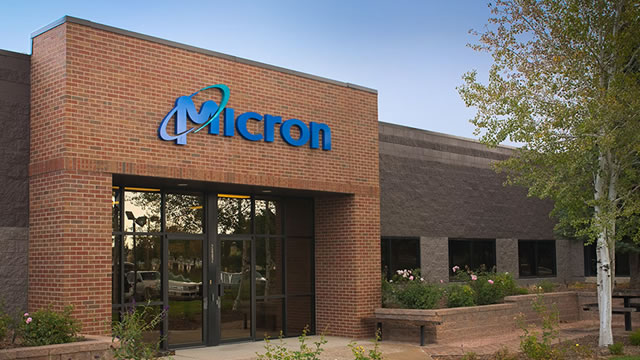
TSMC and ASML said AI memory demand is “exceptionally strong,” and that fully booked EUV capacity will constrain supply growth through 2028. Japan and the U.S. committed billions to Micron’s manufacturing expansion, improving long-term capacity and supply-chain resilience. GM and Ford also signed long-term Micron supply agreements, diversifying demand beyond hyperscalers with more stable automotive AI memory outlook.
ASML is the cleanest bottleneck winner: when capacity is already sold out for years, the incremental upside shifts from unit growth to scarcity premium, backlog quality, and multiple expansion. That said, most of the near-term benefit is likely already in consensus; the stock should outperform if investors start capitalizing earnings power into 2028 rather than treating it as a one-year cycle.
MU benefits from a more durable demand mix than the market usually assigns to memory. The important second-order effect is that sovereign-backed capex lowers geopolitical risk and raises the probability of a more concentrated, higher-cost global supply base, which supports pricing power in the next upcycle. The risk is that this same subsidy wave eventually pulls forward too much capacity, so the trade works best on a 1-3 month momentum leg, not as a blind 18-month hold.
GM and F are more about de-risking production than driving equity upside. Long-term supply agreements reduce line-down risk and inventory volatility, but they also embed memory cost exposure exactly when AI content per vehicle can creep higher; the benefit is operational stability, not a step-function margin tailwind. The consensus may be underestimating how much this strengthens Micron’s non-hyperscaler mix and how little it changes the profit pool for the automakers themselves.
Contrarian view: the market may be too focused on demand confirmation and not enough on the timing mismatch between current shortages and future supply adds from subsidized fabs plus incumbent Asian capacity. If DRAM spot prices soften, hyperscaler capex slows, or Micron guides capex meaningfully higher without corresponding ASP support, the thesis weakens quickly. The best falsifier for ASML is a slowdown in order conversion; for MU it is inventory buildup or margin guidance that stops improving despite the demand narrative.
AI-powered research, real-time alerts, and portfolio analytics for institutional investors.
Request TrialOverall Sentiment
moderately positive
Sentiment Score
0.35
Ticker Sentiment
