
Digital Tails Group Introduces Configuration-Driven Visual Content Automation
Source: PRWeb
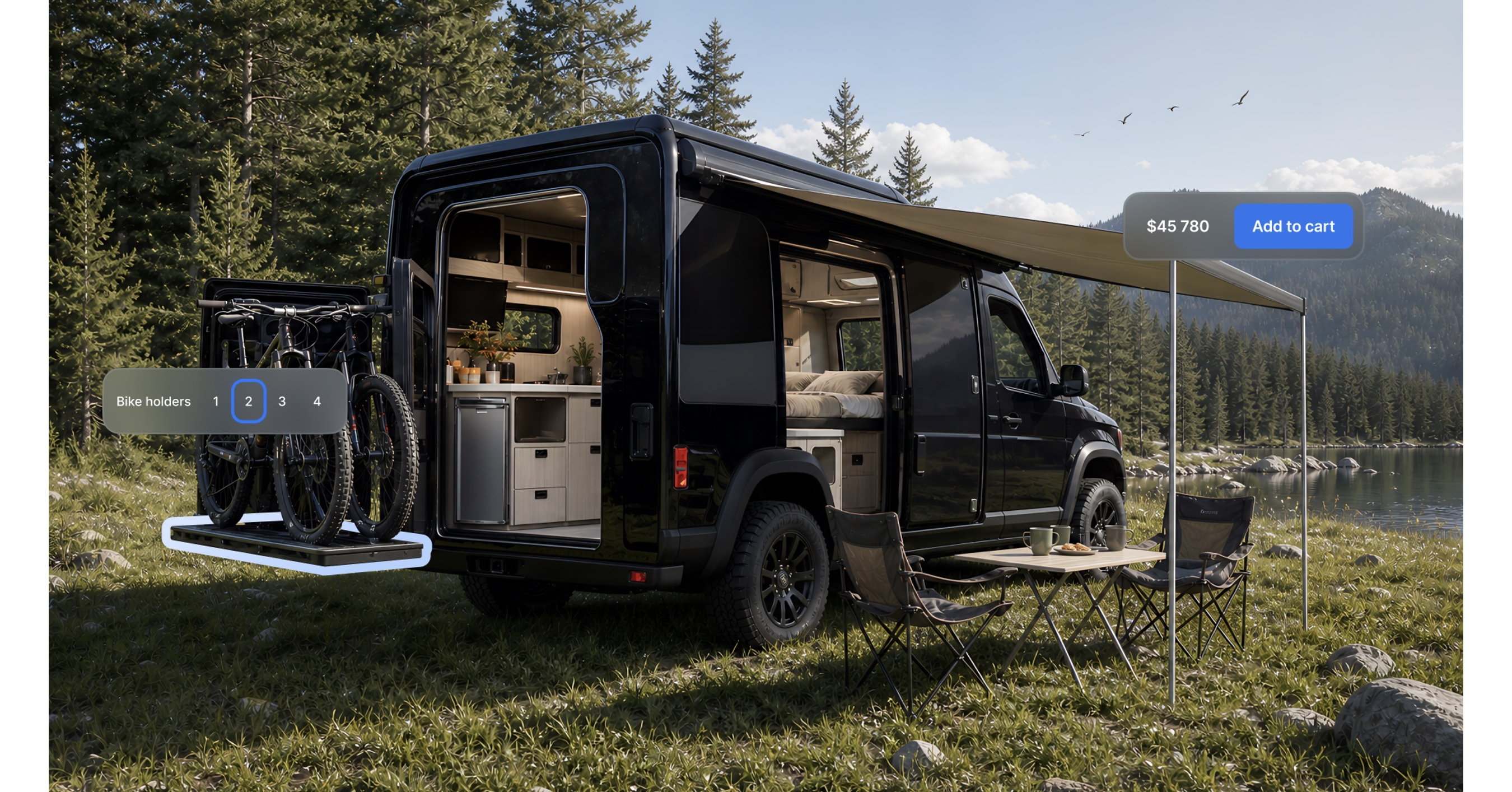
Digital Tails Group launched configuration-driven visual-content automation powered partly by its OWN.AI engine, enabling manufacturers to generate photorealistic images, personalized videos and branded media from a buyer’s exact product configuration. The capability targets configurable-product categories including RVs, specialty vehicles, furniture and accessories, aiming to eliminate manual asset production across potentially thousands of product variants. The product is available immediately for new and adapted DTG configurator projects, though the announcement provides no financial metrics, customer wins or revenue outlook.
Analysis
This is not yet a public-markets catalyst: the announcement provides no customer wins, pricing, deployment scale, or evidence that generated visuals preserve configuration accuracy at a level sufficient for warranty-sensitive products. The commercial hurdle is not image quality but integration with product-information management, CPQ, dealer systems, and approval workflows; implementation cycles for RV and furniture OEMs are likely measured in quarters rather than weeks. Treat the claimed productivity benefit as unverified until conversion-rate lift, asset-production cost reduction, or named OEM adoption is disclosed.
The broader read-through modestly favors incumbent design-to-manufacturing software vendors with installed product-data moats—PTC and Autodesk—because configuration-accurate generative media requires clean product hierarchies, CAD/3D asset libraries, and rules engines. Conversely, standalone 3D visualization vendors without deep configuration data may face pricing pressure as rendering and video generation commoditize. For RV and furniture manufacturers such as Winnebago (WGO), REV Group (REVG), La-Z-Boy (LZB), and Lovesac (LOVE), personalized visualization could improve lead conversion and reduce dealer-level inventory mismatch, but the benefit will be immaterial to earnings until adoption extends across dealer networks.
Consensus enthusiasm around AI content tools likely overstates near-term margin upside: high-consideration buyers still need trustworthy fit, dimensions, materials, and delivery information, while synthetic-video errors create reputational and return-risk exposure. The more investable 6-18 month implication is that AI shifts spend from creative production toward structured product-data infrastructure and workflow software. A material thesis reversal would be evidence that OEMs can deploy without rebuilding 3D libraries, or disclosed conversion uplift above roughly 200-300 bps that supports premium software pricing.
AllMind Terminal
AI-powered research, real-time alerts, and portfolio analytics for institutional investors.
Request TrialMarket Sentiment
Overall Sentiment
mildly positive
Sentiment Score
0.38
Key Decisions for Investors
- No directional trade on DTG-related news; monitor for named OEM contracts, recurring-revenue pricing, implementation duration, and independently reported conversion metrics before assigning investable significance.
- Maintain a 6-12 month watchlist bias toward PTC and ADSK versus pure visualization/software peers: configuration-linked AI raises the value of proprietary CAD, PLM, and product-rules data. Enter only following evidence of enterprise AI attach-rate acceleration in bookings or guidance; falsify on continued seat-growth deceleration without offsetting ARPU gains.
- Watch WGO, REVG, LZB, and LOVE for dealer-digitalization announcements rather than buying on the theme. A long basket becomes actionable only if management quantifies online/dealer conversion gains or lower selling expense; absent this, weak discretionary demand and promotional risk dominate any visualization benefit.
- For a contrarian hedge against AI-visualization hype, avoid paying premium multiples for standalone generative-content exposure without proprietary product data. Evidence that customers can substitute general-purpose models at materially lower cost would pressure specialized visualization pricing within 12-24 months.
More News
- What next for France as riots rattle markets? Three questions facing investors ahead of more protests
- Next week brings major risks for the stock market, just as the AI trade keeps faltering
- AI Doubts Spread Cracks in Equities, Credit Markets: Evening Briefing Americas
- Looters hit 3,000 French businesses. Within hours, the haul was trending on Vinted under the riot’s date
- Kinder Morgan, Energy Transfer and Williams could benefit from cheap natural gas
- CrowdStrike CEO's alarming prediction — plus, the sell-off spreads beyond tech
From AllMind Research
- Anthropic IPO Preview: Valuation, Timing, and What to Watch
- Shein After the IPO: Venue, Valuation, and What Must Be Proved
- What AI Research Tools Should a Small Hedge Fund Buy First?
- AllMind Discusses Ontario's AI Economy with Minister Stephen Crawford and Supply Ontario CEO James Wallace
- AI Research Tools for SEDAR+, UK and ASX Filings