
Enstructure, Diamond State Port Corporation and Stakeholders Celebrate Groundbreaking of the Delaware Container Terminal
Source: PR Newswire
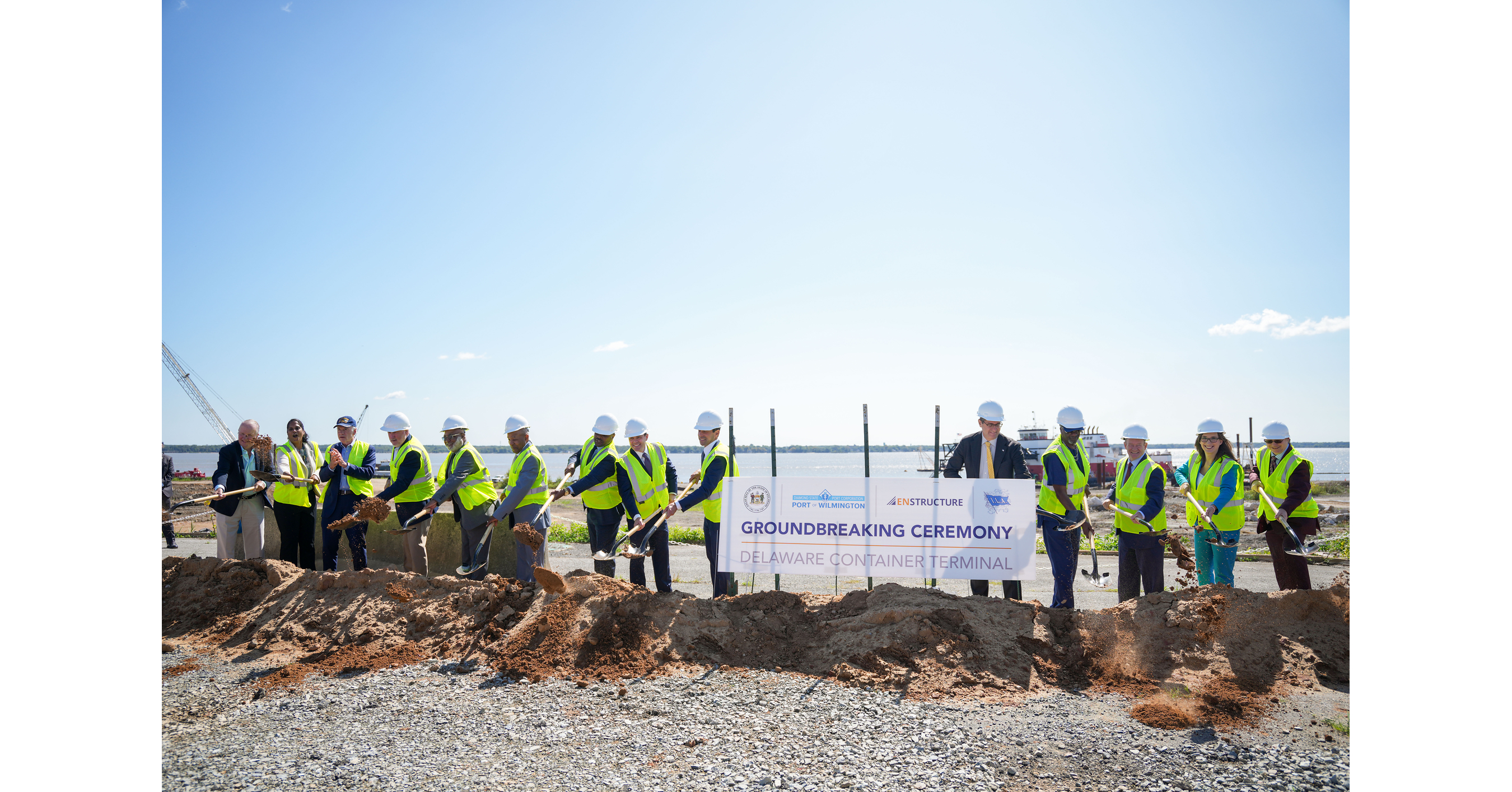
Enstructure and Delaware broke ground on the $669 million Delaware Container Terminal (DCT), a public-private Port of Wilmington expansion expected to be completed in 2029. The project includes $225 million from Enstructure, $325 million from Delaware and $119 million in federal DOT/EPA grants, and is designed to handle 1.2 million TEUs annually—nearly doubling capacity along the Delaware River port complex. The 137-acre terminal will accommodate vessels up to 16,000 TEUs and deploy electric cargo equipment, including seven ship-to-shore and 24 rubber-tired gantry cranes, supporting lower-emission logistics capacity and thousands of projected jobs.
Analysis
There is no liquid, direct public-equity beneficiary: Enstructure and the port authority are private/public entities, while the construction spend will be distributed across several years and is unlikely to be earnings-material for diversified equipment or engineering vendors. The investable implication is instead a localized reduction in Northeast supply-chain friction once operations begin, potentially improving distribution-site economics for importers serving the I-95 corridor and increasing competitive pressure on incumbent New York/New Jersey, Philadelphia and Baltimore gateways.
The key economic risk is utilization rather than construction: incremental terminal capacity earns attractive returns only if carriers establish recurring calls and regional import growth exceeds the capacity additions being pursued across East Coast ports. Container shipping lines may use a new gateway primarily as negotiating leverage on handling rates, limiting terminal-margin realization; greater port optionality also weakens the scarcity premium embedded in inland drayage and warehousing near congested gateways. This is a 2029-plus structural consideration, not a near-term shipping-rate catalyst.
Contrary to the green-infrastructure framing, electrified cargo handling can raise fixed-power, charging and maintenance complexity while reducing variable diesel exposure. The relevant diligence item is whether utility interconnection, power pricing and equipment uptime are contractually protected; adverse power-cost or commissioning outcomes would shift operating costs back to carriers and reduce the terminal's competitive rate advantage. Construction permitting, remediation and labor-cost escalation are the principal 12-36 month execution risks.
AllMind Terminal
AI-powered research, real-time alerts, and portfolio analytics for institutional investors.
Request TrialMarket Sentiment
Overall Sentiment
moderately positive
Sentiment Score
0.68
Key Decisions for Investors
- No immediate listed-equity trade: avoid treating the project as a catalyst for container-shipping equities such as ZIM or MATX; the operating start is too distant and capacity growth is more likely to increase carrier bargaining power than freight rates.
- Create a 2027-2029 watchlist around CSX and NSC, conditional on disclosed rail-service agreements or committed intermodal volumes. A confirmed dedicated service offering could support a tactical long versus trucking-sensitive logistics peers; absent contract details, rail revenue attribution is speculative.
- Monitor East Coast port throughput, carrier-call commitments and regional warehouse vacancy quarterly. If committed volumes lag construction progress by 2027, consider a long port-adjacent logistics/rail basket only after utilization visibility improves; if commitments are strong, avoid shorting container carriers solely on anticipated capacity because demand growth may absorb supply.
- Use future evidence of utility-interconnection delays, capex overruns, or environmental-remediation revisions as a negative execution alert for private-project counterparties rather than a public-market short thesis; no readily identifiable listed operator has sufficient direct exposure.
More News
- Budget 2026 speech
- The UK cuts energy bills, taxes banks and boosts defense in high-stakes budget
- Can Southeast Asia pitch itself as an ‘all-in-one’ chip hub?
- Alphabet Disappoints as Microsoft’s Cloud Brightens
- FedEx's soft holiday-quarter outlook doesn't change our view on the stock
- Russia’s alleged sabotage campaign in Europe raises fears of escalation