
Karma Gyesera Grand Coupe Named 2027 Luxury Green Car of the Year by Green Car Journal
Source: PR Newswire
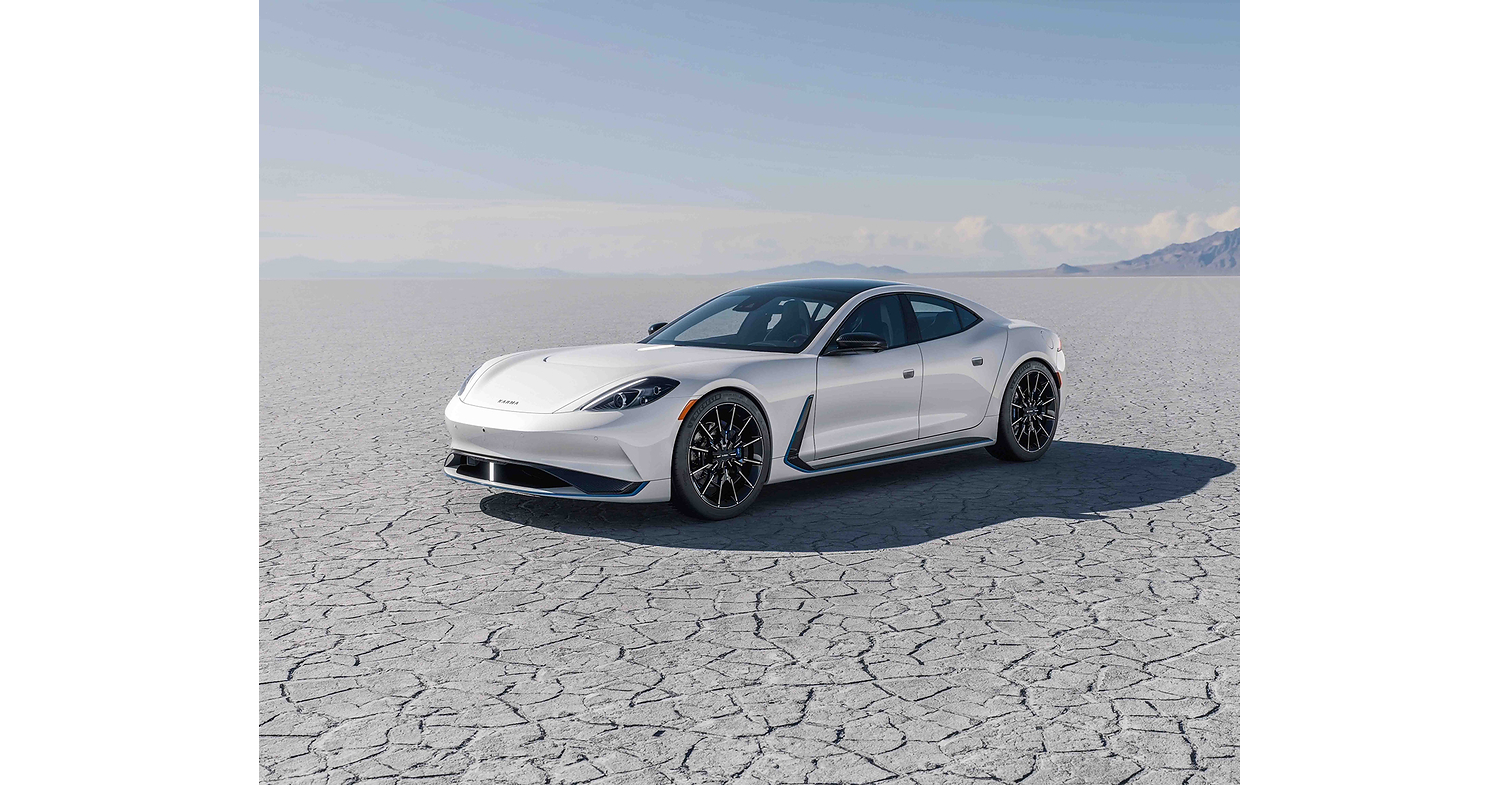
Karma Automotive's 2027 Gyesera Grand Coupe won Green Car Journal's 2027 Luxury Green Car of the Year award ahead of its December 2026 dealership launch. The $139,995 hybrid extended-range electric vehicle offers 566 horsepower, 546 lb-ft of torque and sub-3.7-second 0-60 mph acceleration. The award supports brand visibility for Karma's low-volume luxury EREV launch but is unlikely to materially affect broader auto-sector valuations.
Analysis
This is not investable as a standalone catalyst: Karma is privately held, the award is promotional rather than a demand or profitability datapoint, and ultra-luxury low-volume launches rarely alter public OEM earnings. The more relevant read-through is that extended-range electric architectures retain premium-market relevance where charging convenience and residual-value concerns constrain pure-BEV adoption. That favors OEMs with credible hybrid/EREV product cadence over manufacturers whose valuation depends on rapid premium BEV mix expansion.
Over the next 1-3 months, monitor luxury EREV order activity and comparable launches as a qualitative signal for U.S. premium electrification demand, not as evidence of a sector-wide volume inflection. Ferrari (RACE) and Mercedes-Benz (MBG.DE) have greater ability to monetize powertrain optionality through pricing and mix, while Tesla (TSLA) is more exposed to a narrative shift toward hybrids/EREVs if premium BEV demand remains promotion-dependent. The supply-chain impact is immaterial at Karma-scale, but sustained EREV adoption would be structurally supportive for battery suppliers with smaller-pack exposure and combustion-powertrain incumbents versus a pure-BEV outcome.
The contrarian point is that exclusivity can mask weak mass-market economics: a six-figure, low-volume vehicle does not validate EREV demand at scalable price points. A meaningful thesis requires independently verifiable reservation conversion, production volumes, dealer inventory turns, and gross-margin disclosure; absent those data, treat this as branding noise. The broader hybrid/EREV view would be falsified by accelerating premium-BEV incentives clearing inventory without margin erosion, or by charging adoption materially reducing range-anxiety purchase friction over the next 6-18 months.
AllMind Terminal
AI-powered research, real-time alerts, and portfolio analytics for institutional investors.
Request TrialMarket Sentiment
Overall Sentiment
mildly positive
Sentiment Score
0.38
Key Decisions for Investors
- No direct trade on the announcement; Karma has no listed equity and the stated catalyst lacks disclosed unit, revenue, or margin sensitivity.
- Maintain a 6-18 month relative-value watch: long RACE versus short TSLA only if quarterly deliveries show premium BEV demand weakening while hybrid/EREV-capable luxury OEMs sustain pricing. Target a 10-15% relative move; exit if TSLA automotive gross margin ex-credits stabilizes or improves for two consecutive quarters without incremental discounting.
- Track MBG.DE quarterly mix, incentive intensity, and EV/hybrid contribution as a more liquid verification vehicle for premium electrification optionality. Upgrade only if management demonstrates pricing resilience alongside hybrid/EREV mix gains; do not infer this from awards or pre-specification activity.
- Set an alert for public evidence of EREV adoption at scale—monthly registrations, supplier contracts, or major OEM production guidance—before expressing any battery or powertrain supply-chain view. The missing variable is volume: low-volume ultra-luxury demand has negligible earnings leverage for listed suppliers.
More News
- Here’s the ‘core economic flaw’ in the AI bull case as stock and bond trades unravel, according to a top economist
- 5 big analyst AI moves: ’Uniquely catalyst-rich’ months ahead for SpaceX
- The experience economy keeps defying expectations. Maybe we’ve been looking at it all wrong
- The U.S. military and NASA have power problems. Nuclear microreactors might solve both
- Trump set to announce plan by Audi to build a U.S. factory in Georgia, source says
- Biotech stocks are surging. How investors can play the new drug innovation boom
From AllMind Research
- Anthropic IPO Preview: Valuation, Timing, and What to Watch
- Shein After the IPO: Venue, Valuation, and What Must Be Proved
- What AI Research Tools Should a Small Hedge Fund Buy First?
- Selecting an AI Research Platform for Institutional Investors
- Weekly Update: New Reporting Features and More Sources for Document Search