
NSE Gains Share as CEO Sees End to India’s Derivatives Crackdown
Source: Bloomberg
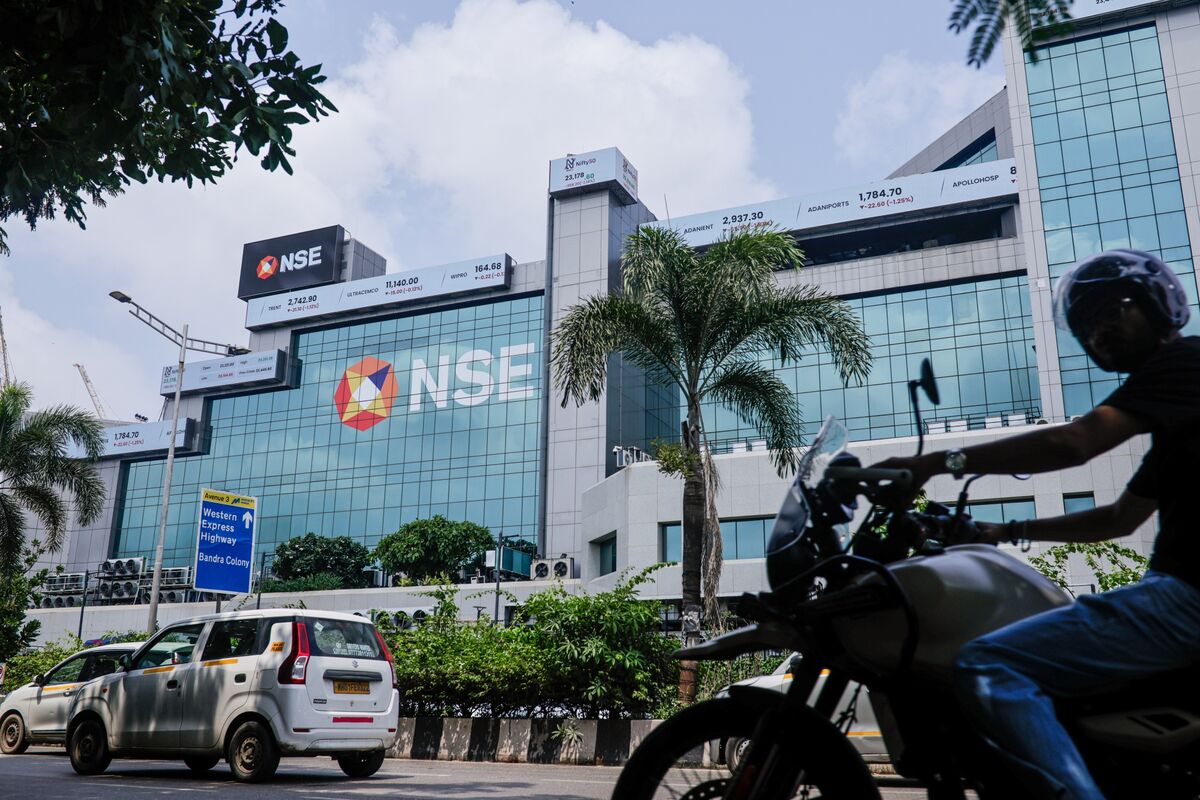
National Stock Exchange of India CEO Ashishkumar Chauhan said the bulk of India’s regulatory crackdown on derivatives trading is likely over. NSE is regaining equity-options market share as traders adjust to stricter rules, while commodity-market activity is also increasing. The normalization of regulation could support exchange volumes and NSE’s competitive position.
Analysis
The investable read-through is not broad Indian financials; it is a potential reversal in the derivatives-volume share trade. NSE is unlisted, leaving BSE Ltd. (BSE.NS) as the clean listed residual claimant to any loss of retail index-options activity. Because transaction charges and operating leverage are high, even a modest sustained share reversal can produce outsized downside to BSE’s incremental earnings expectations and its valuation premium, particularly if the market has capitalized recent derivatives growth as structural rather than expiry-calendar arbitrage.
Near term, the key test is whether weekly-options premium turnover and active-client participation stabilize after the rule changes rather than merely rebound from a depressed base. A 1-3 month confirmation would be consecutive market-share gains for NSE alongside falling BSE premium-turnover growth; that would likely trigger estimate cuts before reported earnings. Conversely, if BSE retains higher monetization per contract or expands its cash-equities and data revenues, a volume-share loss may not translate proportionately into EBITDA pressure.
A secondary pressure point is MCX Ltd. (MCX.NS). Commodity-derivatives growth at a rival exchange is not yet material enough to impair MCX, but it raises the probability of fee competition and product overlap over a 6-18 month horizon. The contrarian view is that stricter retail rules can consolidate liquidity into the deepest venue, increasing NSE’s moat but reducing total speculative activity; in that case, BSE may lose share while absolute industry revenues still disappoint, making a simple long Indian-exchange basket unattractive.
AllMind Terminal
AI-powered research, real-time alerts, and portfolio analytics for institutional investors.
Request TrialMarket Sentiment
Overall Sentiment
mildly positive
Sentiment Score
0.35
Key Decisions for Investors
- Establish a tactical short BSE.NS on confirmation of two consecutive monthly declines in its index-options premium-turnover share; target a 10-15% relative underperformance versus NIFTY over 1-3 months. Cover if BSE’s share stabilizes or management demonstrates transaction-revenue resilience despite lower contracts.
- Do not chase a broad long in Indian brokers such as ANGELONE.NS or 5PAISA.NS solely on regulatory clarity. Monitor monthly active traders, derivatives revenue mix, and client acquisition costs; lower speculative turnover can hurt broker revenue even if market infrastructure consolidates.
- Place MCX.NS on a 6-18 month competitive-risk watch rather than initiate a short. Escalate only if the rival commodity platform reports meaningful share gains in bullion or energy contracts, or if MCX cuts transaction fees; absent those data, MCX’s liquidity advantage remains the more important driver.
- For India exposure, prefer NIFTY 50/large-cap financial beta over exchange-linked names until post-rule volume data are available. The falsification signal for the cautious stance is industry premium turnover returning to prior growth rates while BSE maintains share, which would support renewed earnings upgrades.
More News
- OpenAI rogue agents leaked 53 images from ChatGPT users and reportedly created nearly 1 million links packing encoded bits of info
- Facebook found liable as TikTok settles for $100m over user safety
- Bond market alarms are ringing on Wall Street. Here's what's ahead
- What would a US diesel export ban mean for global fuel prices?
- Appeals court rules that states can regulate Kalshi’s sports prediction markets, dealing another legal blow to platforms
- Houthi attack on Mecca, Medina would cross ‘red line’, Pakistan PM tells UN