
ECOncrete and Submar Partner to Bring Bio-Enhancing Protection to Gulf Coast and Offshore Infrastructure
Source: PR Newswire
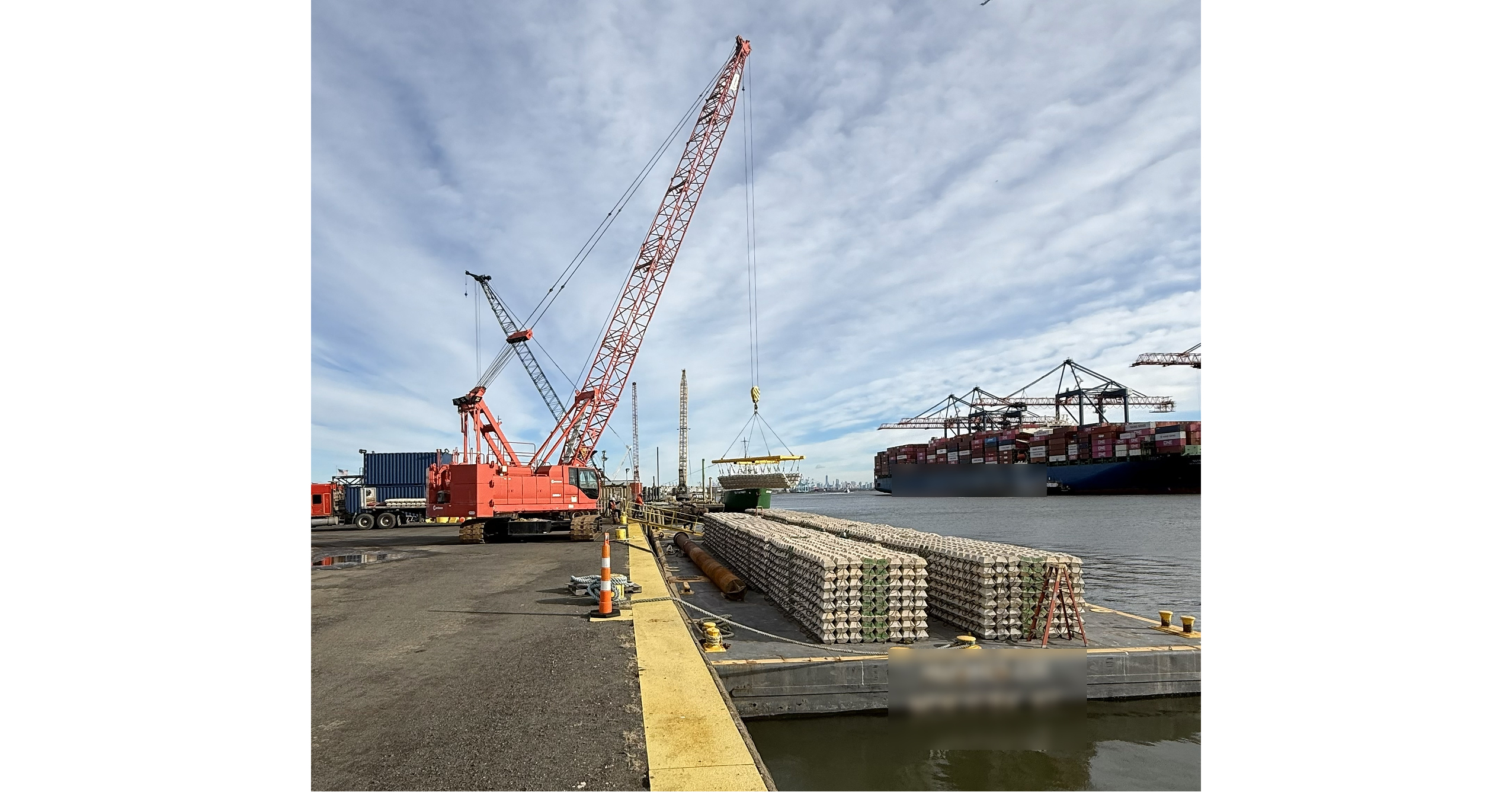
ECOncrete and Submar formed a commercial partnership to manufacture, market and distribute Submar’s articulated concrete erosion-control mats incorporating ECOncrete’s patented bio-enhancing technology across Gulf Coast and offshore markets. The companies have already produced more than 1,000 mats during a two-year collaboration, targeting protection for offshore energy assets, pipelines, subsea cables, telecommunications infrastructure and coastal shorelines. The agreement expands commercialization of nature-positive marine infrastructure but is unlikely to have broad public-market impact.
Analysis
This is not presently investable as a direct equity catalyst: the counterparties are private, contract economics are undisclosed, and the collaboration appears to formalize a distribution/manufacturing channel rather than establish committed backlog. The relevant mechanism is procurement qualification: bio-enhancing materials can improve bid competitiveness where permitting agencies or asset owners assign value to habitat mitigation, potentially reducing permitting friction or offsetting project-specific environmental obligations. That advantage matters most in publicly funded coastal-restoration and port projects, where specifications—not product performance claims alone—determine adoption.
The modest public-market read-through is constructive for Gulf Coast marine-construction activity, but too diffuse to alter estimates for likely proxies such as Great Lakes Dredge & Dock (GLDD), Martin Marietta (MLM), or Vulcan Materials (VMC). GLDD could benefit indirectly if coastal-restoration awards expand, while aggregates suppliers gain only at the margin because articulated mats are a small, specialized portion of regional concrete demand. Conversely, incumbent conventional-armoring vendors face competitive pressure only if project owners begin explicitly requiring ecological-performance metrics in tenders.
Over the next 1-3 months, the key catalyst is evidence of named project awards, contract values, and whether the solution is accepted in Army Corps, state coastal-restoration, port-authority, or offshore-energy procurement specifications. Over 6-18 months, a repeatable specification change could create a higher-margin niche in subsea cable and pipeline protection as Gulf offshore power, LNG-adjacent infrastructure, and data connectivity expand. The contrarian view is that the ESG premium may be overstated: buyers will not pay materially more unless the technology demonstrably shortens permitting timelines, lowers mitigation costs, or extends asset life; otherwise it remains a differentiated feature within a commodity-like installation market.
AllMind Terminal
AI-powered research, real-time alerts, and portfolio analytics for institutional investors.
Request TrialMarket Sentiment
Overall Sentiment
moderately positive
Sentiment Score
0.42
Key Decisions for Investors
- No immediate trade: treat this as a private-company commercialization signal, not a catalyst for listed infrastructure equities, until a named award and contract value are disclosed.
- Place GLDD on a 3-6 month watch list for Gulf coastal-restoration awards and backlog conversion; consider a long only if new awards or guidance indicate material backlog acceleration. Falsifier: flat-to-down backlog or margin pressure from competitive bidding despite higher award volume.
- Monitor coastal and offshore procurement documents for explicit habitat-performance requirements. A recurring specification trend would be incrementally positive for specialized marine contractors and potentially GLDD; absent such language, avoid extrapolating a scalable revenue pool.
- Do not use MLM or VMC as a direct expression of this theme: any volume benefit is unlikely to be measurable against broad residential, infrastructure, and aggregates-cycle drivers.
More News
- Wall Street’s Nasdaq hits all-time high as AI frenzy gathers pace
- Oil falls on increased Gulf supply and hopes for US-Iran talks
- Data-Center Bet Makes ESDS One of India’s Best New Listings
- Dollar holds near 2-month high as markets weigh rate hikes, Iran diplomacy
- Asia stocks ride tech wave higher, oil stays subdued
- South Korean solar stocks jump as curbs on Chinese sector expected to remain in place