
BobaVida Kicks the Door Open on the Drink Aisle With ORBA, a Ready-to-Drink Popping Boba Beverage Shipping November 1
Source: PR Newswire
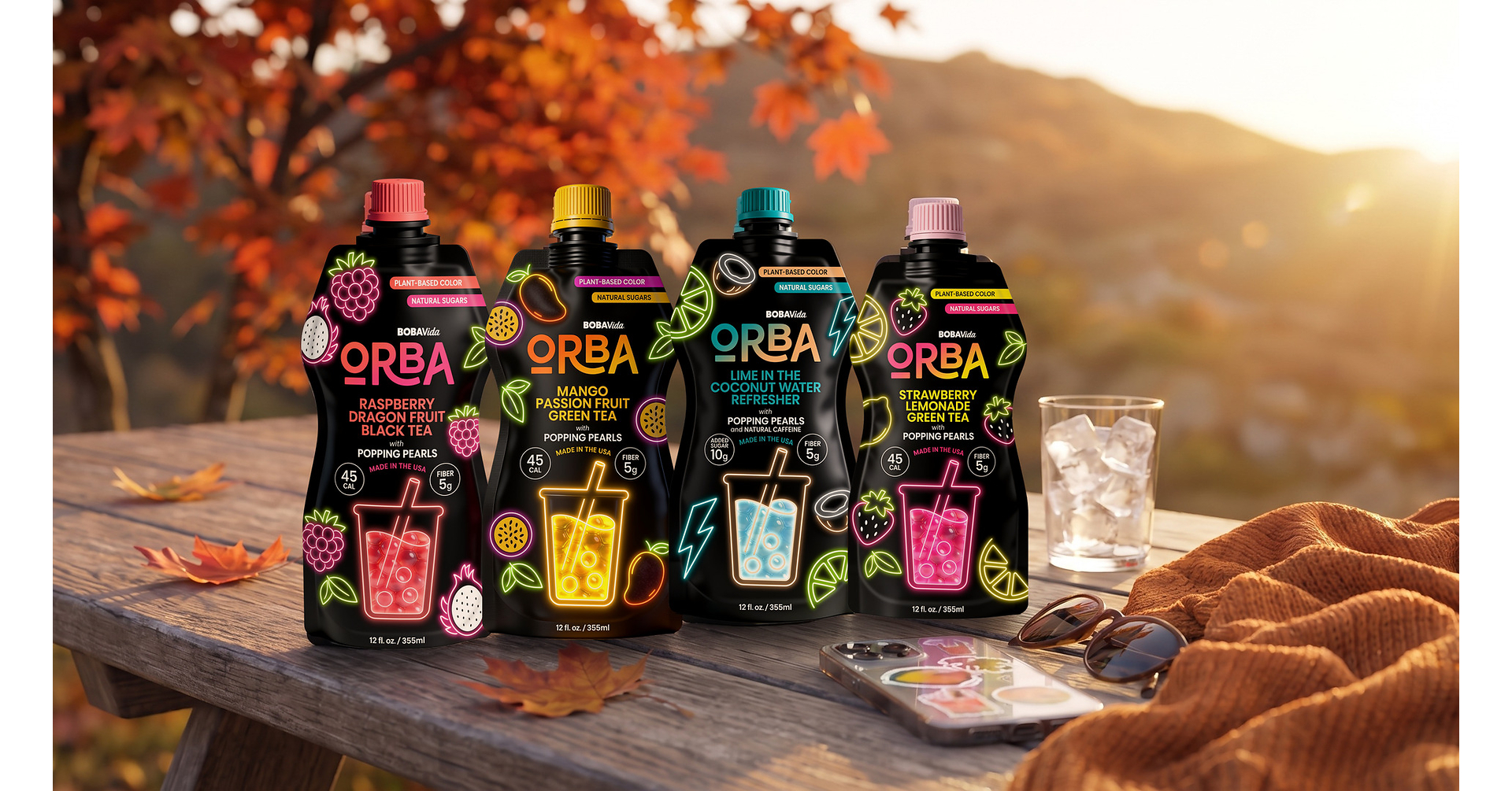
BobaVida launched ORBA, a ready-to-drink popping-boba beverage sold in resealable 12 oz pouches, with retail and distributor pre-orders open and shipments beginning November 1, 2026. The product launches in four flavors at a suggested retail price of $11.99 per four-pack, leveraging BobaVida's 44,000-square-foot Missouri manufacturing facility and distribution in more than 5,000 stores. Management is targeting growing mainstream demand for boba products within a U.S. RTD tea market projected to rise from $13.72B in 2026 to $17.61B by 2031.
Analysis
This is not investable public-equity information by itself: Boh Bah/BobaVida appears privately held, and no confirmed national retail authorization, velocity data, gross margin, or distribution economics are disclosed. The relevant read-through is that an experiential beverage format is attempting to migrate from foodservice into shelf-stable packaged retail, where repeat purchase—not social-media reach—determines whether retailer resets translate into durable revenue.
If the format gains traction over the next 3-12 months, the likely pressure point is not incumbent mainstream RTD tea demand broadly but refrigerated and ambient “better-for-you” beverage shelf allocation. Public names with the most direct potential shelf-space sensitivity include Celsius (CELH), Vita Coco (COCO), and smaller functional beverage brands distributed through major DSD systems; however, the product’s low-calorie positioning and novelty format could also expand the category rather than cannibalize it. The pouch format may provide freight and merchandising advantages versus rigid bottles/cans, but it also carries a higher risk of consumer quality perception, leakage, and lower impulse visibility in coolers.
The contrarian view is that the stated creator funnel is more useful for launch sampling than for sustaining retail velocity. Pearl texture creates differentiation but raises repeat-rate and supply-chain execution risk: retail buyers will focus on spoilage, pouch durability, pearl consistency, and turns per SKU. A November shipment date makes first-quarter 2027 distributor reorders and any subsequent named-chain rollout the only meaningful catalysts; absent those data, there is no basis to extrapolate a category disruption.
AllMind Terminal
AI-powered research, real-time alerts, and portfolio analytics for institutional investors.
Request TrialMarket Sentiment
Overall Sentiment
mildly positive
Sentiment Score
0.35
Key Decisions for Investors
- No position recommended. Treat this as a private-company product-launch watch item rather than a catalyst for CELH, COCO, MNST, or KDP.
- Monitor Q1 2027 retailer resets, named national-chain listings, and disclosed reorder rates. A broad launch through Walmart, Target, Kroger, or 7-Eleven with evidence of repeat distribution would justify reassessing shelf-space risk for CELH and COCO.
- For CELH holders, use scanner-data alerts rather than preemptive selling: a sustained 4-8 week velocity decline in adjacent low-calorie RTD sets, combined with incremental pouch facings, would be the relevant falsification signal for current category-share assumptions.
- Avoid assigning value to creator-view metrics unless they convert into independently verifiable retail velocity. The key missing metrics are unit turns per store per week, promotional spend, retailer gross margin, and post-launch defect/return rates.
More News
- Oracle Japan shares surge 7% after record fiscal first quarter, bucking selloff of U.S. parent
- Exclusive-How firms linked to sanctioned Chinese cotton giant sell clothes to U.S
- Costco makes progress on a key membership metric. Here's our new price target on the stock
- Akamai secures $11.6B cloud deal with Anthropic for AI workloads
- Tesla poised to scale production of heavy-duty Semi trucks with opening of Nevada factory
- Here’s the Tesla Semi… again