
Trump’s Fuel Export Ban Threat Sends European Diesel Soaring
Source: Bloomberg
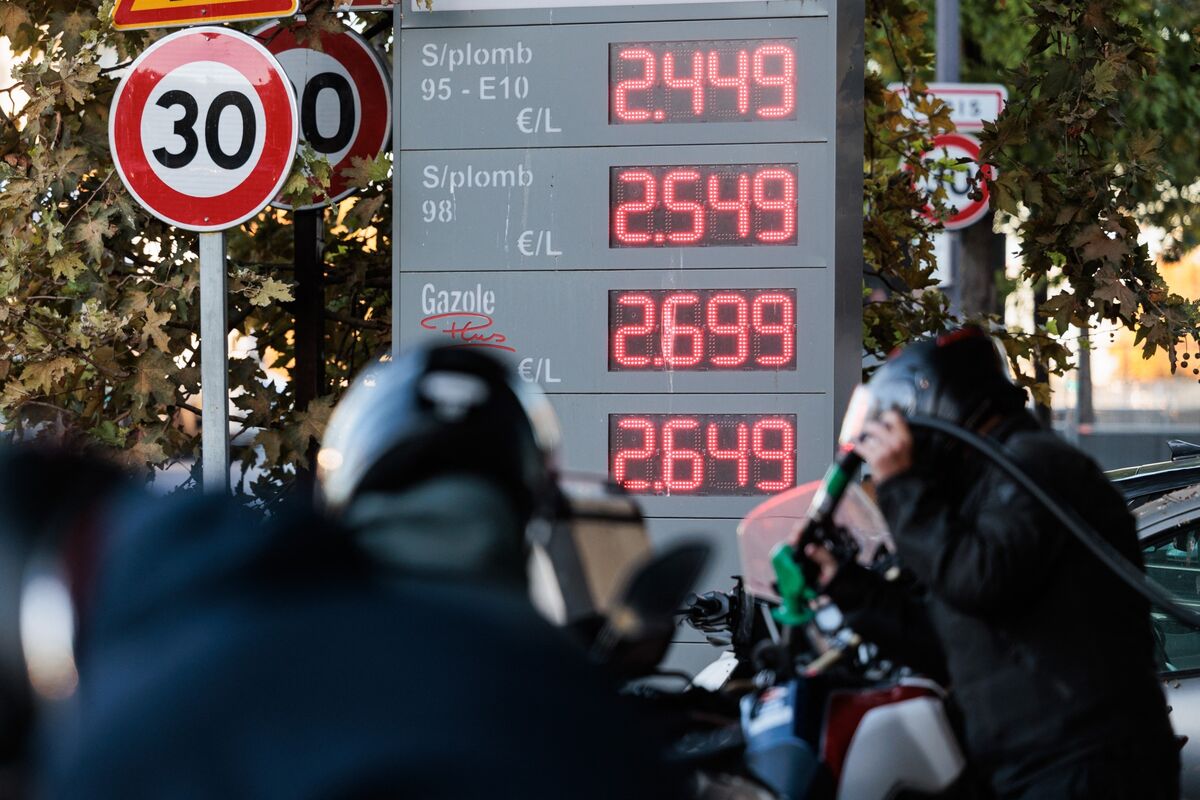
President Donald Trump's threat to ban US diesel exports drove European diesel prices sharply higher, with the region's diesel crack spread versus Brent surpassing a record $95 per barrel on Wednesday. The prospect of disrupted supply from Europe's largest supplier increased fuel-cost and inflation risks, while the equivalent US diesel refining margin weakened as domestic futures came under pressure. The divergence could materially affect European energy markets and complicate central banks' inflation-fighting efforts.
Analysis
The immediate dislocation is regional rather than outright bearish for refining: US Gulf Coast diesel barrels lose their export-arbitrage outlet, pressuring Gulf Coast distillate cracks and inventories, while Northwest Europe prices the replacement-cost risk. European refiners with high middle-distillate yields—Neste (NESTE.HE), Repsol (REP.MC), Galp (GALP.LS), and OMV (OMV.VI)—should see margin upside if the restriction is durable; US export-oriented refiners Valero (VLO), Phillips 66 (PSX), and Marathon Petroleum (MPC) face the opposite mix effect. Tanker owners could be a second-order beneficiary if Europe replaces US cargoes with longer-haul Middle Eastern and Asian barrels, favoring product-tanker exposure through STNG and INSW.
For the next days to weeks, the key market variable is whether this is a negotiating threat, a temporary emergency action, or an enforceable ban with exemptions. A formal restriction would raise European transport and heating-fuel inflation quickly, complicating ECB easing expectations and pressuring European consumer cyclicals more than broad equities. Conversely, US diesel prices would fall only until domestic storage constraints force refinery run cuts; that response can tighten US gasoline and jet supply within 1-3 months, partly offsetting the initial domestic consumer benefit.
Consensus may overstate the permanence of the European crack spike. Europe has meaningful ability to redirect cargoes from the Middle East, India and Asia, and elevated cracks incentivize refinery maximization; absent simultaneous disruptions in Russia-related flows or refinery outages, replacement supply should compress the premium over 1-3 months. The structural risk is political contagion: export controls on diesel establish a precedent for gasoline, LNG or crude interventions, warranting a higher policy-risk discount on US downstream earnings multiples over the next 6-18 months.
AllMind Terminal
AI-powered research, real-time alerts, and portfolio analytics for institutional investors.
Request TrialMarket Sentiment
Overall Sentiment
mildly negative
Sentiment Score
-0.25
Key Decisions for Investors
- Initiate a 1-3 month relative-value trade: long NESTE.HE or REP.MC versus short VLO, sized market-neutral. The thesis is sustained European middle-distillate margin expansion versus curtailed US export realizations; exit if no formal policy action is announced or the European diesel-Brent crack retraces below roughly $65/bbl.
- Buy a 2-4 month European refining-margin hedge via long ICE gasoil exposure or, where mandates permit, long European refining equities against short US refining ETF CRAK/XLE beta. Do not chase after an additional 20% gasoil spike; replacement cargo nominations and European inventory data are the near-term falsifiers.
- Watch STNG and INSW for confirmation from rising Atlantic-to-Europe and Middle East-to-Europe product-ton-mile rates. Enter only if spot product-tanker rates rise for two consecutive weeks; the trade offers asymmetric upside if rerouting persists, but fails if the measure is withdrawn before cargo patterns reset.
- Reduce tactical exposure to European discretionary and transport names if diesel inflation remains elevated for two weekly pricing cycles; an extended fuel-cost shock raises the probability of slower ECB cuts. Reverse that hedge on clear exemptions, policy withdrawal, or evidence that replacement imports normalize regional cracks.
More News
- Oil falls on report Asia will import highest volume of crude since start of Iran war
- Japan's 10-year bond yield hits 30-year high following sell-off in Treasurys
- America’s Asian allies want a Trump-Xi truce — but not at their expense
- US Debt Selloff Spans Most Maturities: Evening Briefing Americas
- Chinese authorities reportedly in possession of F-35 components in Hong Kong
- Trump evalúa prohibir exportaciones de diésel de EE.UU.