
SK chemicals Builds Regional Circular Economy Models for Waste Banners
Source: PR Newswire
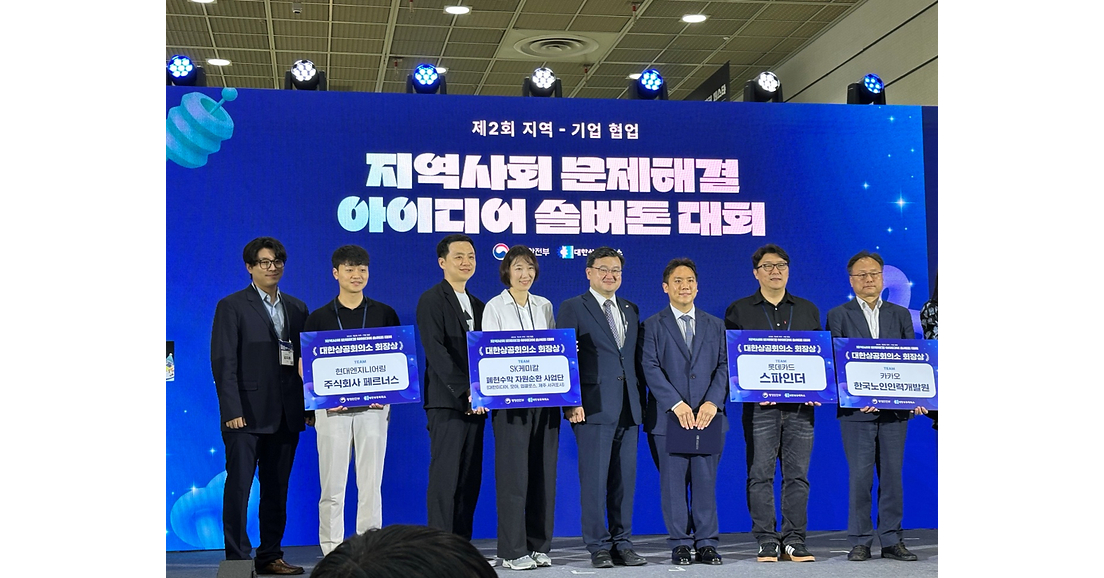
SK chemicals formed a consortium to collect waste banners across Gyeongsang, Honam, and Jeju and chemically recycle them into new banner fabric for local use. The company estimates more than 1,000 tons of waste banners are generated annually in those regions; nationwide, about 6,000 tons are generated each year in Korea, with roughly 70% reportedly landfilled or incinerated. The initiative is a regional circular-economy expansion using SK chemicals' depolymerization technology, with potential to reduce disposal but no financial targets or commercial impact disclosed.
Analysis
The investment case is process validation and future feedstock access, not near-term earnings: the announced regional stream is unlikely to move consolidated results absent evidence of throughput, recovery yield, product pricing, and incremental capex. The key bottleneck is not depolymerization in isolation but coordinated collection, sorting, preprocessing, and reliable offtake. If any link is costly or inconsistent, logistics and contamination can erase the value of turning waste back into banner-grade material. Conversely, repeatable municipal procurement and standardized sorting could create a replicable route to secure waste feedstock and strengthen SK chemicals’ commercial credibility with other waste owners and brands.
The broader competitive implication is conditional: successful chemical recycling could divert suitable material from incineration and landfill and compete with virgin resin or lower-grade mechanical-recycling outlets. It does not establish an advantage over those routes on cost or lifecycle emissions; those require independently verified yield, energy use, and lifecycle data. Local employment and regional circularity may help win public-sector participation, but should not be treated as proof of commercial returns.
Near term, this is a low-materiality announcement rather than a catalyst for a fundamental re-rating. Over 1–3 months, watch for operating data and binding supply/offtake arrangements; over 6–18 months, replication across regions and procurement rules are the more consequential tests. The contrarian read is that the headline’s “closed loop” framing may overstate economics: a circular process can still depend on subsidies or a price premium. No standalone trade is justified without scale and unit-economics evidence.
AllMind Terminal
AI-powered research, real-time alerts, and portfolio analytics for institutional investors.
Request TrialMarket Sentiment
Overall Sentiment
mildly positive
Sentiment Score
0.35
Key Decisions for Investors
- Do not trade the announcement as an earnings catalyst; treat it as a watch item for SK chemicals’ technology commercialization and policy-linked optionality.
- Set alerts for disclosed annual throughput, preprocessing rejection rates, depolymerization yield, cost per tonne versus virgin or mechanical-recycled alternatives, and realized banner-fabric pricing. These are the missing inputs needed to assess return on capital.
- Look for binding municipal collection and product-purchase commitments, plus disclosed capex and utilization. Expansion without dependable feedstock and offtake would weaken the thesis; standardized regional contracts and repeat orders would strengthen it.
- Falsify the positive thesis if the pilot fails to publish operating proof, requires persistent uneconomic support, or is not replicated beyond the initial regions over the next 6–18 months; independently verified lifecycle-emissions data should also support any ESG premium.
More News
- Oman evacuates injured crew from attacked tanker in Strait of Hormuz
- Oil rises as concerns over Houthi attacks on Saudi Arabia eclipse supply recovery
- Singapore's Temasek warns of the ‘biggest risk’ facing markets right now
- Australia top court rules against coal mine expansion, citing climate harm
- Rebounding oil exports through Strait of Hormuz are vulnerable to stepped-up Iranian tanker attacks
- GIC Private Ltd, Medline 10% owner, sells over $721m in shares