
Le congrès Smart City Expo 2026 promeut des solutions urbaines ayant un impact concret
Source: PR Newswire
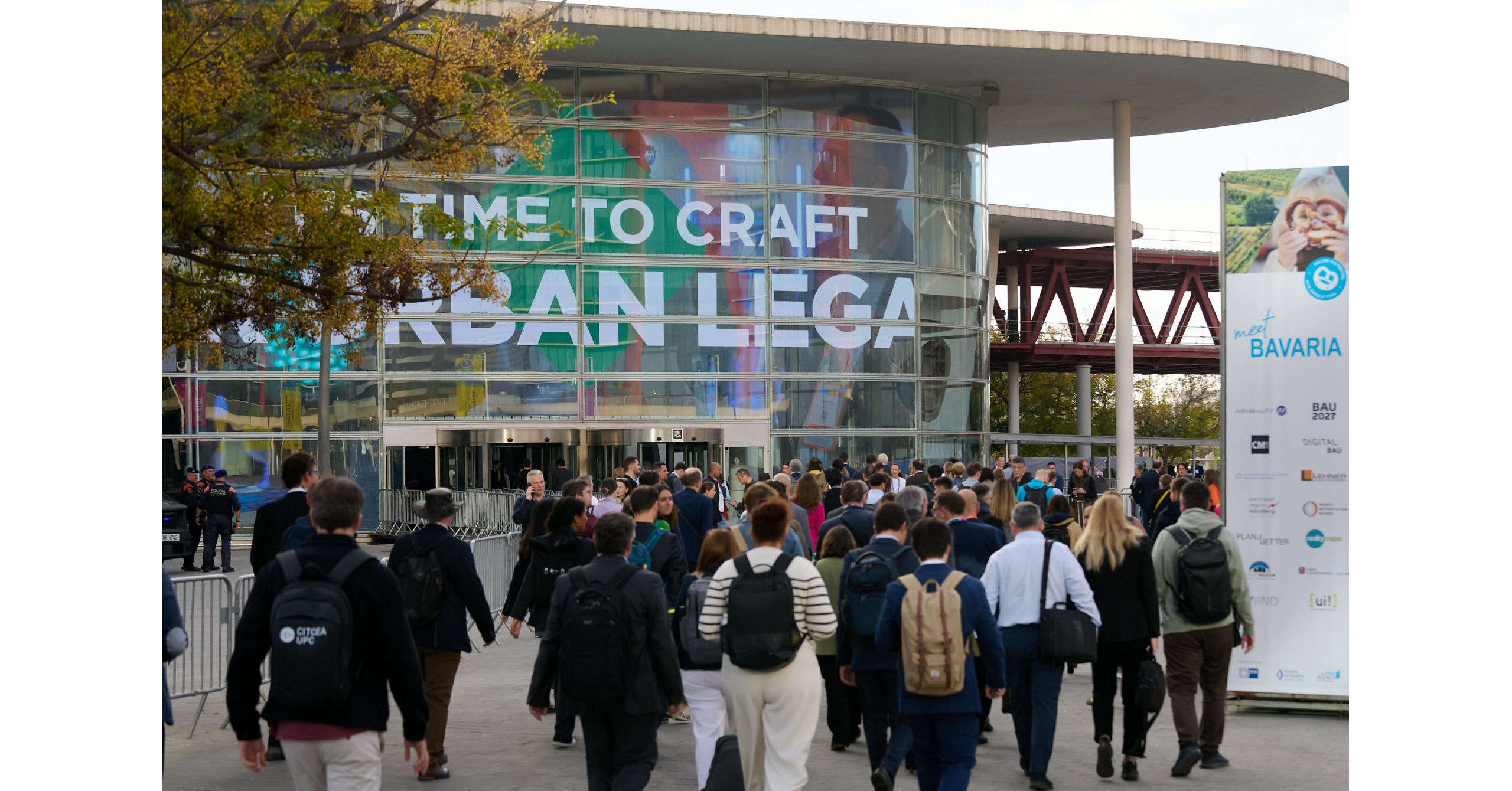
Smart City Expo World Congress 2026 will be held in Barcelona on November 3-5, targeting 1,000 cities, more than 25,000 visitors, over 1,000 exhibitors and 600 speakers. The event will focus on scalable urban solutions, particularly housing, alongside AI, digital transformation, green energy, mobility, infrastructure and inclusion. Google, Microsoft, NVIDIA, Dell Technologies and Deutsche Telekom IoT are among the planned exhibitors, but the announcement does not disclose contracts, financial results or material company-specific developments.
Analysis
This is not a near-term earnings catalyst for the named large-cap vendors; municipal technology procurement is fragmented, budget-constrained, and typically converts from demonstration to material revenue over 12-36 months. The more investable read-through is that housing retrofit, grid digitization, and urban compute are converging into a single public-sector capex category, favoring vendors able to bundle cloud, edge hardware, cybersecurity, and systems integration rather than sell standalone AI tools.
MSFT and GOOG are best positioned to monetize recurring cloud/data workloads if cities move beyond pilots, but procurement sovereignty, GDPR compliance, and local-hosting requirements limit hyperscaler operating leverage in Europe. DELL can benefit earlier through edge servers and municipal refresh cycles, although hardware-led revenue carries lower margin and is vulnerable to delayed public tenders. NVDA's exposure is indirect: accelerated AI inference at traffic, surveillance, building-management, and digital-twin endpoints supports unit demand, but city deployments are unlikely to affect consolidated results absent a broad European infrastructure funding program.
The underappreciated beneficiary is European power-grid modernization rather than software: electrified buildings, EV charging, and distributed energy management require incremental distribution investment before smart-city applications scale. DTE is not a clean geographic expression of this theme; European grid and electrification names such as Schneider Electric (SU.PA), Siemens Energy (ENR.GR), and Prysmian (PRYMY) have more direct sensitivity. Near-term sentiment may modestly support smart-infrastructure multiples, but there is no evidence here of contracted backlog, funded budgets, or a vendor award—making a directional trade premature.
AllMind Terminal
AI-powered research, real-time alerts, and portfolio analytics for institutional investors.
Request TrialMarket Sentiment
Overall Sentiment
mildly positive
Sentiment Score
0.18
Ticker Sentiment
Key Decisions for Investors
- No new position in GOOG, MSFT, NVDA, DELL, or DTE on this event alone; treat any conference-driven move as low-information. Upgrade only if exhibitors disclose named municipal contracts, contract value, implementation timing, or funded multi-city frameworks.
- Create a 1-3 month watchlist for long SU.PA / long PRYMY versus short a broad European software proxy if EU or national housing-renovation funding is announced: grid, building-automation, and cable content has clearer capex pass-through than municipal AI pilots. Falsifier: weaker order intake or a material reduction in European electrification/retrofit funding.
- For DELL, monitor public-sector/edge infrastructure order growth at the next earnings release; consider a tactical long only if AI-server backlog converts to revenue without gross-margin deterioration. Falsifier: enterprise/public-sector demand softness or further margin compression from AI-server mix.
- Avoid using NVDA as the smart-city expression over the next quarter: the incremental demand is too small relative to hyperscale and sovereign-AI drivers. A broader European sovereign-compute or regulated local-inference mandate would be the catalyst required to reassess.
More News
- Next week brings major risks for the stock market, just as the AI trade keeps faltering
- CrowdStrike CEO's alarming prediction — plus, the sell-off spreads beyond tech
- AI's 'Black October': Critical PHP flaws set off global security scramble
- On the ground at Nvidia GTC Berlin: Jensen Huang, robot ducks and neocloud distress
- What we want to see when this data center stock reports earnings next week
- Google told to halt work on Finnish data centers after clearing an estimated 250,000 trees before environmental review was done