
Amazon Leo: The Company's Next Frontier Is Already Here!
Source: seekingalpha.com
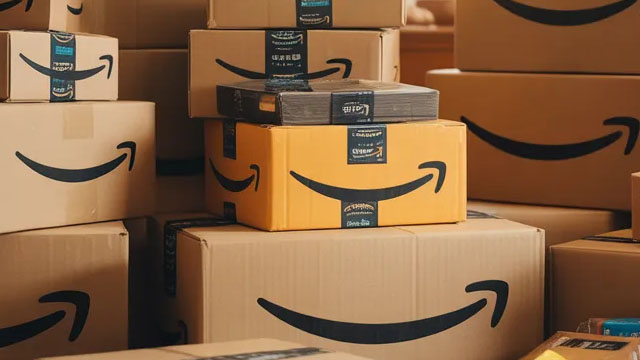
Bank of America raised Amazon's price target to $310, arguing its Leo low-earth-orbit satellite business represents a near-free option with substantial long-term upside. The bank estimates Leo could generate $7 billion-$10 billion in annual recurring revenue by 2030, supported by strategic partnerships, competitive pricing and advanced terminals. While Starlink remains the market leader, Leo could also create broader benefits across Amazon's ecosystem.
Analysis
The valuation debate is less about satellite-service revenue than whether Leo lowers Amazon’s distribution and cloud customer-acquisition costs. A proprietary connectivity layer could improve AWS edge deployment, extend Marketplace/logistics coverage into low-connectivity regions, and create device/Prime bundling opportunities; those benefits would be difficult to isolate in segment reporting and therefore are unlikely to be capitalized into AMZN’s multiple until tangible commercial metrics emerge. The principal second-order loser is not necessarily SpaceX, but terrestrial fixed-wireless and rural broadband incumbents whose subsidy-supported economics depend on serving high-cost locations.
Near-term, the market is likely to treat the analyst target revision as narrative support rather than an earnings catalyst. The investable inflection over the next 1-3 months is evidence of terminal economics, launch cadence, signed enterprise commitments, and disclosed capital intensity; absent those, investors should assume the initiative remains a cash-use case rather than an incremental FCF driver. Over 6-18 months, successful enterprise distribution could justify a higher AWS-adjacent option value, but delays or materially subsidized hardware pricing would instead raise concerns that Leo is competing in a structurally low-return connectivity market.
Consensus may be underestimating execution risk from spectrum coordination, launch dependency, and customer-installation costs, while over-focusing on a headline recurring-revenue estimate. The key falsifier for the bullish option-value thesis is not subscriber growth alone: it is whether management can demonstrate attractive terminal gross margin and enterprise ARPU without incremental capex guidance that offsets prospective revenue. If Leo requires sustained pricing concessions to gain share, Starlink’s scale advantage could turn the category into a margin-destructive duopoly rather than a source of multiple expansion.
AllMind Terminal
AI-powered research, real-time alerts, and portfolio analytics for institutional investors.
Request TrialMarket Sentiment
Overall Sentiment
moderately positive
Sentiment Score
0.58
Ticker Sentiment
Key Decisions for Investors
- Maintain or initiate a modest AMZN overweight only on core AWS/retail FCF fundamentals; treat Leo as unmodeled upside rather than a basis for paying a higher entry multiple. Reassess after the next earnings call for capex guidance, commercial-launch timing, and any disclosed terminal-unit economics.
- Use a 6-12 month defined-risk call spread in AMZN rather than outright calls if seeking Leo optionality: structure strikes around a 10-20% upside range from entry, funded by selling the higher strike. Exit if consolidated capex guidance rises materially without corresponding AWS growth or Leo contract disclosures.
- Do not pursue a directional short in satellite competitors solely on this development. Establish a watchlist alert on enterprise contract announcements and terminal pricing: a demonstrated low-cost AMZN terminal could pressure rural broadband proxies and fixed-wireless economics, but the article provides insufficient evidence to size that trade today.
- For a relative-value expression, prefer long AMZN versus a broad internet basket only if AWS growth reaccelerates or management identifies monetization beyond consumer connectivity; otherwise Leo-related optimism can be offset by higher infrastructure spend and multiple compression.
More News
- Looters hit 3,000 French businesses. Within hours, the haul was trending on Vinted under the riot’s date
- ‘There’s nothing temporary about a temporary store’: How Spirit Halloween’s CEO took it from 130 stores to 1,550—and swallowed your mall’s Hot Topic
- AI agents could disrupt bank deposits. Why Wall Street may be overreacting
- What we want to see when this data center stock reports earnings next week
- Instacart explores potential sale, holds talks with Uber and DoorDash: report
- BofA names Meta a top AI pick, raises price target on stronger ad growth
From AllMind Research
- Anthropic IPO Preview: Valuation, Timing, and What to Watch
- Shein After the IPO: Venue, Valuation, and What Must Be Proved
- What AI Research Tools Should a Small Hedge Fund Buy First?
- State of M&A and Private Markets, June 2026: A $4.9 Trillion Rebound, Underwritten on Money That Never Got Cheaper
- Run Cost-Controlled Financial Research in AllMind Agent Studio