
Three Generations, All First-Time Passes: PowerTitan 3.0 Validates System-Level Safety Under Extreme Large-Scale Fire Test
Source: PR Newswire
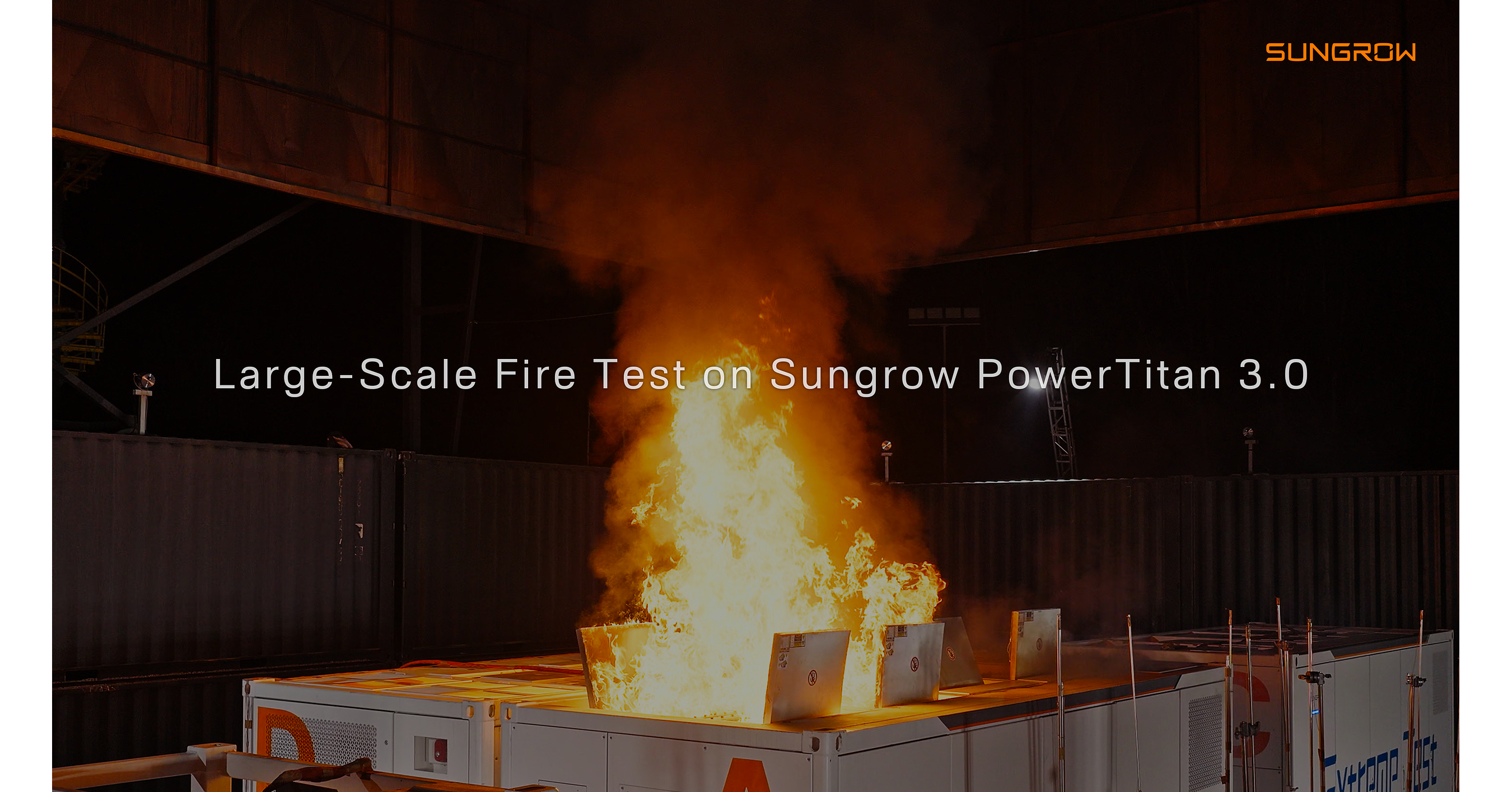
Sungrow said its PowerTitan 3.0 battery energy storage system passed a large-scale fire test under UL 9540A: 2026 and CSA/ANSI C800-2025 requirements, with thermal runaway contained in the initiating container and no propagation to adjacent containers or a 7.4 MW substation. The 7.5-hour test used 28.56 MWh of fully charged storage with suppression and thermal management disabled; the initiating container reached 1,259.8°C yet remained structurally intact. Sungrow said all three PowerTitan generations passed their large-scale fire tests on the first attempt.
Analysis
The investable signal is a possible shift in BESS procurement from cell-level specifications toward independently evidenced, system-level fire-containment performance. If insurers, lenders and project owners begin to reward that evidence through lower premiums, fewer exclusions or faster approvals, vendors able to document performance could win share even without a near-term change in battery costs. That is a conditional industry hypothesis, not a demonstrated commercial benefit for Sungrow.
For ULS, the test offers modest reputational validation as an independent testing provider, but one engagement does not establish recurring revenue or material earnings impact. The announcement is manufacturer-issued; the test result is not by itself proof of certification, approval across jurisdictions, or equivalent safety across other configurations. Higher energy density also makes safety differentiation more valuable, while raising the cost of a failure for vendors, operators and insurers.
Near term, expect limited fundamental read-through absent evidence of procurement wins or paid testing growth. Over 1–3 months, watch whether project tenders, insurer terms or permitting decisions explicitly cite comparable large-scale tests. Over 6–18 months, stronger evidence-based safety requirements could benefit tested suppliers and independent testing firms, while disadvantaging vendors unable to substantiate containment claims. A major BESS fire, regulatory divergence, or tests that fail to predict field incidents could reverse confidence. The contrarian point: a successful extreme-condition test may be technically meaningful but still have little value if buyers do not change purchasing or underwriting behavior.
AllMind Terminal
AI-powered research, real-time alerts, and portfolio analytics for institutional investors.
Request TrialMarket Sentiment
Overall Sentiment
moderately positive
Sentiment Score
0.45
Key Decisions for Investors
- No immediate ULS trade: treat this as a small credibility positive, not an earnings catalyst. Revisit only if ULS discloses broader BESS testing demand, revenue contribution or repeat engagements.
- Set a 1–3 month watch item for utility-scale storage RFPs, insurer underwriting language and permitting decisions that require or reward independently witnessed, system-level fire testing.
- For BESS vendor comparisons, benchmark Sungrow against disclosures from Fluence, Tesla, Wärtsilä and BYD; do not infer a competitive win without evidence of comparable test scope and subsequent project awards.
- Falsify the constructive industry thesis if buyers and insurers do not change requirements, if tested configurations prove unrepresentative of deployed systems, or if field incidents undermine the link between test performance and loss severity.
More News
- The U.S. market has never been more focused on one single bet—but AI’s payoff will likely take decades
- Meta put out an ambitious roadmap to Muse monetization after strong quarter and guide
- CoreWeave’s market confidence erodes as bond yields spike and stock sinks
- Why is Tesla stock falling after-hours today?
- Meta ordered to pay $25 billion in case related to Cambridge Analytica scandal
- Zuckerberg told Meta directors he might leave California, where he could lose billions to a wealth tax. Meta answered with a new class of stock