
Brookfield Asset Management: 4.25% Yield With High Growth
Source: seekingalpha.com
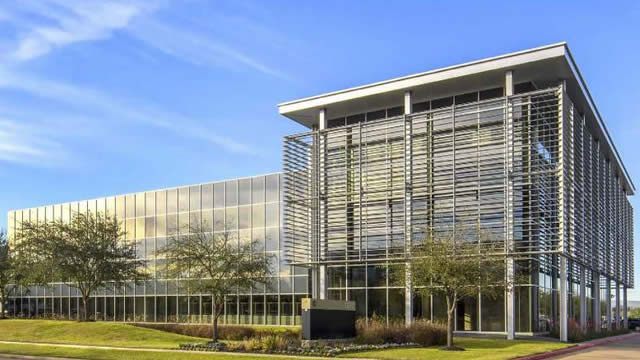
Brookfield Asset Management's falling share price and rising dividend have lifted its dividend yield to 4.25%. The article argues the stock is not a dividend trap because earnings and cash flow are increasing, with free cash flow described as rising dramatically.
Analysis
The key valuation question is not whether BAM can cover the current distribution, but whether the market is discounting a sustained slowdown in fee-bearing capital formation and realizations. For an asset-light manager, reported FCF can be flattered by timing of management-fee receipts, accrued performance fees, and working-capital movements; recurring fee-related earnings (FRE), net inflows, and fee-bearing AUM are the cleaner underwriting variables. A dividend yield premium is durable only if FRE growth remains ahead of the distribution-growth rate without relying on realization-dependent carry.
Relative to KKR, APO, ARES and CG, BAM's differentiated risk is its affiliation with Brookfield's broader capital ecosystem: it can source proprietary mandates, but its fundraising momentum is more exposed to institutional appetite for long-duration infrastructure, transition and private-credit allocations. If rates fall over the next 6-12 months, lower discount rates and improved transaction activity should support both fundraising and realizations, potentially closing the valuation gap to alternative-asset peers. Conversely, an extended private-markets liquidity drought would make a higher yield a multiple-compression signal rather than a catalyst.
The non-consensus opportunity is that a weak share price can create a self-reinforcing capital-return setup if management maintains dividend growth while asset-management earnings compound; yield-oriented buyers become incremental demand once the payout is demonstrably covered. But this is not yet a standalone dividend trade on the supplied evidence: the article's FCF claim needs reconciliation against FRE, payout ratio, net fundraising, and any growth in receivables before assigning a defensive-income multiple. The immediate catalyst is quarterly fee-bearing AUM and fundraising; the 1-3 month rerating path depends on guidance durability, while the 6-18 month outcome depends on realization markets reopening.
AllMind Terminal
AI-powered research, real-time alerts, and portfolio analytics for institutional investors.
Request TrialMarket Sentiment
Overall Sentiment
mildly positive
Sentiment Score
0.35
Ticker Sentiment
Key Decisions for Investors
- Place BAM on a pre-earnings watchlist rather than initiate solely on yield. Go long only if fee-bearing AUM, net inflows and FRE guidance confirm that recurring earnings cover the annualized dividend with room for continued growth; falsify on a material FRE-guide cut or persistent net outflows.
- Conditional 6-12 month pair: long BAM / short CG or an equal-weight alternative-manager basket if BAM trades at a widening valuation discount despite comparable fee-related growth. This isolates a Brookfield-specific rerating, but exit if BAM fundraising trails peers for two consecutive quarters.
- For existing BAM exposure, treat the next earnings release as the near-term catalyst and cap position size until management discloses the composition of FCF and payout coverage. A dividend increase unsupported by FRE growth is a de-risk signal, not confirmation.
- Monitor BN as a second-order read-through: stronger Brookfield-sponsored fundraising and asset sales would validate BAM's distribution ecosystem and realization pipeline; deterioration in BN liquidity or fundraising would weaken the thesis before it appears in BAM's reported earnings.
More News
- Warren Buffett stepping down as chairman of Berkshire Hathaway: 'Father Time always wins'
- Flock Offers Employees Buyouts as Customers Flee
- Anthropic’s first embedded evaluator is … Accenture?
- Volkswagen and Porsche Holding cut outlook
- Warren Buffett steps down as Berkshire Hathaway chairman
- Meet Warren Buffett’s son Howard, a former sheriff, war photographer, and now, Berkshire’s new chairman