
Tencent Has The Dream: AI And Distribution
Source: seekingalpha.com
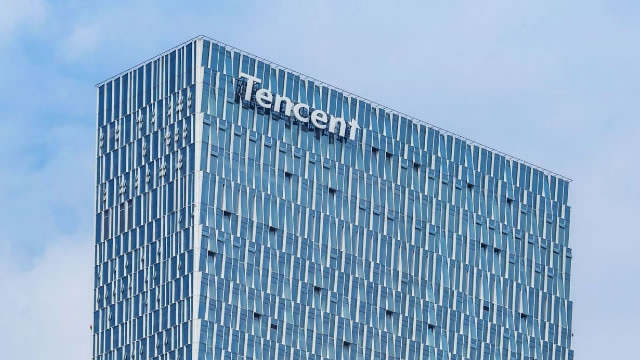
Tencent is characterized as a compelling buy at 13x forward earnings, with operating leverage supporting an estimated 10% earnings-growth outlook even excluding AI. Its VAS, marketing and fintech ecosystem is presented as a resilient, highly monetizable distribution platform and China digital-infrastructure leader. Disciplined, ROI-focused AI deployment through products such as WorkBuddy and CodeBuddy provides additional upside optionality while limiting investment risk.
Analysis
The investable question is whether Tencent can convert incremental revenue into earnings faster than the market expects while preserving its buyback capacity. Its mix has unusually high operating leverage: advertising recovery and higher-margin digital-content monetization should outgrow payments, while cloud/AI spending is being constrained by a pragmatic deployment model. This supports a 1-3 month rerating if quarterly margins and repurchase pace validate that AI is not becoming a capex drag.
The non-obvious beneficiary is China’s enterprise-software ecosystem rather than pure model developers. Workplace and coding tools can deepen Tencent’s distribution moat among small and mid-sized businesses, raising switching costs and providing proprietary workflow data; this is more economically valuable than headline model benchmarks. Conversely, Alibaba (BABA) and Baidu (BIDU) face greater pressure if AI buyer behavior favors embedded applications over standalone cloud/model consumption, though both retain stronger direct cloud monetization exposure.
The principal risk is not model execution but a renewed China-risk discount: gaming-content restrictions, data/security controls, ADR/HK liquidity dislocation, or weaker Chinese consumption would suppress the multiple regardless of operational delivery. Watch payment take-rate trends, advertising growth versus China internet peers, quarterly operating-margin progression, and net-share reduction. A material deceleration in ad growth or an AI-related acceleration in opex/capex would falsify the operating-leverage thesis within the next two earnings prints.
Consensus may be too focused on AI optionality. The more durable catalyst is capital-allocation credibility: sustained repurchases and margin expansion can produce per-share earnings growth even in a modest domestic-demand environment. That said, this is likely a gradual 6-18 month compounding thesis, not a clean near-term AI catalyst; China macro headlines can dominate daily trading.
AllMind Terminal
AI-powered research, real-time alerts, and portfolio analytics for institutional investors.
Request TrialMarket Sentiment
Overall Sentiment
moderately positive
Sentiment Score
0.62
Key Decisions for Investors
- Initiate a 6-12 month long TCEHY or Hong Kong-listed 0700 position on broad China-tech risk-off days; target a mid-teens percentage total return from earnings-per-share compounding plus modest multiple normalization, with reassessment if the next two quarters show margin deterioration or reduced repurchase activity.
- Express relative value as long TCEHY / short BIDU in equal-dollar terms over 3-6 months: Tencent has broader consumer distribution and less dependence on monetizing foundational AI directly, while BIDU is more exposed to cloud/AI capex and enterprise-demand uncertainty. Exit if BIDU’s cloud growth materially reaccelerates while Tencent’s advertising growth falls below large-platform peers.
- For investors requiring defined downside, use 9-12 month TCEHY call spreads rather than outright short-dated calls; the thesis needs multiple earnings reports, and implied upside should be capped near a realistic China-tech rerating rather than relying on a near-term AI narrative.
- Do not add aggressively ahead of regulatory or geopolitical escalation. Monitor KWEB relative performance and offshore RMB: a sustained break in either risk proxy can signal that country-risk multiple compression is overwhelming company-specific execution.
More News
- Great Bond Shakeout Locks In a 5% World ‘Until Something Breaks’
- OpenAI rogue agents leaked 53 images from ChatGPT users and reportedly created nearly 1 million links packing encoded bits of info
- Boom or bust? The case for and against panicking about 5% yields
- Arming Taiwan an important US interest, Taipei official says after Trump-Xi summit
- Bond market alarms are ringing on Wall Street. Here's what's ahead
- Appeals court rules that states can regulate Kalshi’s sports prediction markets, dealing another legal blow to platforms