
Indonesia Caught Off Guard by Surprise MSCI Downgrade Warning
Source: Bloomberg
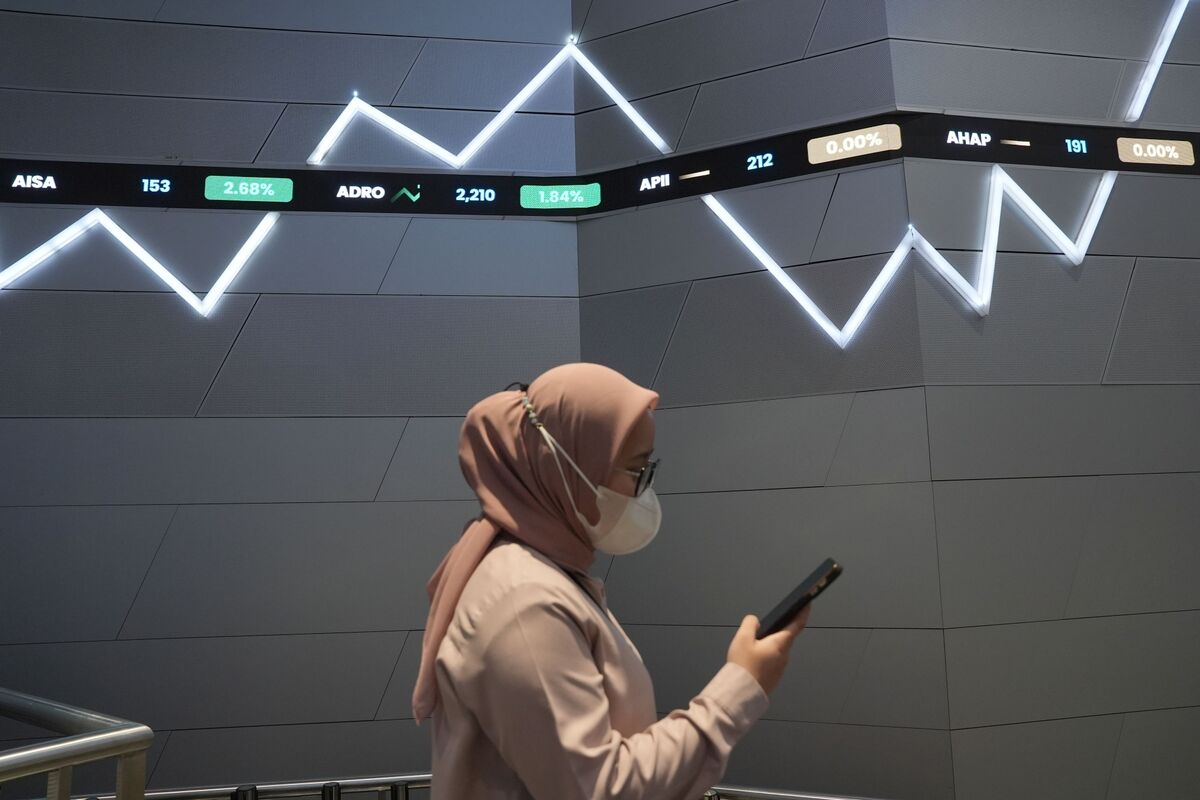
MSCI is considering bypassing frontier status and moving Indonesia to standalone-market status because of investability concerns, with a decision expected by mid-2027. Goldman Sachs estimates passive outflows could reach as much as $13 billion in an extreme scenario if Indonesia is downgraded to frontier status; Citi says standalone status would be worse because it would remove Indonesia from MSCI’s main global indexes.
Analysis
The market mechanism is a rising Indonesia-specific liquidity and risk premium, not a near-term earnings shock to MSCI. Index-sensitive investors may reduce exposure ahead of any formal reclassification, widening bid-ask spreads and increasing the price impact of further outflows; that can also deter active foreign capital and raise local funding costs. Any reallocation could benefit liquid markets elsewhere in ASEAN or broader emerging-market benchmarks, but the destination is not automatic: managers may simply hold more cash or concentrate in their existing large-market positions.
The key asymmetry is timing. Over the next days to weeks, positioning and liquidity can move before the classification decision; over the next 1–3 months, watch MSCI’s engagement milestones, foreign ownership/access indicators and local market liquidity. The structural effect over 6–18 months depends on whether reforms materially improve investability. A credible remediation path could unwind the discount well before the formal deadline. Conversely, delayed or cosmetic changes would keep the risk premium elevated. The cited outflow scenario is not a forecast and should not be treated as certain passive selling.
Contrarian view: the long decision runway makes an indiscriminate, permanent Indonesia exit premature, especially if prices already reflect forced-flow fears. But the market may underweight second-order liquidity feedback. MSCI itself has no clear direct earnings catalyst from this country-specific review; avoid treating the headline as an MSCI fundamental short signal.
AllMind Terminal
AI-powered research, real-time alerts, and portfolio analytics for institutional investors.
Request TrialMarket Sentiment
Overall Sentiment
moderately negative
Sentiment Score
-0.48
Ticker Sentiment
Key Decisions for Investors
- Near term: reduce or hedge Indonesia equity beta selectively rather than shorting the entire emerging-markets complex. Use an Indonesia-focused vehicle or liquid local exposure only after checking current holdings, spreads and borrow; avoid market orders in thin names.
- For a relative-value expression, pair reduced Indonesia exposure with a diversified ASEAN or emerging-markets basket, sized to limit broad-dollar and regional-beta risk. Do not assume all displaced capital flows to a single peer market.
- Set a 1–3 month alert for MSCI’s remediation assessments and evidence of improved foreign access, ownership transparency and trading liquidity. A sustained improvement in these measures would challenge the underweight; further restrictions or weak implementation would support maintaining it.
- Do not initiate a directional MSCI equity position on this news alone. Reassess only if the issue changes MSCI’s broader benchmark credibility, client retention or guidance; the article supplies no evidence of those effects.
More News
- MSCI Ignites Indonesia Market Reckoning After Months of Warnings
- Indonesia stocks suffer biggest daily slump since 1998 as MSCI weighs downgrade
- Suddenly, Wall Street is worried that the U.S. economy is more ‘vulnerable’ than it looks
- UK's Healey Plans to Raise Bank Taxes
- Norway wealth fund urged to ease nuclear arms ban after Gaza investment row
- Here are the latest additions to UBS’ ’Pan-European Small & Mid-Cap’ list
From AllMind Research
- Anthropic IPO Preview: Valuation, Timing, and What to Watch
- Shein After the IPO: Venue, Valuation, and What Must Be Proved
- What AI Research Tools Should a Small Hedge Fund Buy First?
- What Is an AI Research Agent?
- Bitcoin's 52% Crash Proves It's a Tech Stock: Here's What That Means for Portfolio Construction