
Augury Introduces Industrial Profile for Google Cloud's Open Knowledge Format
Source: PR Newswire
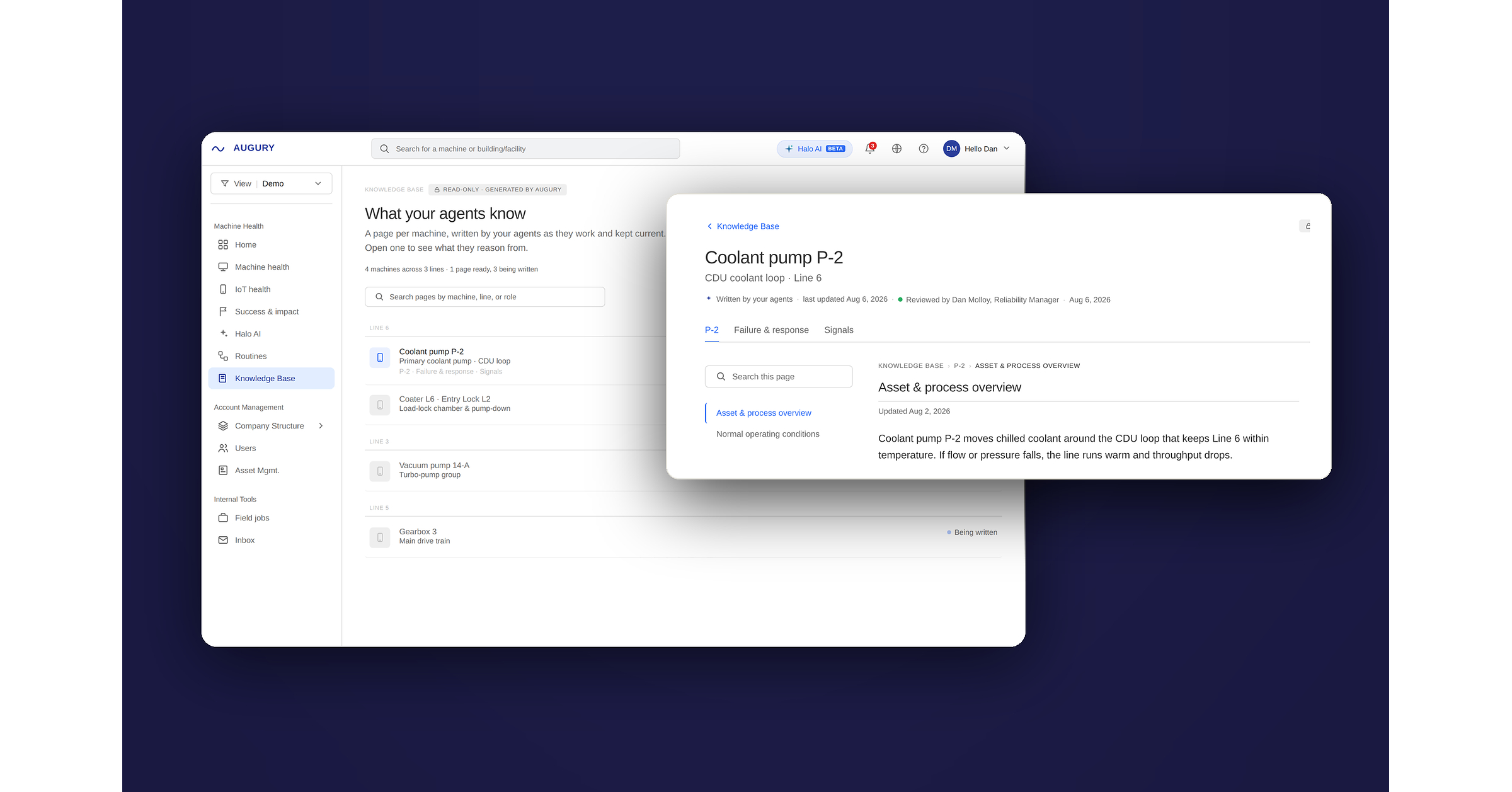
Augury launched the open-source OKF Industrial Profile for Google Cloud's Open Knowledge Format, providing manufacturing-specific conventions for human-verified operator knowledge, sensor-trust rules and plant-floor AI context. The profile is available under an Apache 2.0 license and is designed to work alongside standards including ISA-95, ISA-88 and Asset Administration Shell without duplicating live operating data. The release could support broader interoperability for industrial AI agents, but it is a product and standards announcement with limited near-term market impact.
Analysis
For GOOG, the financial read-through is immaterial near term: the relevant bottleneck is not model access but the costly services workflow of converting tacit plant knowledge into governed machine-readable rules. An open profile can marginally improve Google Cloud’s credibility in manufacturing RFPs, but it also reduces proprietary data-model lock-in and allows workloads to remain portable across AWS, Azure, and edge deployments. The more direct value accrues to implementation partners and industrial-software vendors that own installed-base connectivity, historian data, and plant-system integrations—not to the cloud specification sponsor.
The second-order risk is that a common context layer weakens premium valuations for closed industrial-AI platforms if customers increasingly separate the knowledge layer from the application/vendor layer. Siemens (SIEGY), Schneider Electric (SBGSY), Rockwell (ROK), Honeywell (HON), PTC (PTC), and AVEVA-owner Schneider have differentiated installed bases, but their AI monetization depends on converting proprietary workflow access into recurring software revenue before interoperability compresses switching costs. Over the next 6-18 months, adoption will be constrained by liability, cybersecurity review, labor governance, and the labor-intensive verification of rules; public-repository availability is not evidence of enterprise deployment or cloud consumption.
Contrarian view: interoperability may ultimately expand the industrial-AI market rather than commoditize it, because customers unwilling to commit operational control to a single vendor may fund pilots once auditability improves. That outcome favors hyperscalers with broad partner ecosystems, but only if production deployments generate incremental storage, analytics, and inference spend rather than remain disconnected-edge proofs of concept. Watch for named production customers, systems-integrator endorsements, and disclosed usage growth in Google Cloud manufacturing workloads; absent those within two quarters, this is ecosystem marketing rather than an investable GOOG catalyst.
AllMind Terminal
AI-powered research, real-time alerts, and portfolio analytics for institutional investors.
Request TrialMarket Sentiment
Overall Sentiment
mildly positive
Sentiment Score
0.35
Ticker Sentiment
Key Decisions for Investors
- No directional GOOG trade on this release; treat it as a low-impact ecosystem signal. Reassess only if Google discloses manufacturing-cloud bookings, material AI consumption growth, or multiple production deployments within the next 1-3 quarters.
- Maintain a watchlist pair: long GOOG / short an industrial-software basket weighted to PTC and ROK only if open-standard adoption is validated by major manufacturers or integrators. Thesis is cloud ecosystem scale versus potential application-layer switching-cost compression; invalidate if proprietary vendors demonstrate accelerating ARR, attach rates, or pricing despite interoperability.
- For 6-18 month industrial-AI exposure, favor selective longs in automation incumbents with control-system and service revenue—HON, SIEGY, SBGSY—over pure software narratives, but wait for evidence that AI projects convert to paid deployments. Key risk is that compliance and plant-change-control cycles defer monetization beyond current consensus expectations.
- Set an alert for competing commitments from AWS, Microsoft Azure, Siemens, or Schneider to the same format or a rival standard. Broad multi-vendor support would increase interoperability risk for closed platforms; fragmentation would instead limit adoption and diminish the relevance of this announcement.
More News
- Nvidia's role as AI financier faces first big test as neoclouds take market hit
- Goldman says these top tech stocks have plenty of upside ahead of earnings
- Will AI expose the rickety infrastructure of the internet?
- The UK is investing $134 million into an AI Biosecurity Lab
- In Brazil’s elections, big techs’ transparency and cooperation policies translate as governance washing, according to this expert
- The AI graveyard: a running list of projects and startups that didn’t make it