
How a U.S. diesel export ban would play out, according to Goldman Sachs
Source: marketwatch.com
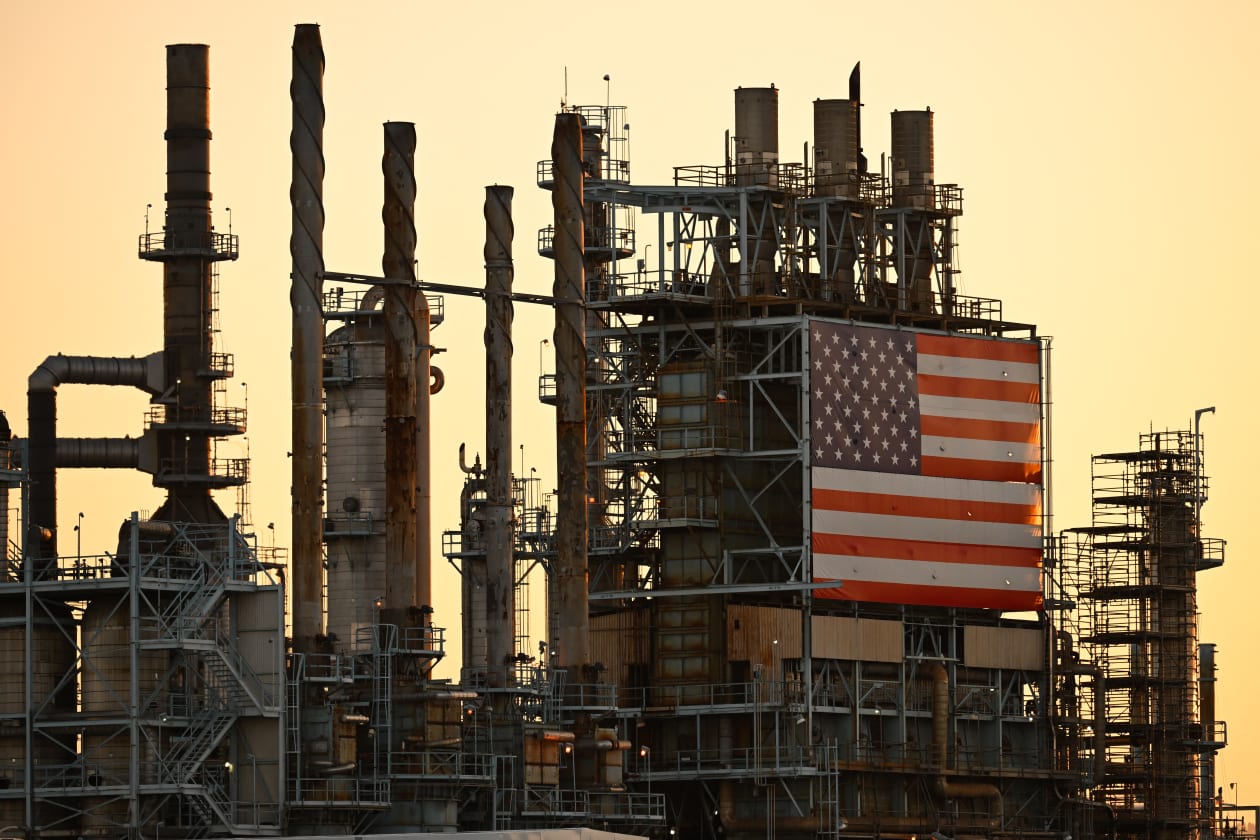
The White House is considering a potential U.S. diesel export ban after retail diesel prices reached $6.53 per gallon and remained near $6.45, up 75% year over year, according to AAA. President Trump said he would support restrictions to reduce domestic fuel costs; Goldman Sachs assessed the potential market effects, with the policy posing risks to diesel exporters, refining margins and global fuel supply flows.
Analysis
The cleanest equity transmission is a compression of Gulf Coast refining economics rather than a durable windfall for domestic fuel consumers. VLO, MPC and PSX depend on export optionality to clear incremental distillate barrels; trapping supply in PADD 3 would widen the discount of U.S. diesel to seaborne pricing, reduce utilization incentives, and pressure crack-spread-driven earnings estimates within days of a credible policy announcement. A secondary effect is lower refinery runs, which can tighten gasoline and jet-fuel supply even as diesel inventories build—making a broad "lower fuel prices" outcome internally inconsistent after the initial dislocation.
Foreign distillate markets would bear the opposite shock. European gasoil and Latin American import markets have less immediate replacement capacity, favoring a long ICE gasoil versus short NYMEX ULSD expression over the first 1-3 months if implementation is broad and enforced. The policy may be less bearish for U.S. trucking and rail than headline logic implies: fuel-surcharge mechanisms partially offset diesel exposure, while lower fuel costs can be competed away in freight pricing; JBHT, ODFL, UNP and CSX are therefore second-order beneficiaries, not primary longs.
The key contrarian point is execution risk. A full ban would likely invite carve-outs for contractual cargoes, allies, military uses, or specific grades, and refiners can alter yields only gradually; narrow exemptions would sharply reduce the equity impact. The thesis is falsified by explicit exemption language, a sustained recovery in Gulf Coast diesel cracks, or refinery guidance indicating exports remain near normal. GS itself has no direct earnings sensitivity; its commentary is an information catalyst, not a standalone trade.
AllMind Terminal
AI-powered research, real-time alerts, and portfolio analytics for institutional investors.
Request TrialMarket Sentiment
Overall Sentiment
mildly negative
Sentiment Score
-0.28
Ticker Sentiment
Key Decisions for Investors
- On confirmation of a broad, time-defined export restriction, initiate a 1-3 month pair: short VLO or MPC / long XLE, sized market-neutral. Refiners should underperform integrated upstream-heavy exposure as domestic distillate cracks compress; cover if Gulf Coast diesel crack spreads recover to pre-policy levels or material export exemptions emerge.
- For a purer policy expression, buy ICE gasoil and sell NYMEX ULSD in matched risk units after final implementation details, with a 1-3 month horizon. The trade captures the likely U.S.-versus-seaborne distillate dislocation; avoid initiation on rhetoric alone because exemptions and enforcement terms dominate the spread outcome.
- Do not add broad longs in JBHT, ODFL, UNP or CSX solely on lower diesel expectations. Reassess after the next earnings cycle for evidence that fuel surcharges lag costs and freight demand is stable; otherwise fuel savings are likely passed through to customers.
- Maintain an alert on refinery utilization and PADD 3 distillate inventories over the first 2-6 weeks. Rising inventories alongside falling runs would strengthen the short-refiner case but also creates a later bullish setup in gasoline and jet cracks as reduced throughput constrains co-product supply.
More News
- What the market needs to branch out beyond AI stocks. Plus, a win for CrowdStrike
- Nearly half the stocks in the S&P 500 are at cross purposes with the rest of the market
- Apollo raises specter of an AI agentic 'bank run' hitting financial industry
- The economist who coined the phrase ‘Magnificent 7’ says the very thing that made them extraordinary is under threat
- Goldman warns high-yield bond supply surge pressuring markets
- Brookline initiates Revolution Medicines stock with buy rating
From AllMind Research
- Anthropic IPO Preview: Valuation, Timing, and What to Watch
- Shein After the IPO: Venue, Valuation, and What Must Be Proved
- What AI Research Tools Should a Small Hedge Fund Buy First?
- How to Build an Automated Research Process for a Fund
- Weekly Update: AI-Powered Report Editing, Investor Relations, and Enhanced Search