
Taiwan Semiconductor: AI CapEx Keeps Climbing, And TSMC Looks Undervalued
Source: seekingalpha.com
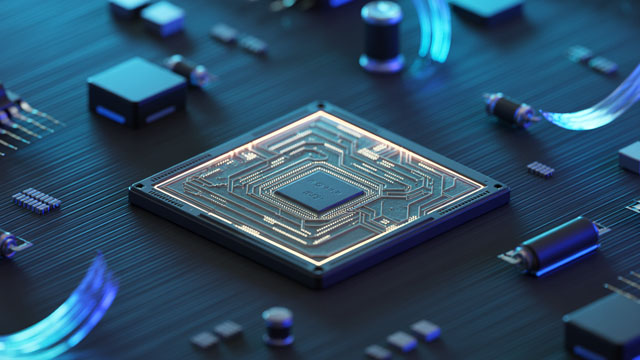
TSMC reported 33.7% year-over-year revenue growth in Q2 2026, alongside a 67.7% gross margin and 60.3% operating margin, and guided for 37% YoY revenue growth in Q3. The company is positioned as a key beneficiary of AI infrastructure spending, with hyperscaler CapEx projected to reach $1.3 trillion by 2027. At 20.37x projected 2027 earnings, with EPS expected to compound at nearly 30% annually through 2028, the article argues TSMC remains undervalued relative to its growth and cash-generation profile.
Analysis
The key debate is no longer whether TSM can fill leading-edge capacity, but whether its customers can earn adequate returns on their AI infrastructure before they demand a pricing reset. TSM’s margin structure implies that advanced-node scarcity and packaging remain more valuable than wafer-volume growth alone; the incremental beneficiary is likely equipment and materials exposure tied to 2nm and advanced packaging—ASML, AMAT, LRCX, KLAC and specialty packaging suppliers—rather than broad semiconductor beta. A sustained mix shift toward leading-edge logic can support further gross-margin expansion even if mature-node utilization remains weak.
Near term (days to 3 months), the stock’s upside depends on whether management converts strong demand commentary into higher 2027 capex, advanced-packaging capacity targets, or pricing disclosures. The valuation argument is vulnerable to a denominator problem: consensus earnings estimates embed both uninterrupted AI capex and a benign Taiwan-risk discount. Any evidence that hyperscaler depreciation schedules, GPU utilization, or power constraints are delaying data-center deployments could reduce customer order visibility before reported TSM revenue weakens.
The contrarian view is that TSM may be priced less as a cyclical foundry and more as the sole scalable AI compute bottleneck, leaving limited upside from routine beats. The more asymmetric structural trade is long leading-edge semiconductor capital equipment versus mature-node foundry exposure: AI-driven node transitions require disproportionate lithography, metrology and etch intensity, while China-linked mature-node supply continues to pressure legacy utilization. Over 6-18 months, export-control expansion or a Taiwan geopolitical premium repricing remains the largest risk to the entire complex, irrespective of operating execution.
AllMind Terminal
AI-powered research, real-time alerts, and portfolio analytics for institutional investors.
Request TrialMarket Sentiment
Overall Sentiment
strongly positive
Sentiment Score
0.72
Ticker Sentiment
Key Decisions for Investors
- Maintain or initiate a 3-6 month long TSM position only on AI-capex or guidance-driven pullbacks; target a 15-20% upside on continued earnings-estimate revisions, with thesis invalidated by a material cut to 2027 capex, advanced-packaging expansion, or gross-margin outlook.
- Pair trade for 6-12 months: long ASML and KLAC versus short UMC or GF. This expresses rising leading-edge process intensity while hedging broad foundry-cycle risk; reassess if mature-node utilization improves materially or 2nm ramp timing slips.
- Use TSM downside hedges rather than chasing spot strength: buy 6-9 month put spreads around an adverse Taiwan-risk or AI-capex reset scenario. A catalyst would be export-control tightening, a hyperscaler capex-guide reduction, or evidence of GPU/power deployment bottlenecks.
- Set an earnings-watch trigger for the next report: add exposure only if management raises both capital spending and advanced-node/packaging capacity while preserving margin guidance. Revenue growth alone is insufficient; a mix-driven margin concession would signal customer bargaining power is increasing.
More News
- Meet the Magnificent Semiconductor Stock Crushing Nvidia in 2026
- Why Intel Stock Jumped This Week
- Qualcomm splits its flagship phone chip in two with the 8 Elite Gen 6
- AMD Just Joined Nvidia in the $1 Trillion Club. At $614, Wall Street Is Paying Too Much for a Distant No. 2.
- If I Could Only Add 1 ETF to My Portfolio This Year, Here's Exactly What I'd Buy
- The "Magnificent Seven" Stocks: Here's the 1 I'm Buying Hand Over Fist Right Now