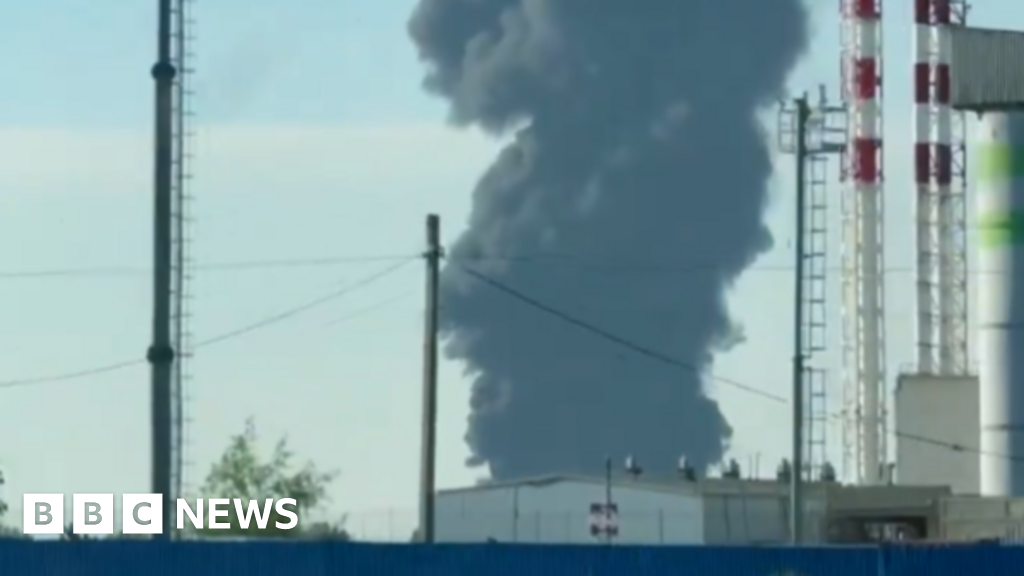
Russia said more than 140 drones were shot down over the St Petersburg/Leningrad region in an "unprecedented" Ukrainian attack, with a fire reported at a military facility and residents evacuated. Zelensky said Ukrainian forces hit a naval base, arsenals, and an oil depot 500km away in Krasnodar, underscoring continued strikes on Russian logistics and energy infrastructure. The escalation comes amid stalled ceasefire talks and could raise near-term geopolitical and energy-market risk.
This is less about tactical battlefield headlines and more about a shift in the economic cost curve of the war. Once drone ranges are consistently reaching deep logistics, the marginal protection value of static assets falls sharply while the premium rises for dispersion, redundancy, and mobile transport capacity. That tends to pressure Russian logistics efficiency, but it also creates asymmetric risk for any region-dependent industrial or energy infrastructure with limited hardening and long replacement cycles.
The second-order market implication is that energy supply risk is becoming more idiosyncratic, not just a broad crude-beta story. Repeated hits on storage, terminals, and convoy routes can tighten local product balances even when headline export flows look intact, which is supportive for refined-product cracks before it shows up in Brent. That matters more for diesel-sensitive transport and agro supply chains than for broad equity indices, and it argues for higher implied volatility across European energy and regional logistics exposures.
A key contrarian point: the market may be underestimating how much this accelerates adaptation rather than destruction. If Russia responds by dispersing inventory, rerouting freight, and hardening critical nodes, the near-term disruption can fade while defense and counter-drone budgets become structurally sticky for years. The real tradable signal is not the strike count itself, but whether insurance premiums, freight rerouting costs, and military logistics expenditures start trending higher for multiple quarters.
Tail risk is escalation into infrastructure that sits closer to global pricing nodes: export terminals, pipeline junctions, or Black Sea-linked capacity. That is a months-long risk, not a days-long one, and would be the catalyst for a sharper move in European distillates, shipping rates, and defense equities. A de-escalation path exists if talks resume or if drone effectiveness is blunted by electronic warfare upgrades, but absent that, this is a slow-burn margin squeeze rather than a one-day shock.
AI-powered research, real-time alerts, and portfolio analytics for institutional investors.
Request TrialOverall Sentiment
strongly negative
Sentiment Score
-0.60
