
Warren Buffett Steps Down as Chairman of Berkshire Hathaway: NYSE Content Update
Source: PR Newswire
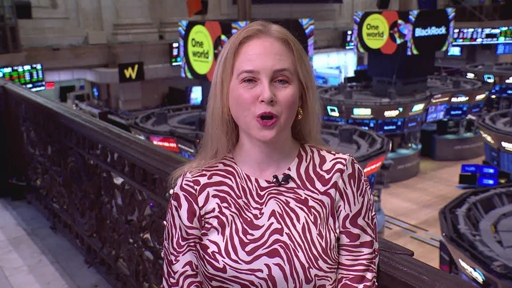
Warren Buffett will step down as Berkshire Hathaway chairman after leading the company since 1965, becoming chairman emeritus immediately; Howard Buffett will succeed him as chairman. Separately, legal AI platform Harvey raised $550 million at a $15.5 billion valuation to expand services for law firms and professional-services clients. Fintech entrepreneur Bill Harris also launched Evergreen.AI, an AI-driven platform for personalized financial, retirement, investment and tax guidance.
Analysis
BRK.A/BRK.B faces a near-term key-person discount even if operating control and investment succession have been largely institutionalized. The market will focus less on the title change than on whether the new governance structure preserves Berkshire’s unusual capital-allocation flexibility: retaining excess cash, making large negotiated acquisitions, and avoiding pressure to repurchase stock at elevated intrinsic-value estimates. A 3-10 trading-day weakness would be more likely driven by index and retail-holder sentiment than a change in subsidiary earnings power.
The relevant 1-3 month catalyst is whether management provides a clearer framework for buybacks, insurance-float deployment, and the role of investment managers after the transition. The largest valuation risk is a persistent narrowing of Berkshire’s conglomerate premium if investors conclude that decentralized operations are intact but differentiated capital allocation is not; this would matter most if cash balances remain high while acquisition opportunities are scarce. Conversely, an announced large acquisition or accelerated buyback program would be the fastest evidence that the succession architecture is functioning.
Harvey’s financing is a private-market data point rather than a direct public-equity earnings catalyst. It reinforces that legal/professional-services AI is attracting capital at valuations that assume rapid enterprise adoption, raising competitive pressure on content-and-workflow incumbents such as RELX, WKL, TRI and LSEG; however, those firms possess proprietary datasets, embedded distribution, and compliance relationships that startups must still overcome. The contrarian view is that enterprise legal AI increases the value of verified content and auditability, potentially supporting incumbent pricing rather than immediately displacing it.
BLK and C have no discernible earnings or balance-sheet implication from the referenced events. Avoid treating ceremonial visibility as a catalyst; the actionable read-through is confined to BRK governance and a longer-duration watch on whether private AI funding translates into measurable seat, workflow, or content-share losses at public information-services vendors.
AllMind Terminal
AI-powered research, real-time alerts, and portfolio analytics for institutional investors.
Request TrialMarket Sentiment
Overall Sentiment
mixed
Sentiment Score
0.05
Ticker Sentiment
Key Decisions for Investors
- Do not chase an opening move in BRK.A/BRK.B; monitor the first 3-5 sessions for sentiment-driven dislocation. Consider a tactical long only if shares underperform the S&P 500 by more than 5% without a change in buyback policy, insurance reserve commentary, or subsidiary guidance; target a 3-6 month normalization, with thesis invalidated by evidence of reduced capital-allocation discipline.
- For existing BRK exposure, hedge transition-event volatility over the next 1-3 months with a modest BRK.B put spread rather than reducing the core position outright. The hedge should be reassessed following the next formal capital-allocation update; an explicit succession operating model or material repurchase authorization would remove the rationale.
- Establish a research watchlist pair, long RELX or WKL versus short TRI, rather than an immediate position. Initiate only if Harvey or comparable vendors begin winning disclosed enterprise deployments at the expense of incumbent renewals; falsify the thesis if incumbent organic growth, retention, and AI-product attach rates remain stable through the next two reporting cycles.
- No trade in BLK or C based on this item. Require a separate catalyst tied to AUM flows, fee-rate trends, credit costs, or capital return before allocating risk.
More News
- Warren Buffett stepping down as chairman of Berkshire Hathaway: 'Father Time always wins'
- Tokenization is set to change stock trading. These stocks could get a boost
- Buffett Steps Down at Berkshire
- Warren Buffett steps down as Berkshire Hathaway chairman
- Meet Warren Buffett’s son Howard, a former sheriff, war photographer, and now, Berkshire’s new chairman
- Warren Buffett abruptly steps down as Berkshire chair as ‘Father Time’ wins, handing role to son Howard who will ‘guard its culture and values’