
Natural Gas and Oil Forecast: Diesel Stocks Tighten as Hormuz Flows Slowly Recover
Source: fxempire.com
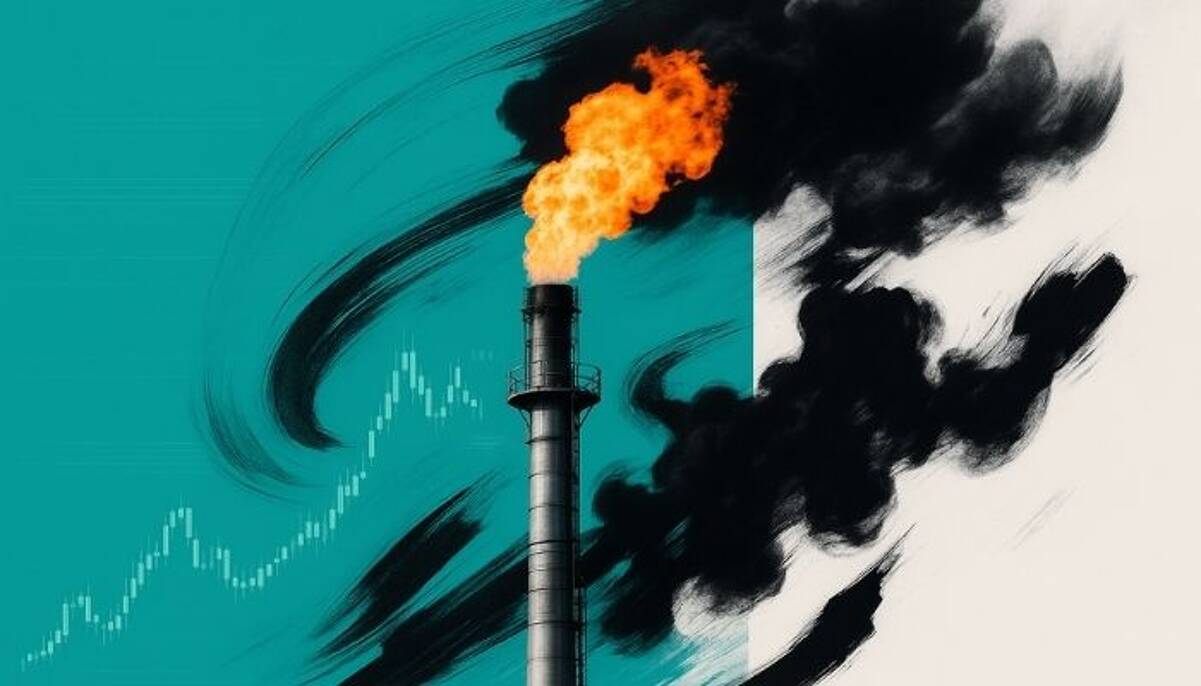
Talks easing disruption risk at the Strait of Hormuz (Iran-Oman revenue-sharing deal and Qatar PM visit) are offset by persistently tight refined-fuel conditions, especially depleted U.S. and global diesel pools. EIA data showed commercial crude stocks +0.1M bbl to 428.9M (+~1% vs average) while gasoline fell 2.5M bbl and distillate dropped 2.2M bbl to 103.4M (down ~14% vs recent-year average), with total petroleum demand ~3% below year-ago. Technically, natural gas broke above $2.87–$2.90 to trade ~$2.91, but WTI (~$81.85) and Brent (~$86.6) remain vulnerable with prices below key moving averages, keeping the near-term bias cautious.
Analysis
The market is likely to give back some of the geopolitical premium in crude, but that does not mean the energy complex is directionally “risk-off.” The more important mechanism is that distillate scarcity is still forcing product spreads to do the heavy lifting, so upstream beta can soften even while the best refinery names keep earning on cracks. That argues for a relative-value trade, not a blanket bearish energy view: cheaper feedstock plus tight diesel is the best setup for high-complexity refiners and the worst for high-beta E&Ps.
Over the next 1-3 months, the key catalyst is whether vessel flows through Hormuz normalize enough to keep a lid on Brent, while distillate inventories remain too low to clear the diesel squeeze. If the market sees even modest rebuilding in diesel stocks, the current product-support story can unwind quickly and take refining margins with it; if not, freight, trucking, and industrial input costs stay sticky even with softer crude. The falsifier for the bearish crude thesis is a sustained reclaim of the prior resistance zone in WTI/Brent, which would signal that the risk premium is not actually gone.
Natural gas looks more like a tradeable technical breakout than a durable fundamental re-rate. Pre-winter storage and record supply cap upside, so the risk/reward deteriorates above the first upside extension unless the storage report materially surprises to the downside. Consensus seems too focused on oil geopolitics and not enough on the second-order beneficiary: diesel-tied margin dispersion across refiners, transport, and chemical users.
AllMind Terminal
AI-powered research, real-time alerts, and portfolio analytics for institutional investors.
Request TrialMarket Sentiment
Overall Sentiment
mildly negative
Sentiment Score
-0.15
Key Decisions for Investors
- Long VLO or MPC vs short XOP for 1-3 months: best relative-value expression of cheap crude + tight diesel; target 10-15% outperformance if crack spreads hold, stop if WTI reclaims $83.25 and Brent $88.50 on a closing basis.
- Short USO or buy near-dated put spreads on crude proxies on failed rallies toward the prior resistance zone: crude remains technically vulnerable while the geopolitical premium bleeds; risk is limited if Hormuz flows do not normalize and Brent pushes through $88.50.
- Long VLO/MPC vs short IYT as a diesel-cost hedge: if distillate inventories stay 10%+ below normal into the next 4-6 weeks, freight margins should stay under pressure even if headline oil eases.
- No aggressive position in nat gas ahead of the EIA storage print; if the report is neutral-to-bearish and gas loses $2.87, fade the breakout via short UNG/call spreads, but if it holds above $2.94, respect the momentum and stand aside.
More News
- US forces disable ship ‘attempting to run’ Iran blockade in Gulf of Oman
- Middle East war, high debt levels to dominate IMF-World Bank meetings in Bangkok
- Attack on Saudi airport kills 12 people and wounds more than 300—the deadliest strike in any Gulf Arab country since the start of the Iran war
- CBO chief warns it’s ‘probably not plausible’ that a strong economy alone can steady U.S. debt as 5%-6% growth is needed—more than Bessent’s 3% view
- Stocks saw new highs and big declines: How the volatile AI trade moved last week's market
- Why is US turning to Russia for diesel despite sanctions?