
Week Ahead: Trump-Xi meeting puts trade back in the spotlight
Source: proactiveinvestors.com
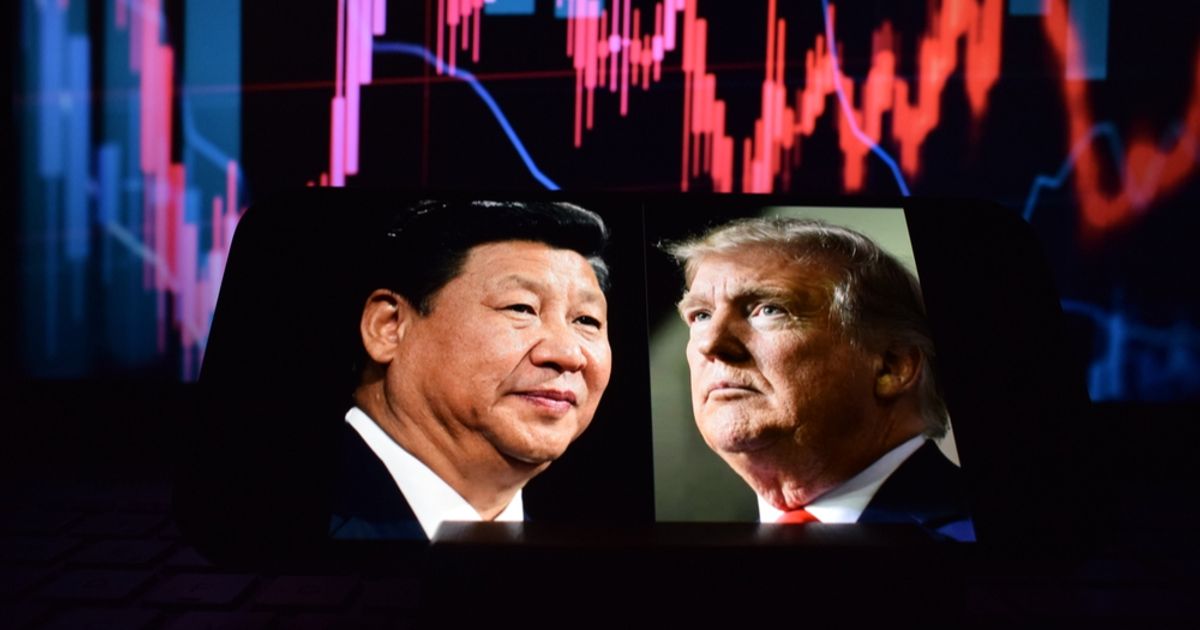
President Trump will host China's Xi Jinping on Thursday, with tariffs, trade, Taiwan, AI and potential Chinese purchases of U.S. goods—including Boeing aircraft—likely to be key market catalysts. Markets remain pressured by the Federal Reserve's 25bp rate increase last week and Chair Kevin Warsh's signal that further tightening may be needed to contain inflation, while Treasury and European bond yields rose despite lower oil prices. Investors will also monitor Wednesday's 20- to 30-year Treasury buyback, Fed speakers, Meta's AI-focused Connect event, and Costco's Thursday earnings.
Analysis
The Trump-Xi meeting creates a binary, headline-driven dispersion trade rather than a broad risk-on setup. BA has the clearest asymmetric upside if aircraft purchases are formally announced with delivery timing and financing detail; a vague purchase framework is unlikely to alter its near-term cash-flow profile, while renewed tariff rhetoric would more immediately pressure China-exposed industrial supply chains and consumer import margins. The second-order beneficiary of a credible de-escalation is likely freight and aerospace suppliers rather than BA alone, but the listed universe offers no clean supplier proxy.
Higher long-end yields are the more durable near-term constraint on equity multiples. META's product-event narrative requires evidence of monetization, unit economics, or a revised capex framework to overcome rate-driven multiple pressure; product demonstrations alone could trigger a sell-the-news reaction after a crowded AI positioning cycle. KBH faces a more direct transmission mechanism through mortgage rates and buyer affordability, while WFC's net-interest-income benefit from higher rates can be offset if long yields weaken loan demand and raise unrealized-security/balance-sheet concerns.
COST is the cleaner earnings-quality expression this week: membership income and traffic resilience can offset modest tariff-linked merchandise-cost pressure better than discretionary retailers, but its premium valuation leaves little tolerance for gross-margin disappointment. MCD, DRI, and CBRL should be monitored as an inflation read-through: a renewed rise in imported food, packaging, or labor costs would widen the relative advantage of scale operators, though franchise-heavy models pass through inflation with a lag. The contrarian view is that markets may overfocus on diplomatic language Thursday while underpricing the Treasury buyback and Fed-speaker impact on term premium; a weak buyback result could dominate equity tape direction within hours.
Over the next 1-3 months, the key falsifiers are a sustained decline in 10-year and 30-year Treasury yields, an explicit U.S.-China tariff rollback, or corporate guidance showing tariff costs are immaterial. Without these, favorable meeting optics should be sold into for long-duration growth and housing-sensitive exposures. Six-to-18 months, a substantive trade détente would reduce the probability of supply-chain duplication and support industrial capex, but it would also weaken the scarcity premium embedded in domestic reshoring beneficiaries.
AllMind Terminal
AI-powered research, real-time alerts, and portfolio analytics for institutional investors.
Request TrialMarket Sentiment
Overall Sentiment
mildly negative
Sentiment Score
-0.18
Ticker Sentiment
Key Decisions for Investors
- Treat BA as an event-driven watch, not a pre-meeting core long: buy a small defined-risk call spread only after a verifiable order announcement specifies aircraft count, delivery slots, and financing. Exit if the announcement is merely an MoU or if management does not indicate incremental delivery/cash-flow relevance; target 2:1 payoff versus premium.
- Establish a 2-6 week pair trade long COST / short KBH in equal dollar beta-adjusted sizing. This expresses resilient recurring consumer economics against rate-sensitive housing demand; reassess if the 10-year Treasury yield falls at least 35-40bp from pre-event levels or KBH reports materially improved order growth and cancellation trends.
- Use META's Connect event to reduce/hedge AI-duration exposure rather than chase product headlines. A short-dated put spread or trimming long exposure is warranted if management raises capex without quantifying advertising, device, or agent monetization; cover the hedge on a concrete revenue KPI or a meaningful capex discipline signal.
- Monitor Wednesday's long-end Treasury buyback as the immediate macro trigger: a weak accepted-offer breadth or limited market response supports a tactical short in XHB or KBH for days to weeks. Do not initiate if 30-year yields rally sharply after the operation, as that would remove the principal rate catalyst.
- For restaurant exposure, favor MCD over DRI and CBRL through the next earnings cycle if imported-input or tariff headlines intensify. The thesis fails if same-store sales slow enough to show consumer resistance to pricing, which would negate its scale-based margin advantage.
More News
- Wall St futures rise as AI stocks rally, crude prices fall
- Amazon blocks Meta’s Muse and accuses Perplexity of misleading a court
- Can CEO John Ternus find Apple’s next big thing?
- Why Meta Platforms Stock Skyrocketed Today
- Here are the 3 big things we're watching in the stock market this week
- Why AMD Stock Is Rising Fast Today