
Century Complete Now Selling New Homes at Hudson Village in Cowpens, South Carolina
Source: PR Newswire
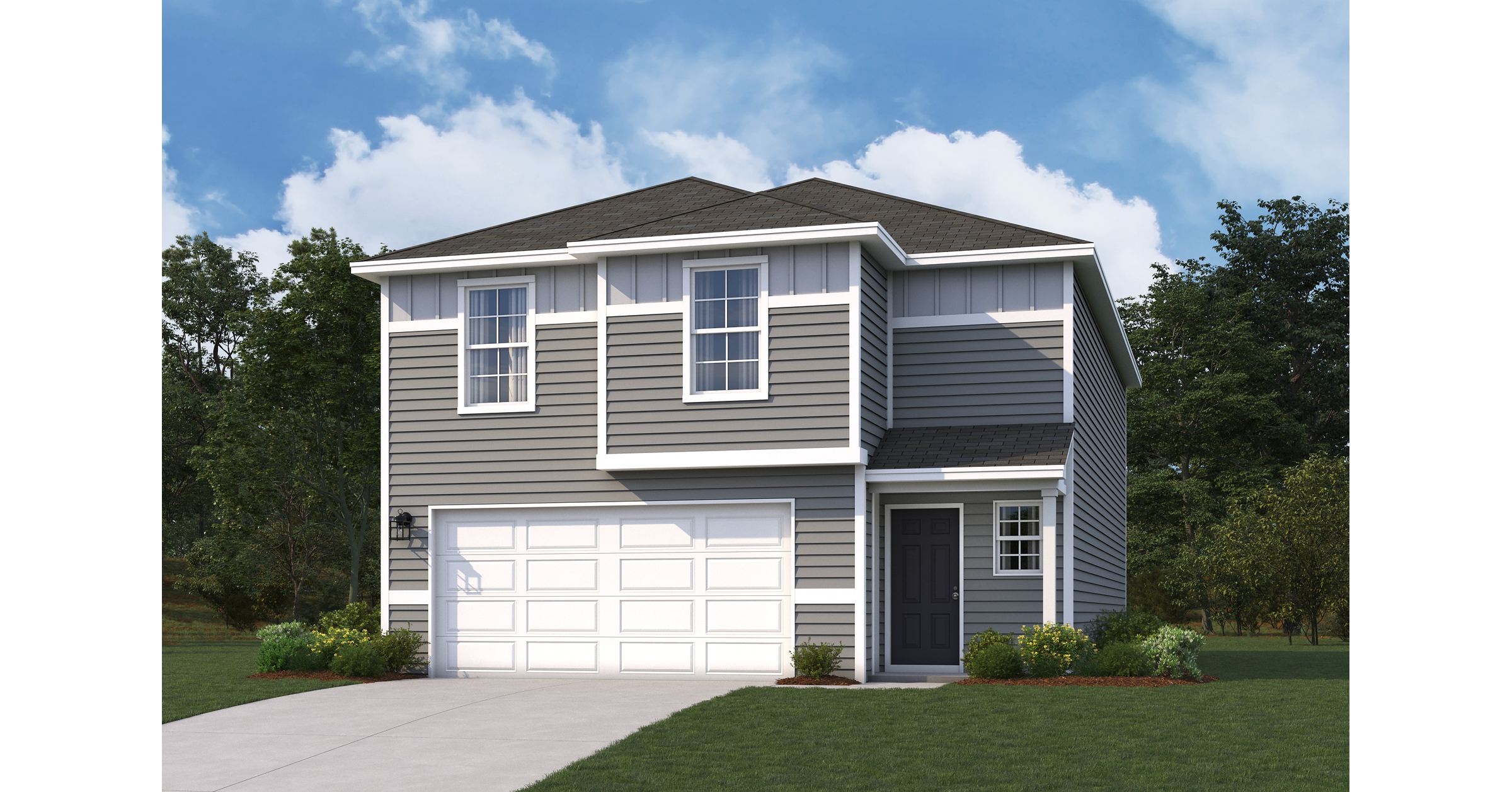
Century Communities' Century Complete brand began selling 138 single-family homes at Hudson Village in Cowpens, South Carolina, with prices starting at $231,888. The development offers five 3- to 4-bedroom floor plans spanning 1,155 to 1,965 square feet and targets attainable housing demand in Spartanburg County. The localized community launch is a modestly positive operational update but is unlikely to materially affect Century Communities' overall financial performance.
Analysis
This is immaterial to CCS’s consolidated earnings on its own: even full sellout at entry-level pricing implies roughly $30-40M of gross home sales before incentives, a small fraction of annual revenue. The relevant signal is whether CCS can sustain absorption and gross margin in South Carolina’s entry-level segment, where standardized plans and centralized online sales can lower SG&A per closing and improve affiliate mortgage/title capture. A successful ramp would support the market’s view that Century Complete can defend returns at lower price points without relying on aggressive incentives.
The competitive implication is modestly negative for local private builders and more exposed entry-level public peers such as LGIH and MHO, particularly if CCS uses its balance sheet to maintain spec inventory near the I-85 employment corridor. DHI and LEN have greater scale but are less dependent on a single submarket; their risk is a broader affordability-led pricing response rather than direct share loss. DOCU has no investable read-through: the online transaction workflow is unlikely to create incremental volume material enough to affect its revenue.
Near term, this is not a standalone catalyst for CCS. Over the next 1-3 months, monitor weekly traffic, net orders, cancellation rates and incentive levels in CCS’s Southeast operations; a fast sales pace with stable gross margin would validate land underwriting, while high mortgage-rate sensitivity could turn apparent demand into margin-dilutive buydowns. Over 6-18 months, the bigger upside is that lower absolute monthly payments may allow CCS to gain share if existing-home supply remains constrained, but this depends on construction costs and mortgage rates not re-accelerating.
Consensus may over-credit low headline pricing as proof of affordability. The decisive variable is the all-in monthly payment after financing, insurance and HOA costs, not the advertised base price. If CCS must use elevated rate buydowns or upgrades to convert buyers, mortgage-affiliate revenue will not offset the gross-margin pressure; that would make the project a warning sign rather than a growth signal.
AllMind Terminal
AI-powered research, real-time alerts, and portfolio analytics for institutional investors.
Request TrialMarket Sentiment
Overall Sentiment
mildly positive
Sentiment Score
0.22
Ticker Sentiment
Key Decisions for Investors
- No immediate event-driven trade in CCS; treat this as a Southeast demand datapoint rather than an earnings catalyst. Reassess after the next quarterly order, cancellation and gross-margin disclosure.
- Establish a monitoring trigger for a tactical CCS long over the next 1-3 months only if Southeast net orders accelerate while company-wide gross margin and incentive rates remain stable; target 10-15% upside on multiple support from share gains, with exit if gross-margin guidance falls by more than 150 bps or cancellations rise materially.
- For housing exposure, prefer a conditional pair trade long CCS / short LGIH if evidence shows CCS is taking entry-level share without incremental incentives. The thesis is falsified if LGIH maintains absorption and margins in overlapping affordable markets, or if CCS’s mortgage-rate buydown expense rises.
- Avoid DOCU on this news; require disclosed transaction-volume growth or a broader builder workflow partnership before assigning any revenue relevance.
More News
- Century Communities amends credit agreement, increases commitments to $1.2 billion
- Nike Warns Sales Slump Will Worsen This Fiscal Year
- Google unveils latest AI model, but Wall Street wants a breakout personal agent
- Most Americans say US-Israel war on Iran not worth fighting: Poll
- Wilbur Ross was Trump’s first-term tariff hawk. Now he says refunds give importers ‘an extra profit’ and pay them ‘more than the money’ they laid out
- Cullinan initiates FDA filing for lung cancer drug zipalertinib
From AllMind Research
- Anthropic IPO Preview: Valuation, Timing, and What to Watch
- Shein After the IPO: Venue, Valuation, and What Must Be Proved
- What AI Research Tools Should a Small Hedge Fund Buy First?
- Weekly Update: Adding Live MBO Level 3 Data - Liquidity Heatmap, OFI Charts, and More
- AI Software for Buy-Side Teams: Build the Research Stack