
Stock Market Today, Nov. 5: Intel Falls on Weak Fourth-Quarter Sales Outlook Amid Chip Selloff
Source: fool.com
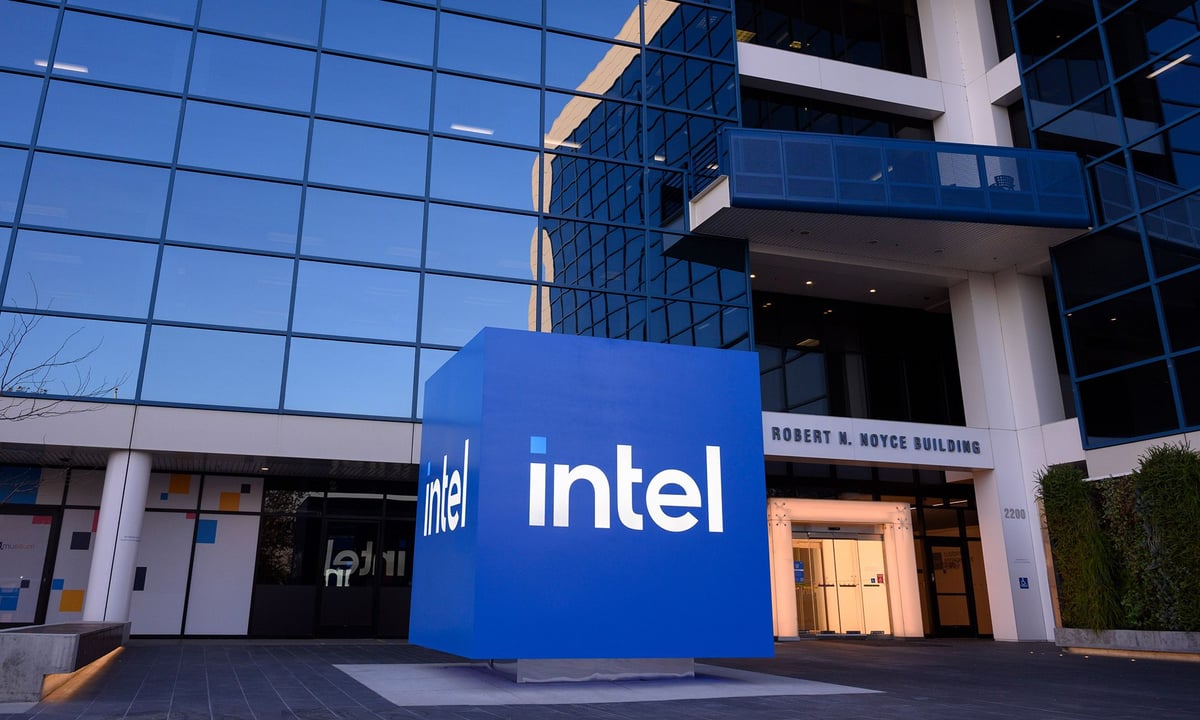
Intel fell 10.33% to $52.25 on Nov. 5, with trading volume about 129% above its three-month average, amid a broader semiconductor sell-off and weak Q4 guidance. Its projected Q4 sales of $15B–$16B were below the $17B Wall Street expectation; Intel cited weakening PC demand and tight, costly memory supply, which is expected to persist through at least the first half of 2027. The S&P 500 fell 4.36% and the Nasdaq Composite dropped 5.52%; investor concerns about possible tighter AI regulation and pauses to data-center projects added sector pressure, despite management describing Intel’s data-center revenue growth as its strongest in 15 years.
Analysis
Separate the company-specific earnings reset from the election-driven sector shock: the former is more actionable for Intel, while the latter amplified the move and may unwind quickly. Tight memory supply is a two-sided constraint: it can raise component costs and pressure PC affordability, potentially deferring device purchases; it may also limit OEM shipments even if CPU demand stabilizes. For Intel, that threatens both near-term client revenue and factory utilization, so a revenue shortfall could have a second-order impact on margins. Verify whether memory availability or pricing is actually worsening Intel’s costs before treating this as a sustained margin thesis.
The AI-policy concern looks less certain than the demand signal. A change in political control does not by itself establish that data-center projects will be paused; permitting, power availability, and grid interconnection may remain more binding constraints. If projects proceed, the sell-off could punish chip exposure indiscriminately even as customer spending shifts among suppliers. Conversely, Intel’s reported data-center growth is not enough to establish durable share gains without follow-through in segment revenue and profitability.
Over days, elevated volume and a broad market decline raise the risk of further forced de-risking; avoid reading one session as a clean estimate of Intel-specific value. Over 1–3 months, the key checks are PC sell-through, memory availability/cost, and whether Intel’s next outlook stabilizes. Over 6–18 months, utilization and the ability to convert data-center demand into profitable growth matter more than the political headline. The thesis weakens if Intel delivers revenue at or above its outlook and demonstrates improving cost or utilization trends.
AllMind Terminal
AI-powered research, real-time alerts, and portfolio analytics for institutional investors.
Request TrialMarket Sentiment
Overall Sentiment
moderately negative
Sentiment Score
-0.55
Ticker Sentiment
Key Decisions for Investors
- Do not chase the post-selloff move immediately: broad-market weakness and unusually heavy trading make near-term price action noisy. Reassess after stabilization and the next company update.
- Conditional relative-value idea: consider short INTC versus long QCOM only if Intel’s outlook continues to deteriorate while Qualcomm’s outlook remains comparatively stable. Keep the position sized for broad semiconductor beta; the thesis is falsified by Intel guidance stabilization or material improvement in its cost/utilization commentary.
- Watch PC sell-through and memory availability/pricing over the next 1–3 months. If shortages ease without a demand rebound, PC unit pressure may persist; if costs ease and shipments recover, the negative Intel margin/demand thesis is weakened.
- Treat AI-regulation headlines as a catalyst watch, not a standalone short signal. Look for named project delays, permitting changes, or customer capex revisions; absent those, the sector-wide political discount may reverse.
More News
- Tech stocks are suffering their biggest selloff since Covid, as investors see premature end to AI datacenter boom
- Wall Street’s best post-midterm rally in 44 years lasted just one day—then $3 trillion vanished as chip stocks plunged over AI fears
- AI stocks plunge after election, driving down US markets
- Qualcomm slides 9% after earnings, leading post-election chip stock sell-off
- U.S. stock futures rise after AI rout batters Wall St; payrolls data in focus
- Top Democrats call to rein in AI buildout after midterms sweep: 'National data center moratorium now'