
Four Seasons Hotel Toronto Sets the Scene for Toronto International Film Festival's 51st Edition
Source: PR Newswire
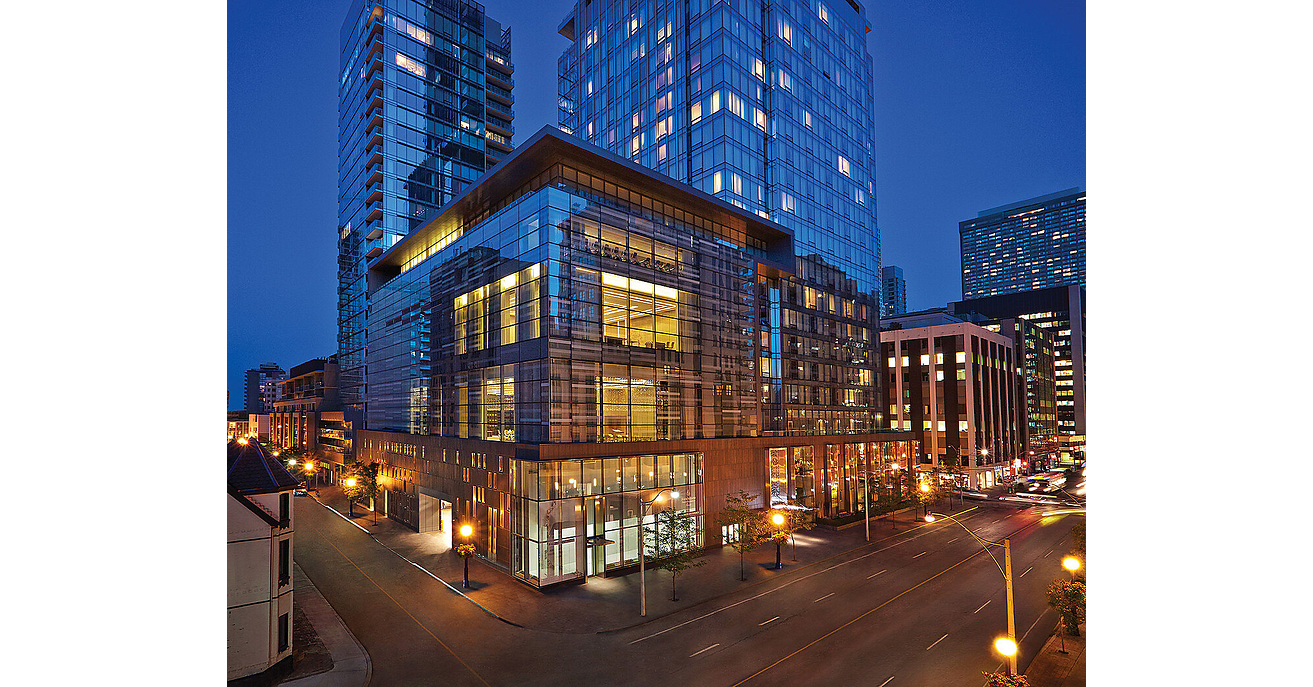
Four Seasons Hotel Toronto is reiterating its TIFF (Sept. 8–20) hospitality push, anchored by premium dining and experiences, including a $1,000 Final Cut XO Sazerac tableside cocktail at d|bar. The hotel will also run a $225 per-person Café Boulud five-course tasting menu (caviar and Japanese A5 Wagyu) and spa treatments starting at $595–$755 per person, plus a Rolls-Royce chauffeured component for the signature cocktail (subject to availability). Overall, the announcement is a promotional demand-generation update with no explicit financial guidance or market-wide macro implications.
Analysis
This is a brand monetization story, not a material earnings event. The economic value sits in high-margin ancillary spend — food, beverage, spa, and private events — where incremental revenue drops far better than room-night demand, but the scale is still tiny relative to any public hotel or leisure name. The real signal is that ultra-luxury operators can keep pricing power by turning cultural events into curated scarcity; that supports the top end of the lodging stack more than it moves the broad sector.
Second-order winners are adjacent luxury suppliers: premium spirits, champagne, caviar, high-end beauty, and local experiential services capture short-lived demand, while generic dining and midscale hotels get less spillover because affluent guests consolidate spend inside the flagship property. For public comps, the read-through is modestly constructive for high-ADR operators such as HLT and MAR only if this kind of activation is repeatable across major events; one property-level campaign does not change RevPAR math by itself.
The contrarian view is that investors often confuse polished hospitality marketing with durable demand. The main falsifier is not social buzz but whether September/October Toronto occupancy, ADR, and ancillary spend hold up in actual lodging data; if they don’t, the thesis collapses within 1-2 reporting periods. Over 6-18 months, the only investable implication would be sustained evidence that luxury travelers pay materially higher total wallet share, not just a one-off premium cocktail or spa menu.
AllMind Terminal
AI-powered research, real-time alerts, and portfolio analytics for institutional investors.
Request TrialMarket Sentiment
Overall Sentiment
mildly positive
Sentiment Score
0.12
Key Decisions for Investors
- No immediate trade in public hotel equities; treat this as a watch item and wait for Toronto luxury ADR/occupancy data in the next 30-60 days before expressing a view on HLT or MAR.
- If you want a tactical expression, own HLT over lower-end leisure exposure only on a pullback after the event window; risk/reward is better on confirmed pricing power than on PR-driven sentiment.
- Set an alert for Q3 management commentary from MAR, HLT, and Canadian lodging names on event-driven urban RevPAR; a single-digit ADR pop with flat occupancy would confirm the halo effect, while flat-to-down ancillary spend would falsify it.
- Avoid chasing TNL on this headline; vacation-ownership economics are not the clean beneficiary of a short-duration luxury festival, so any move would likely be noise rather than signal.
- For the consumer luxury basket, use this only as a sentiment check, not a catalyst: if premium spirits or beauty names sell off on macro weakness while experiential spend stays resilient, that would be a better entry than buying on the announcement.
More News
- Indonesian stocks plunge to six-year low as MSCI downgrade fears mount
- Indonesia Said to Meet Monday With MSCI Over Shock Index Threat
- China's CXMT sees shares drop over 6% as investors look past chipmaker's profit turnaround
- China's economic growth quickens to 4.6% as exports surge, stimulus rolls out
- Australia’s Cleanaway agrees to $6.5 bln EQT buyout bid; shares surge
- India’s Finance Minister blames easy exits and excess liquidity for equity market's underperformance
From AllMind Research
- Anthropic IPO Preview: Valuation, Timing, and What to Watch
- Shein After the IPO: Venue, Valuation, and What Must Be Proved
- What AI Research Tools Should a Small Hedge Fund Buy First?
- Weekly Update: Adding Live MBO Level 3 Data - Liquidity Heatmap, OFI Charts, and More
- AI Software for Buy-Side Teams: Build the Research Stack