
Here’s how much more groceries, clothing and household appliances could cost as diesel prices keep surging
Source: MarketWatch
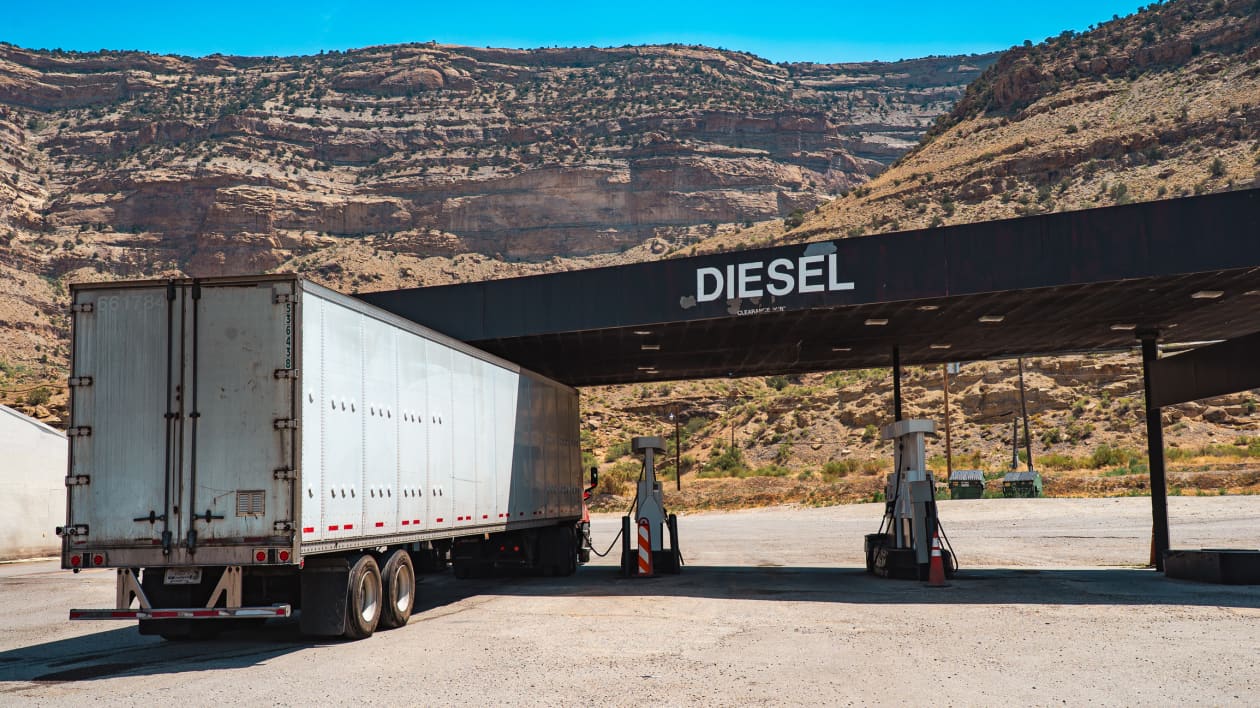
Surging diesel prices could raise consumer costs for groceries, clothing and household appliances, even as gasoline prices eased from the prior week. Barclays economists noted that diesel is a key input for transporting goods and services throughout the economy, creating a potential pass-through inflation risk for consumer products.
Analysis
The relevant transmission is not broad CPI mechanically; it is a margin-allocation problem across low-margin freight, grocery, and value retail. Truckload carriers can recover diesel through fuel surcharges with a lag, while retailers with fragmented vendor bases and limited pricing power absorb part of the cost. That favors scaled grocers and retailers with superior procurement/logistics density—WMT, COST, KR—over dollar stores and discretionary chains such as DG, DLTR, and BBWI, where freight is a larger share of landed cost and consumers are less able to absorb another price increase.
Near-term equity impact should be limited unless diesel remains elevated long enough to reset carrier surcharge schedules and vendor contracts; the first observable evidence is 1-3 months away in gross-margin commentary and freight-rate indices. The more material 6-18 month effect is a renewed goods-inflation impulse that delays Fed easing, pressuring long-duration consumer discretionary multiples more than the direct cost impact. A diesel spike driven by refinery outages rather than crude scarcity is especially unfavorable: it raises distribution costs without delivering commensurate upstream earnings leverage.
Consensus may overstate the pass-through to shelf prices. Inventory turns, contractual fuel surcharges, and lower spot trucking rates can cushion the first quarter, while weaker consumer demand constrains retailers' ability to raise prices. The trade becomes actionable only if wholesale diesel stays above recent levels for 4-6 weeks and freight benchmarks stop declining; absent that confirmation, this is a watch item rather than a standalone macro risk trade.
AllMind Terminal
AI-powered research, real-time alerts, and portfolio analytics for institutional investors.
Request TrialMarket Sentiment
Overall Sentiment
mildly negative
Sentiment Score
-0.30
Key Decisions for Investors
- Maintain a 1-3 month relative-value bias: long WMT or COST versus short DG. Scale only after diesel remains elevated for 4-6 weeks; the thesis is widening gross-margin and traffic resilience, not immediate headline sensitivity. Exit if DG guides stable/improving merchandise margin despite freight pressure.
- Use XRT versus XLY as a conditional hedge for a persistent diesel-driven inflation reacceleration: short XLY / long XRT is preferable to an outright retail short because higher-income discretionary demand and duration-sensitive valuations are more exposed to delayed rate cuts. Reassess after the next CPI and retail-sales releases.
- Do not add broad energy exposure solely on diesel strength. Instead, monitor crack spreads and refinery-utilization data: sustained distillate tightness with flat crude would favor refiners such as VLO and MPC, while a crude-led move would shift the better expression toward XLE. Missing confirmation is the key gating variable.
- Watch freight-rate indices and quarterly commentary from JBHT, KNX, and ODFL. A recovery in spot rates alongside high diesel would improve surcharge revenue but is margin-negative for shipper customers; continued weak freight rates would falsify a broad logistics-cost squeeze.
More News
- European stocks close at three-month lows as surging bond yields hammer banks
- Analysis-Investors wary of slowdown in US corporate profit boom
- Topps Tiles sees full-year profit in line with market views; sales dip 1.3%
- Jim Cramer's top 10 things to watch in the stock market Thursday
- Enliven Therapeutics stock initiated at Overweight by JPMorgan
- Airtel Money sets IPO price at £1.96 per share
From AllMind Research
- Anthropic IPO Preview: Valuation, Timing, and What to Watch
- Shein After the IPO: Venue, Valuation, and What Must Be Proved
- What AI Research Tools Should a Small Hedge Fund Buy First?
- Automating Financial Model Updates: A Source-Controlled Workflow
- Weekly Update: Live Event Center, In-App Documents, and Faster Transcripts