
Online Vehicle Marketplace Remarket Space Expands to St. Louis Without Opening a Storefront or Significantly Growing Its Team
Source: PRWeb
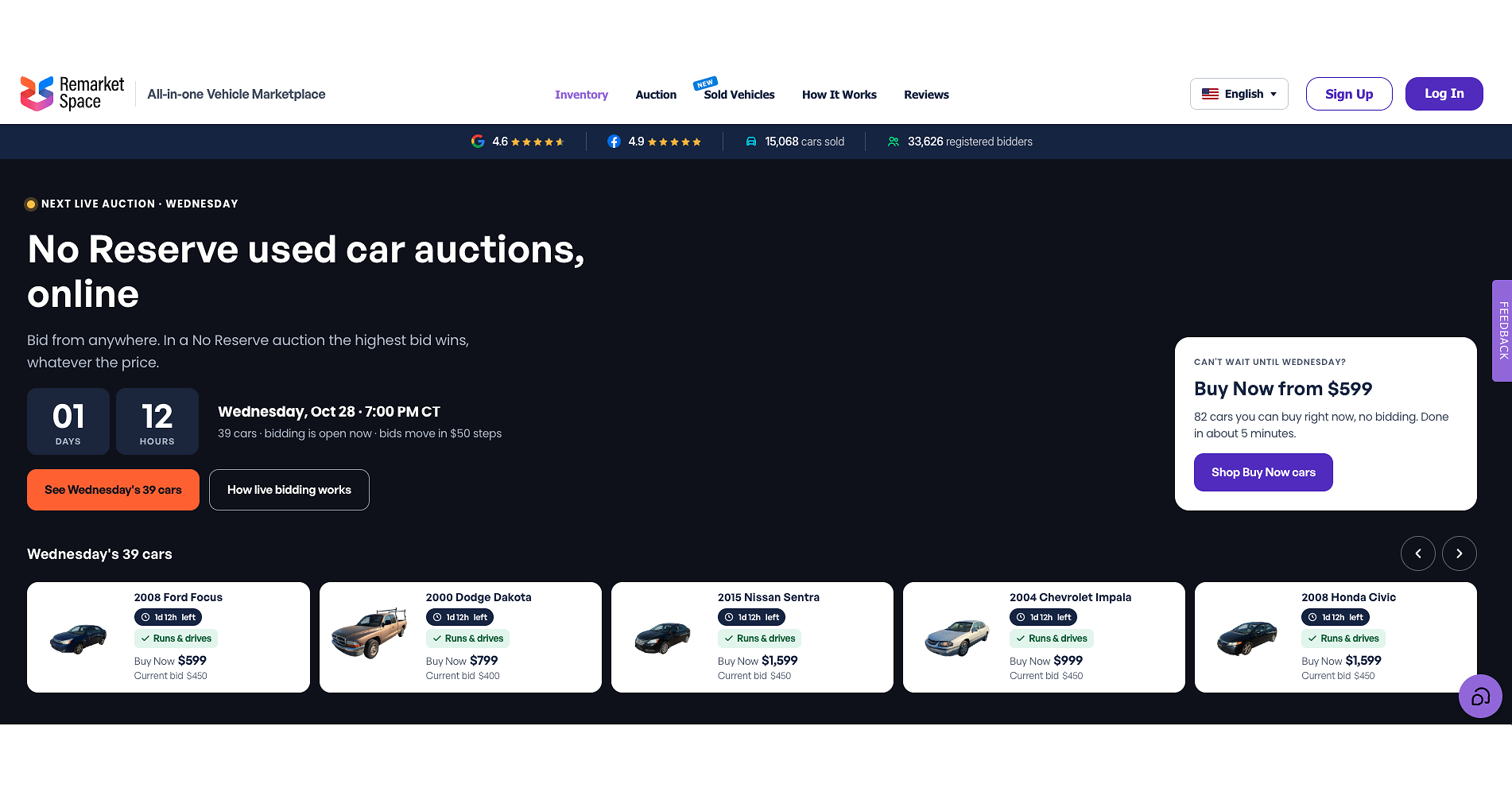
Remarket Space has moved its Elk River used-vehicle marketplace to fully online sales and is beginning to list St. Louis-area inventory in November, supported by its existing Minnesota team without a storefront or significant staff additions. The company reports more than 200 monthly vehicle sales, a sell-through rate above 90%, and 60% of sales to returning customers; it has sold over 15,000 vehicles to more than 33,000 registered bidders.
Analysis
The investable signal is modest: this is evidence that a small regional operator can remove the showroom from its process, not proof that the model scales profitably. The key economic test is whether St. Louis can generate enough local inventory and buyer density to cover inspection, delivery, title-transfer, and post-sale claim costs without adding substantial headcount. A digital funnel can reduce storefront overhead while making logistics and vehicle-condition disputes more important cost centers.
If the model works, transparent condition data and comparable sold prices could pressure traditional used-car retailers to match online convenience and price visibility. That is a competitive headwind in principle for CarMax and local dealers, but this operator’s disclosed scale is not evidence of material near-term displacement. Online marketplaces such as Cars.com and auction operators such as ACV Auctions are relevant comparables, though their business models differ.
The main downside is adverse selection: no-reserve auctions may attract buyers while leaving the seller exposed to weak clearing prices, and a mechanical guarantee converts inspection errors into potential claims. A single-market expansion also cannot establish national scalability; title rules, delivery distances, and inventory quality vary by market. The company’s operating metrics are self-reported in a promotional release and should be independently verified.
Near term, no clear public-equity catalyst. Over 1–3 months, watch St. Louis inventory, sell-through, delivery times, and claims. Over 6–18 months, the thesis strengthens only if expansion repeats without deterioration in service or unit economics. Falsify it if sell-through weakens, customer complaints or guarantee claims rise, or expansion requires meaningful storefront or staffing costs.
AllMind Terminal
AI-powered research, real-time alerts, and portfolio analytics for institutional investors.
Request TrialMarket Sentiment
Overall Sentiment
mildly positive
Sentiment Score
0.35
Key Decisions for Investors
- No direct position: Remarket Space is private, and the disclosed expansion is too small to support a material directional view on public used-car equities.
- Treat the launch as a watch item for CarMax, Cars.com, ACV Auctions, and dealer-facing businesses—not as an immediate short catalyst. Reassess only if the company demonstrates repeatable market entry and evidence of competitive share loss or pricing pressure.
- Monitor St. Louis operating data over the next 1–3 months: inventory acquired, sell-through, delivery economics, return/claim rates, and repeat-buyer behavior. The release does not provide the cost or claims data needed to judge profitability.
- Falsification trigger: if reported growth requires higher fixed costs or is accompanied by weaker sell-through, rising guarantee claims, or deteriorating delivery/service quality, discount the asset-light scaling narrative.
More News
- Magnificent 7 loses $1 trillion. The most eye-popping stats from Thursday's tech stock plunge
- Tech stocks are suffering their biggest selloff since Covid, as investors see premature end to AI datacenter boom
- Wall Street’s best post-midterm rally in 44 years lasted just one day—then $3 trillion vanished as chip stocks plunged over AI fears
- AI stocks plunge after election, driving down US markets
- Elon Musk's Tesla and SpaceX lose over $420 billion in combined market cap after midterms
- Iran says tankers struck in Hormuz amid fears of new US attack